
Reviewed · CRETE
Gigilos summit adventure
Gigilos in the White Mountains feels bigger than the climb. I like how the hike is led by local expert Pari Vigli, plus you get a ready-to-go plan with round-trip transfers from Chania. I also love the practical extras, especially having hiking sticks provided, so you can focus on your footing.
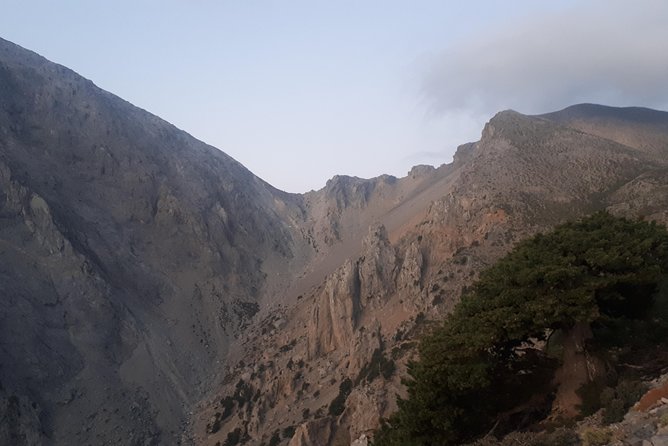
From the Omalos Plateau at about 1,240m, the route pushes upward to around 2,080m and brings you through spring water, cypress and wind-shaped trees, and that wild rock scenery with the towers of Gigilos. You’ll also pass landmarks like the Xepitira arch, then work up to viewpoints over the Tripiti Gorge and out toward the Libyan Sea.
One thing to consider: this is a steep, summit-style hike and the listing calls for strong physical fitness. If mornings start early and uphill trails make you grumpy, you’ll feel that here, especially since the experience depends on good weather.
In This Review
- Key highlights worth planning for
- Meeting the group: a fast start from Chania at 6:30 am
- Transfers to Omalos Plateau (1,240m): the uphill day begins before the first step
- The climb from the plateau: steep paths, cypress shade, and tall rock formations
- Xepitira arch and the alpine feel: where the route turns wilder
- The one-hour spring stop: drinkable water and a natural recharge
- Linoseli shoulder (1,700m): Tripiti Gorge and the Libyan Sea come into view
- Reaching the peak area around 2,080m: the reward is the view and the route
- Pari Vigli and why local knowledge changes the whole hike
- Price and value: what $232.71 gets you for an 8-hour mountain day
- Weather reality for Gigilos: build flexibility into your schedule
- Who this hike is for, and who should skip it
- Should you book the Gigilos summit adventure?
- FAQ
- What time does the Gigilos summit adventure start?
- How long is the hike?
- Is pickup available from Chania?
- Is this a private tour?
- Are hiking sticks provided?
- What happens if the weather is bad?
Key highlights worth planning for
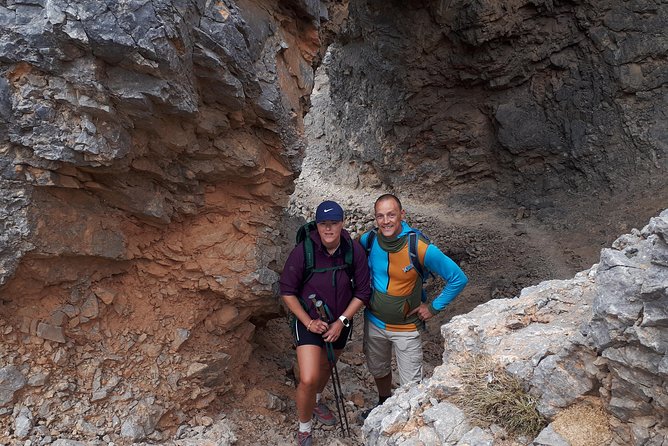
- Local guidance with Pari Vigli, so you’re not guessing routes in the White Mountains
- Hiking sticks included, which helps on steep, rocky sections
- A real drinkable spring about an hour into the hike
- Geology you can see up close, including the towers of Gigilos and the Xepitira arch
- Big perspective from the Linoseli shoulder (1,700m) over the Tripiti Gorge and Libyan Sea
- Private tour format, meaning it’s only your group on the trail
A handful of other ways to spend the day in Crete.
- Crete: Day Trip to Agios Nikolaos and Spinalonga Island
★ 4.6 · 4,416 reviews - Agios Nikolaos: Boat Trip to Spinalonga with Swim Stop
★ 4.4 · 3,031 reviews - Crete: Knossos Palace Entry Ticket with Optional Audio Guide
★ 3.9 · 2,251 reviews - From Chania: Day Trip to Elafonisi Island Pink Sand Beach
★ 4.5 · 2,014 reviews - Chania/Rethymno: Balos & Gramvousa With Pickup & Boat Ticket
★ 4.3 · 1,703 reviews
Meeting the group: a fast start from Chania at 6:30 am
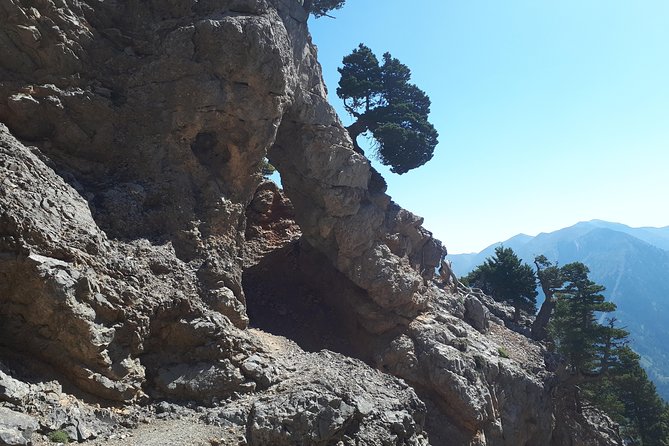
You’ll start early, with the meeting time set for 6:30 am. The pickup point is near public transportation in Chania, at Kydonias, Partheviou Kelaidi & Chania 731 00. That early start matters, because you’re hiking during cooler hours, and the route is all about steady progress up to the summit area.
If you hate rushing, plan your morning the night before. You’ll feel better if you show up with shoes you trust, water ready, and layers you can remove as the day warms up. The tour uses mobile tickets and confirmation at booking, so you’re meant to roll in with minimal hassle.
The private nature is also a real plus. When it’s only your group, you’re more likely to get pacing that fits you, rather than a one-size-fits-all push.
Transfers to Omalos Plateau (1,240m): the uphill day begins before the first step
Before you even hike, you’ll spend almost an hour driving to Omalos Plateau at about 1,240m. The car route crosses the Agyia Valley first, then continues up through small villages before reaching the plateau. It’s not just transportation. This drive gives you a first glimpse of how quickly the terrain changes as altitude climbs.
This is useful for your headspace, too. You start the hike already understanding the scale, and you can mentally split the day into segments: getting up, climbing to the alpine zone, reaching the peak area, then turning back down.
A small practical note: the early departure and longer drive also mean you should treat this like a full day outside. Bring layers, take a quick bathroom stop if you can before departing, and keep snacks simple. You’ll want energy for the steep segments.
The climb from the plateau: steep paths, cypress shade, and tall rock formations
Once you’re at Omalos, the hiking starts on a steep path. The trail begins with views toward the Samaria gorge area, plus looks out across the White Mountains and the plateau itself. Even early on, the scenery has a layered feel, because you’re seeing cliffs and mountain shapes behind you as you gain altitude.
The vegetation shift is part of the story. Early sections pass trees like cypresses and prunus with unusual shapes, shaped by snow and wind across the year. You get a sense of how weather writes its own design into the landscape here.
Then the path leads into taller rocks described as the towers of Gigilos. This is the section where the hike starts to feel like a rock walk, not just a trail hike. Your legs will still do the work, but your attention needs to stay on footing. That’s one reason the provided sticks are such a smart inclusion.
Xepitira arch and the alpine feel: where the route turns wilder
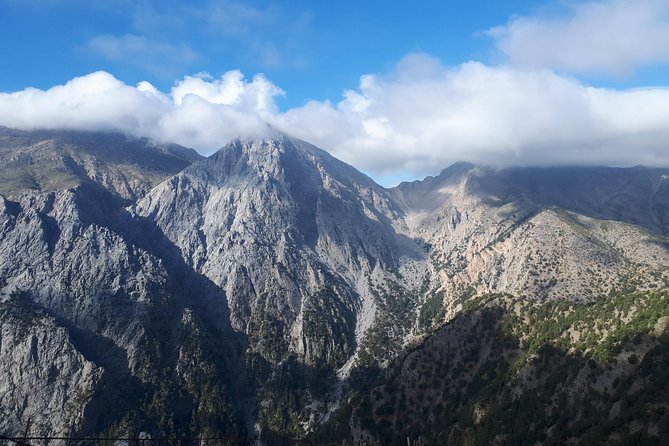
As you continue upward, the trail becomes more exposed and the experience turns more “alpine.” The formations get wilder, and you’ll come across a natural landmark called the Xepitira arch. Places like this are more than photo stops. A good guide uses landmarks to pace you, explain what you’re looking at, and keep you moving confidently.
There’s also a rhythm to the way the hike is described: steep sections, then brief moments where the terrain opens up and you can check out the view. That matters because the summit goal is around 2,080m, and you’re building altitude steadily on a route that doesn’t feel like a flat stroll.
If you tend to get impatient on climbs, lean into this section. The scenery changes fast enough that you’ll feel like the hike is moving even when your legs are slowing down.
The one-hour spring stop: drinkable water and a natural recharge
About an hour after the start of the hike, you reach a spring with fresh water that you can drink. This is one of the most practical highlights on the day. Instead of treating hydration as a carry-and-hope task, you have a point where you can refill and keep going comfortably.
It also helps psychologically. That spring gives you a moment of relief and a landmark you can use to judge progress. If you’re the kind of hiker who likes knowing you’re on schedule, this kind of mid-route marker is gold.
Bring a bottle you can refill easily. And take a quick pause here, even if you don’t feel tired, because the trail keeps getting steeper after this.
Not ready to stop exploring Crete? Try one of these.
Linoseli shoulder (1,700m): Tripiti Gorge and the Libyan Sea come into view
After climbing further, you reach a shoulder named Linoseli at about 1,700m. This is where the views open up in a bigger way. From here, you can look out over the Tripiti Gorge and toward the Libyan Sea.
This is the type of viewpoint that changes how you experience the rest of the climb. Earlier, you’re focusing on the trail and the rocks right in front of you. At Linoseli, you shift attention outward, and the summit starts to feel reachable rather than abstract.
You may also feel the altitude. That doesn’t mean danger, but it can make every step feel slightly heavier. Pace matters here. A local guide can help you keep your rhythm without pushing too hard too fast.
Reaching the peak area around 2,080m: the reward is the view and the route
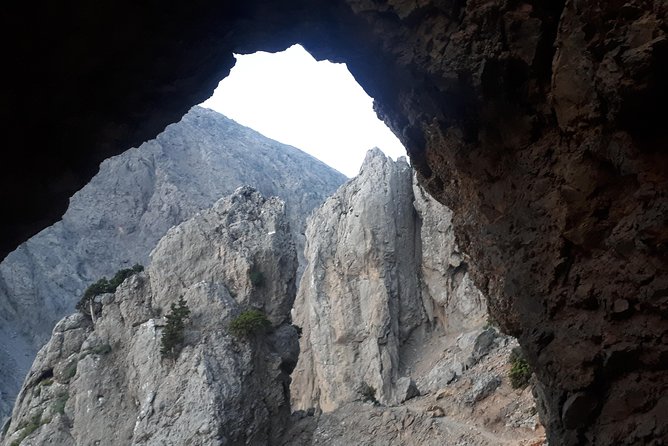
The hike continues upward until you reach Gigilos peak around 2,080m, then you return the same way back. The description notes a peak called Goergus, with a surrounding view. Think of this as a summit-style payoff where the scenery wraps around you and your whole day’s effort becomes obvious.
What makes this summit time valuable is that it’s earned on a route with variety. You’ve moved through forests, passed springs, navigated rock towers, found an arch, and transitioned into a more rugged zone. When you finally reach the top, it doesn’t feel like you just climbed to climb. It feels like you climbed through a landscape.
When you head back down, keep your focus on the trail. Descents can be harder on knees than the uphill feels, especially on steep, rocky paths. The sticks help again here, not just on the way up.
Pari Vigli and why local knowledge changes the whole hike
One of the best parts of this experience is the way the guide brings the area to life. Pari Vigli is a local expert with a personal connection to the region’s hiking culture and storytelling, including knowledge and family memories tied to the Samaria Gorge area. That kind of context matters because it turns a hike into a conversation with the place.
You’ll get instruction and guidance throughout, and the private format helps here. If you want to slow down for photos or pause longer to take in the gorge and sea views, you’re not stuck waiting for a bigger group.
Even when you don’t talk much, you’ll feel it in the route choices and the pacing. A local guide knows where to guide your attention, when to let you enjoy the view, and how to keep you moving safely.
Price and value: what $232.71 gets you for an 8-hour mountain day
At $232.71 per person, this is not a budget hike. The value comes from the full package: transfers from Chania, a local expert guiding your route, private tour structure, and hiking sticks included. For many people, those details add up faster than they expect.
Think about what you would otherwise need if you tried to DIY it. You’d have to plan the drive and timing, figure out a safe route to the summit area, manage gear (including trekking poles), and build a day that starts at 6:30 am and still feels smooth. Here, the plan is already stitched together so you can spend your energy hiking, not coordinating.
Also, private tours can be worth it in this type of terrain. When a trail gets steep and exposed, a guide’s local navigation and pacing help you feel confident. That confidence is part of what you’re paying for.
Weather reality for Gigilos: build flexibility into your schedule
This experience requires good weather. If conditions are poor, it will be canceled and you’ll be offered a different date or a full refund. That’s exactly what you want for a summit-style hike, because it means you’re not being pushed out onto a route that isn’t safe or enjoyable.
If you’re visiting Crete on a tight schedule, keep your plans flexible. With an early start and a mountain summit objective, weather is not a small variable. Plan it like a key day, then cushion the rest of your itinerary in case the tour shifts.
Who this hike is for, and who should skip it
This is for you if you want a real mountain summit hike in the White Mountains and you like doing it with a local expert who can guide route decisions and add context. It’s also for you if you enjoy views that come from altitude and you’re okay with steep trail segments.
The tour also specifically asks for strong physical fitness. If you’re new to uphill hiking or you struggle with sustained steep paths, you might find the climb too demanding.
This experience works particularly well for:
- hikers who like steep, rewarding trail days
- travelers who want more than just scenery, and enjoy local stories
- people who appreciate practical inclusions, like trekking sticks and planned transfers
Should you book the Gigilos summit adventure?
Yes, if your ideal day is an early start, a steep but guided climb, and panoramic views over the Tripiti Gorge and out toward the Libyan Sea. The combination of local expert guidance, included trekking sticks, and a route that mixes spring stops, rock formations like the towers of Gigilos, and landmarks like the Xepitira arch makes this more than a generic summit checkbox.
I would pass if you’re not comfortable with steep hiking or if you can’t be flexible about weather. But if you can handle the physical side and you want a genuinely guided White Mountains experience, this is the kind of hike that sticks in your memory.
FAQ
What time does the Gigilos summit adventure start?
The start time is 6:30 am.
How long is the hike?
The duration is about 8 hours.
Is pickup available from Chania?
Yes. The experience includes round-trip transfers from Chania for ease.
Is this a private tour?
Yes. It is a private tour/activity, and only your group participates.
Are hiking sticks provided?
Yes. Hiking sticks are provided, so you do not need to bring your own.
What happens if the weather is bad?
This experience requires good weather. If it is canceled due to poor weather, you will be offered a different date or a full refund. You can cancel for a full refund if you cancel up to 24 hours in advance.
Recently Published: Crete Tours
- Creta Private Transfer from Heraklion (HER) Airport to Agia Pelagia★ 5.0 · 1 review
- Creta Private Transfer from Heraklion (HER) Airport to Stalís★ 5.0 · 1 review
- VISIT THE MOST FAMOUS PAINTER “EL GRECO” TOUR★ 5.0 · 1 review
- Crete: Balos Beach Viewpoint and Falassrna Beach Day Trip★ 5.0 · 1 review
- Samaria Gorge from Chania with Professional Hiking Guide★ 5.0 · 1 review
- Rethymno Bali & Panormo : Quad Safari & visit Cave 57km 4hours★ 5.0 · 1 review
- Unique wine tasting of organic Cretan wines★ 5.0 · 1 review
- Hersonissos: Private Sunset Catamaran Cruise, Snack & Drinks★ 5.0 · 1 review