Reviewed · AUDIO TOURS
Heraklion: Mobile Self-Guided Audio Sightseeing Tour
Heraklion comes alive when you follow the stories. This mobile self-guided audio tour sends you through key sights from the old harbor, starting at Koules Fortress, with offline narration you can play at your own pace.
I especially like two parts: the fact that the route is designed for independent wandering (no group pace), and the way the audio ties together landmarks like the Morosini Fountain, the Loggia, and the Kazantzakis tomb with the bigger sweep of Heraklion’s past. You get a clear sense of where you are, what you’re looking at, and why the city has such a layered identity.
One consideration: there is no live guide, so if you expect real-time answers or a very interactive on-screen map, you may have to lean on your phone’s regular navigation at times. Also, some people find the pace or description depth a bit uneven, so it helps to go in with the right expectations for an audio-first experience.
In This Review
- Key highlights worth your time
- Starting at Koules Fortress, the harbor-side launch point
- How the phone tour works, offline narration that actually helps
- The route through Heraklion’s key sights, what to look for at each stop
- Koules Fortress and the old harbor logic
- The arsenals, Heraklion’s working side
- Kazantzakis tomb, a modern anchor in an old city
- Morosini Fountain, the Lions, and the value of noticing small details
- The Loggia, a renaissance setting for everyday life
- The Ottoman siege story, why it matters for how you read Heraklion
- Managing pace and phone reliance, the biggest make-or-break factor
- Price and value, why $11 can work or fall short
- Who should book this Heraklion audio tour
- Should you book the Heraklion mobile audio tour?
- FAQ
- Where does the self-guided tour start?
- Do I need internet during the tour?
- What is included in the price?
- Are museum or church entrance fees included?
- Do I get a live guide?
- How long is the tour available after I activate it?
- What languages are available?
- Is the tour wheelchair accessible?
Key highlights worth your time

- Start at Koules Fortress on the old harbor, then follow the city in logical chunks
- Offline audio and maps help you avoid roaming headaches while you wander
- Morosini Fountain, the Lions, plus the Loggia give you quick architectural payoff
- Stories cover Ottoman conquest after a 25-year siege, adding meaning beyond photos
- Multi-language audio (English, German, French, Spanish, Italian) makes it easy to pick your voice
Go at your own pace, map in hand
- Crete: Palace of Knossos E-Ticket and Audio Guide
★ 3.8 · 1,540 reviews - Crete: Knossos Palace and Museum E-Tickets with Audio Guides
★ 4.0 · 126 reviews - Crete: Knossos E-Ticket with Audio Guide & Optional Museum
★ 3.8 · 48 reviews - Knossos Palace: E-ticket with Audio and Heraklion City Tour
★ 4.2 · 26 reviews - Heraklion: Archaeological Museum Ticket with City Audio Tour
★ 4.6 · 18 reviews
Starting at Koules Fortress, the harbor-side launch point

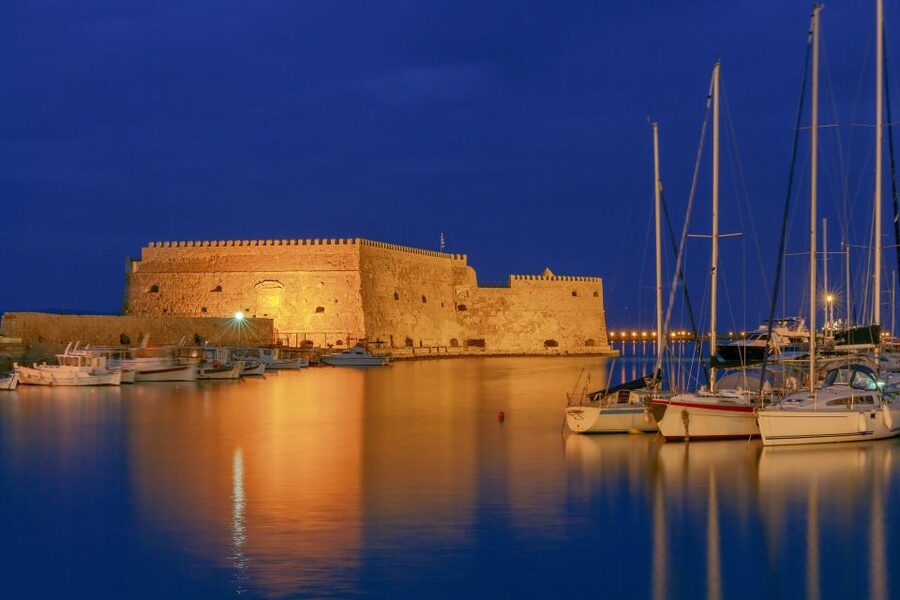
The tour begins at the entrance of Koules Fortress, right at Heraklion’s old harbor. That matters more than it sounds. You’re not starting in the middle of nowhere or at some abstract “city center” point. Koules is a natural orientation anchor: sea on one side, the waterfront city grid on the other, and a fortress that instantly tells you you’re in a place that used to be all about defense and trade.
If you’re walking in from downtown streets, you’ll probably find it easiest to come on foot. Plan to arrive with daylight if you can. Not because the tour won’t work at other times, but because the harbor area rewards a slow look between audio tracks. You’ll get better at noticing the details you’re being told to look for, especially around the fortifications and nearby structures.
Also, you’re in charge of timing here. If you want five minutes at a viewpoint before your next audio segment starts, you can do that. If you want to speed up when you’re already familiar with a landmark, you can do that too. This is built for flexible strolling, not a checklist sprint.
How the phone tour works, offline narration that actually helps
This is a downloadable self-guided tour for your smartphone. After booking, you’ll get an email with an activation link and instructions to access and download the content, so check your spam folder if it doesn’t appear in your inbox.
The big practical win is offline content. The tour includes text, audio narration, and maps stored on your phone so you can wander without roaming charges. You do need storage: plan for about 100 to 150 MB. That’s small enough for many phones, but it’s still worth checking your free space before the day you go.
Audio languages are available in English, German, French, Spanish, and Italian, which is great if you’re traveling with someone who prefers a particular language. You also get offline maps, which is useful because you’re moving across a city route rather than staying in one museum complex.
Two more real-world tips:
- Bring headphones if you want clear audio in busy streets.
- Keep your phone charged. This kind of walking tour is exactly when batteries tend to drain fastest.
Compatibility is straightforward but picky. You’ll need Android 5.0 or later or a compatible iOS device. It’s not compatible with Windows phones, and older iPhone models (like iPhone 5/5C or older) and older iPads/iPod Touch versions aren’t supported. If you’re traveling with an older device, test it at home first.
Finally, there is no VR or AR, so think of it as a storytelling overlay, not a futuristic experience. That’s not a downside if you like plain, functional travel tech.
The route through Heraklion’s key sights, what to look for at each stop
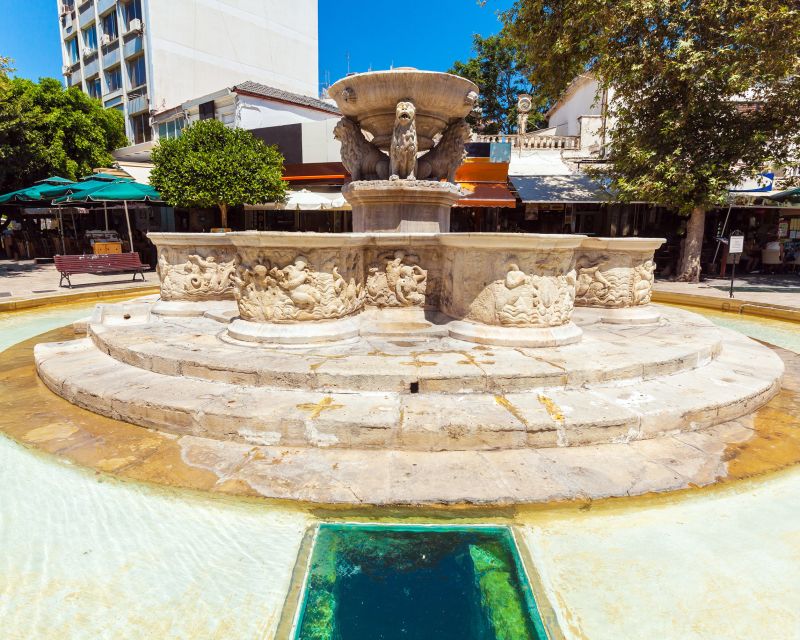
The landmarks called out in the tour make a lot of sense for first-time visitors because they mix “what you can photograph” with “what you can understand.” Here’s how you can think about the main stops, and how to make your listening time count.
Koules Fortress and the old harbor logic
At the start, you’ll set the context at the harbor edge. Fortress walls and defensive structures usually explain more than just architecture. They explain the city’s priorities: security, control of sea routes, and the constant pressure that cities like Heraklion faced over centuries.
As you walk, don’t just look forward. Glance back toward the harbor and sideways toward adjacent waterfront buildings. When audio mentions fortifications and arsenals, it helps to see them as part of one system: storage, defense, and movement.
The arsenals, Heraklion’s working side
The tour highlights the arsenals, which are often overlooked because they sound purely functional. But in a port city, “functional” is where history lives. Arsenals point to shipbuilding and maintenance, and to the way power and money showed up in physical space.
While listening, I recommend you pause for a minute and scan for structural clues: symmetry, repetitive building forms, and any remnants that look designed for storage or organized labor. You don’t need special expertise, just a slow look while the narration ties it together.
A guide in your ear, hands free
Kazantzakis tomb, a modern anchor in an old city
The route includes the Kazantzakis tomb, a reminder that Heraklion is not stuck in the distant past. Even when you’re hearing stories about conquest and siege, a modern cultural landmark helps you keep your bearings.
When you arrive at this kind of stop, treat it like a mental reset. You’ve been walking in “historical layers.” Now you can listen for how the narration connects cultural identity to place. If the audio segment feels shorter or less dramatic than the siege stories, that’s normal. Not everything in a city is built around crisis.
Morosini Fountain, the Lions, and the value of noticing small details
The famous Morosini Fountain, known as the Lions, is the kind of stop that can become either a quick photo moment or a memorable pause, depending on how you approach it. With an audio tour, you’ll get the backstory, which turns the fountain from decoration into a piece of civic messaging.
At fountains, the best habit is to look for the narrative the city built into the design. Where does the attention go? Who seems to be “speaking” through the imagery? Even if you only spend a few minutes, you’ll leave with a clearer idea of why it was placed here and why it lasted.
The Loggia, a renaissance setting for everyday life
The tour also includes the Loggia, a renaissance building. “Renaissance building” can sound like a category label, but it can also help you read the street. Loggias often create a public rhythm: space for gathering, movement under cover, and a feeling of planned civic life.
While listening, take advantage of the shelter effect. Step into the covered area if it’s accessible and spend a minute letting your eyes adjust. You’ll notice how the building shapes foot traffic and sight lines, even if you’re not an architecture expert.
The Ottoman siege story, why it matters for how you read Heraklion
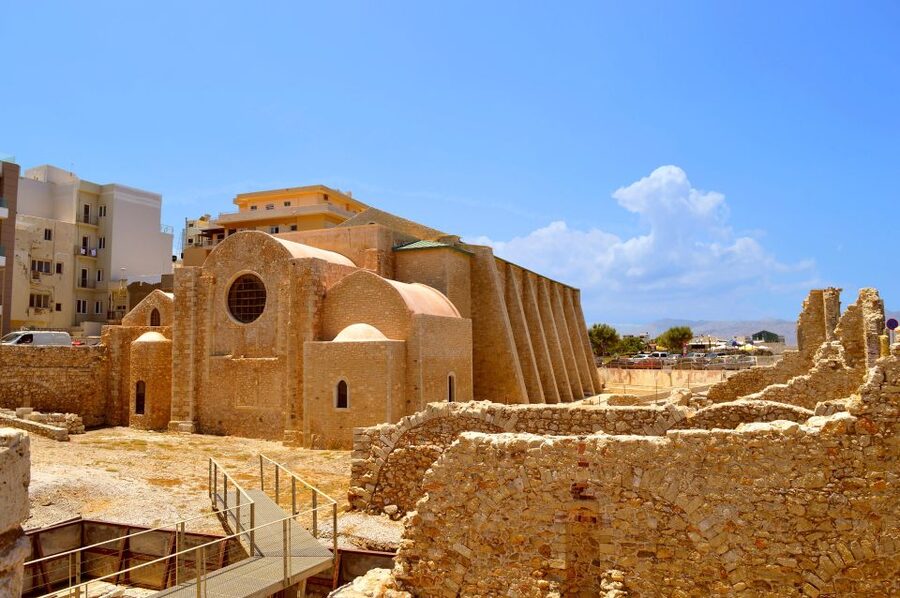
One of the most compelling parts of this audio tour is how it frames Heraklion’s turbulent past, including the Ottomans conquering the city after 25 years of siege. That’s a huge number, and it changes how you see the city. When you know siege time was measured in years, you stop thinking of “history” as a single event and start imagining a long stretch of pressure, supply problems, and rebuilding.
Practically, this is where the audio helps you the most. Stand at a landmark, press play, and let the story make a structure or a street corner feel less random. You’ll start connecting defense features, port energy, and civic buildings into one continuous picture.
Do yourself a favor: don’t treat the siege segment as a trivia chunk. Let it shape your walking pace. After you hear a heavy story, slow down for the next stop. You’ll see more. Even if you’re just looking at shapes, the meaning sticks better when you give your eyes a moment.
Managing pace and phone reliance, the biggest make-or-break factor
This is a phone tour, so the experience depends on how comfortable you are using your device as your guide. That can be a pleasure, or it can be annoying.
Here’s what to watch for based on common friction points people have had with this kind of self-guided setup:
- If you expect a highly interactive in-app map that does everything for you, you might end up using standard phone maps more often than you want.
- Some people report that the audio descriptions can feel like they move quickly, and if you’re the type who wants slow, deep architectural analysis, you may want to take extra time reading the on-screen notes between audio segments.
- Because there’s no live guide, you’re not getting follow-up questions answered. If you like conversation and on-the-spot clarification, plan on doing a little extra reading with your own curiosity.
My practical advice: keep a simple rhythm.
1) Listen while you’re near the stop.
2) Look for the detail the narration points out.
3) If you’re lost, pause audio and use maps to relocate, then restart.
That way, you spend your time seeing Heraklion, not wrestling with it.
Price and value, why $11 can work or fall short
The price is listed at $11 per person, and you get access that lasts 365 days from first activation. That makes the purchase feel less like a one-off ticket and more like a reusable travel tool.
Value comes from three things:
- Offline audio and offline maps for a city route
- A structured set of notable landmarks, starting at Koules and moving through highlights like the Lions fountain, Loggia, and Kazantzakis tomb
- Multi-language narration, so you’re not stuck with a single voice
But value also depends on what you want.
- If you like self-paced walking and you’re happy getting meaning through stories, $11 is a strong deal.
- If you’re hoping for museum entry, guided commentary inside churches, or a live host to explain what you’re seeing, this won’t meet that need.
And there’s a key cost reality check: entrance tickets to museums, archaeological sites, or churches are not included. The tour is about the walk and the narration, not paying your way into paid sites. So if you plan to add multiple ticketed stops, budget those on top.
Who should book this Heraklion audio tour
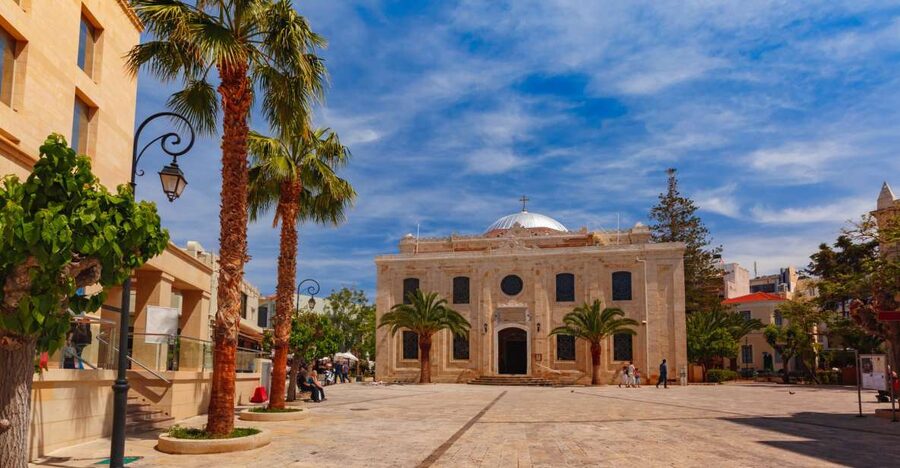
This experience is a great fit if you:
- Want independence, not a schedule or a group pace
- Enjoy history explained through stories while you walk
- Prefer low-cost, phone-based travel planning
- Are comfortable using your own device, plus headphones and a charged battery
It’s less ideal if you:
- Need a live guide to answer questions or adapt to your interests
- Want deep architecture lessons at every stop
- Dislike using apps for navigation, even briefly
Wheelchair access is listed, and since it’s a city tour, the route is designed with wheelchair access in mind. Still, some points of interest might not be fully wheelchair accessible, so plan for that uncertainty.
Should you book the Heraklion mobile audio tour?
If you want an affordable way to understand the city’s landmarks, starting right at Koules Fortress, then this is an easy yes. The offline narration and maps are exactly the kind of practical help you want when you’re walking in heat, crowds, or simply without a long attention span for guidebooks.
The only reason to hesitate is expectation-setting. This is not a live-guided experience, and your phone plays a bigger role than a traditional guided walk. If you’re okay with that trade, you’ll likely enjoy the mix of recognizable sights and the heavier story of Ottoman conquest after a 25-year siege, told in a way that helps you look at Heraklion with new eyes.
If you want, I can also suggest a simple half-day plan around Koules and the Lions fountain so you can time your audio segments with breaks and photo stops.
FAQ
Where does the self-guided tour start?
It starts at the entrance of Koules, located at the old harbor of Heraklion.
Do I need internet during the tour?
You should not, because the tour includes offline content (text, audio narration, and maps). This is meant to help you avoid roaming charges.
What is included in the price?
Included is the self-guided audio tour on your smartphone, an activation link to access it, and offline content (text, audio narration, and maps).
Are museum or church entrance fees included?
No. Entrance tickets to museums, archaeological sites, or churches are not included.
Do I get a live guide?
No. This is a downloadable self-guided tour, and no live guide accompanies you.
How long is the tour available after I activate it?
It is valid for 365 days from the first activation.
What languages are available?
The audio guide is available in English, German, French, Spanish, and Italian.
Is the tour wheelchair accessible?
It is listed as wheelchair accessible as a city tour, but some points of interest might not be wheelchair accessible.
Recently Published: Heraklion Tours
- Half-Day Private Tour in Two Wineries and Archanes from Heraklion★ 5.0 · 1 review
- Minoan Crete: Knossos Palace & Heraklion Museum with Winery★ 5.0 · 1 review
- Heraklion Museum Ticket and City Audio Tour★ 5.0 · 1 review
- Knossos Palace Wine Raki & Olive Oil tasting in Heraklion★ 5.0 · 1 review
- KNOSSOS PALACE private tour ( with Transfer from Heraklion Prefecture )★ 5.0 · 1 review
- Makrigialos-Ierapetra: Jeep Safari 4×4 Off Road Tour★ 5.0 · 1 review
- From Heraklion: Private Sailing Trip with our Hanse 470★ 5.0 · 1 review
- Private Transfer from Heraklion Airport to Elounda★ 5.0 · 1 review
Audio Tours, compared.

Knossos Palace Entry Ticket with Optional Audio Guide
Read our review →
Knossos Palace and Museum E-Tickets with Audio Guides
Read our review →
Heraklion Archaeological Museum Ticket & Audio Guide
Read our review →
Full or Half-Day Trip to Chania with Audio Guide
Read our review →
Palace of Knossos 3D Virtual Audio Tour by Tablet
Read our review →Knossos Palace and Museum E-Tickets with Audio Guides
Read our review →