Reviewed · AUDIO TOURS
Heraklion Self-Guided Audio Tour
Heraklion gets talkative with audio stories. This low-cost self-guided audio tour connects nine major stops across the city, from the Venetian harbor to Minoan treasures, plus churches and museums tied to Crete’s faith and resistance. I like that it feels like you can zoom in on the details without hiring a guide or sticking to someone else’s schedule.
I especially like two things. First, the narration is built around specific places, not generic facts, so you get stories tied to the secret tunnels, prison walls, crypts, and restoration finds you will actually see in front of you. Second, you get control: start where you want, choose your order, and spend as long as you like at each stop.
One drawback to consider is that this is not a GPS tour. You will be doing some light navigation, and you should plan to use your phone browser and internet to access the SoundCloud playlist and the Google My Maps guide.
In This Review
- Key highlights worth planning around
- Planning Your Heraklion Route With a SoundCloud Playlist and Headphone Map
- Venetian Port to Koules Fortress: Maritime Power in 20 Minutes a Stop
- Minoan Museum and St. Titus Church: When Ancient Art Meets Living Faith
- Loggia and Morosini Fountain: Venice’s Power Graphics in Stone
- St. Minas Cathedral and Crete’s Resistance Museum: Faith, Underground Rooms, and War Memories
- Natural History Museum of Crete: Evolution, Endemics, and Earth-Quake Time
- Should You Book This Heraklion Self-Guided Audio Tour?
- FAQ
- How long does the Heraklion Self-Guided Audio Tour take?
- Is this a GPS-guided tour?
- What language is the audio guide available in?
- What is the meeting point and how do I end the tour?
- Do I need tickets for all stops?
- How do I access the audio guide?
- Do the links expire?
- Is the tour refundable if I cancel?
- What should I bring to use the audio guides?
Key highlights worth planning around
- Venetian Port stories tied to 800+ years of maritime trade and underground passages
- Koules Fortress framed by Ottoman conquest, prison history, and military life
- Heraklion Archaeological Museum with 5,000 years of Minoan civilization and big questions (like the palace collapse)
- St. Titus Church and its long Ottoman-era chapter as a mosque, plus frescoes found during restoration
- Morosini Fountain (Lion’s Fountain) with symbol-heavy lions and the water engineering behind the aqueduct system
- Two different endings: a Cretan natural history museum and a resistance-focused museum
Go at your own pace, map in hand
- Crete: Knossos Palace Entry Ticket with Optional Audio Guide
★ 3.9 · 2,251 reviews - Crete: Knossos Palace and Museum E-Tickets with Audio Guides
★ 4.0 · 828 reviews - Heraklion Archaeological Museum Ticket & Audio Guide
★ 4.3 · 396 reviews - Heraklion: Palace of Knossos 3D Virtual Audio Tour by Tablet
★ 4.0 · 230 reviews - E-Ticket & Audio Tour for Knossos Palace: Unlock Minoan Majesty
★ 3.0 · 58 reviews
Planning Your Heraklion Route With a SoundCloud Playlist and Headphone Map
This tour is built for freedom. It is self-guided, not GPS-guided, which means the route is yours. You can do the whole thing in one long afternoon, or stretch it into two days if your feet need a break. The tour duration is listed as about 3 to 9 hours, so the time depends on how many stops you actually choose and how long you linger.
Here is how the audio works in real life. You get private access links before you start, and those links stay valid for up to 6 days. One link opens a SoundCloud playlist that covers all nine attractions in a suggested order. The second link opens an interactive Google My Maps map in your web browser. On that map, each attraction shows up with a headphone icon, and tapping an attraction gives you a clickable link to the audio for that specific stop.
That setup matters, because it changes how you experience the city. Instead of rushing between “must-see” icons, you can slow down and let the story lead. If you look at the map and a particular topic grabs you, you can jump to that stop first. If you are tired, you can skip one museum and still feel like the tour worked.
Practical tip: bring headphones and make sure your phone is charged. Also, be ready for basic city walking. Heraklion has winding streets, and you will connect sights mostly on foot. The tour is near public transportation, but the experience is designed for exploring downtown.
Venetian Port to Koules Fortress: Maritime Power in 20 Minutes a Stop
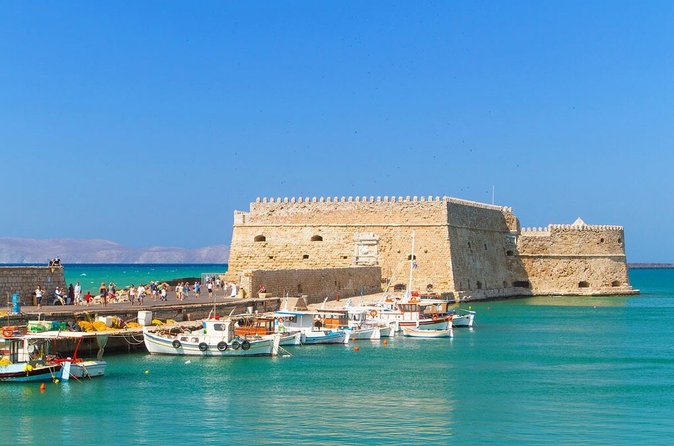
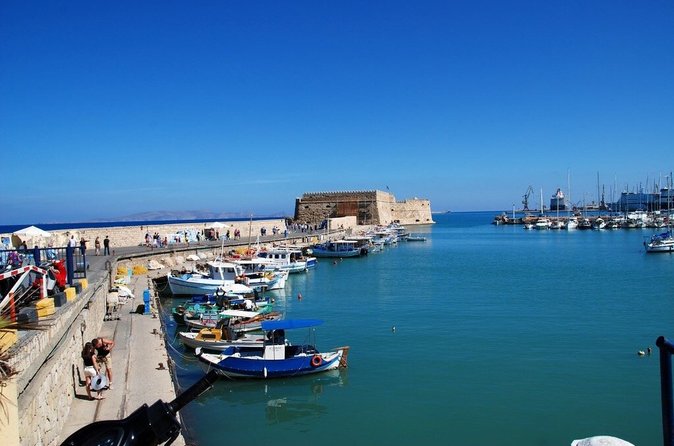
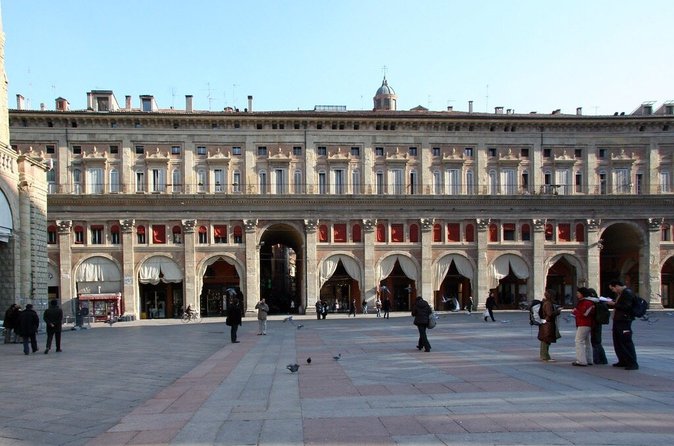
Start at the Heraklion Venetian Port, and the audio quickly sets the tone. This is where the harbor’s “East meets West” reputation makes sense. The narration frames the port as a long-running meeting point, welcoming ships for 800+ years, with merchants moving goods like spices and fine textiles. Even if you already know the broad Venetian story, the audio adds a sharper angle by tying it to the actual waterfront you are standing in.
What I like here is the way the guide turns the harbor into a puzzle. You are not just hearing dates. You are learning about strategic thinking and hidden space. The narration points you toward secret tunnels beneath the port, used by smugglers and revolutionaries. That gives you a reason to look around more carefully. You may not see every tunnel entrance, but the story changes how you read the site.
The audio also broadens the timeline. You hear how the area shifted from a Byzantine fishing village to Venice’s major Eastern outpost. Then you get maritime drama, including pirate raids and diplomatic intrigue, plus the day-to-day reality of dock workers. If your goal is to understand how cities work through trade and labor, this stop delivers.
From the port, go to Castello del Molo (Koules), the fortress that once struck fear into Ottoman admirals and became a symbol of Venetian power in the Eastern Mediterranean. The audio here is darker, more intense, and very visual. It emphasizes the fortress’s prison history, including political dissidents who carved messages into stone walls you can still see. It also spotlights defense design: the fortress’s massive walls and the siege tactics used during the Ottoman conquest of 1669.
Then the narration adds a human layer. You get a sense of daily life for Venetian soldiers stationed here, including what they might have feared and hoped for. And yes, there is also a legend of a ghost said to roam the battlements on moonless nights. Treat that part as folklore, but it is a fun way to bring atmosphere into a place that can otherwise feel like only stone and history.
Timing note: both the port stop and the fortress stop are listed as about 20 minutes for the audio experience. In practice, you can extend if you want, especially at Koules, where viewpoints and stonework reward extra time.
Minoan Museum and St. Titus Church: When Ancient Art Meets Living Faith
Next up is the Heraklion Archaeological Museum, which is a big turning point in the tour. If you’ve been following Venetian and fortress themes, this stop swings you back thousands of years into Minoan civilization. The audio frames it as a journey through around 5,000 years, and it is not just a list of objects. The guide tries to connect artifacts to why people mattered and what they believed.
One reason this stop works well in audio form is that it tackles mystery. The narration discusses the Minoans’ rise, but also why the palace system collapsed. It also highlights recent archaeological discoveries that challenge older stories about Bronze Age Crete. Even if you are not an archaeology expert, those points help you understand why museum exhibits feel like clues, not textbook answers.
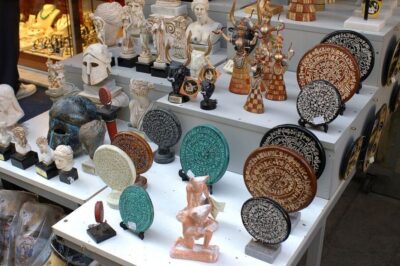
The audio also points you toward recognizable symbols and puzzles. It mentions the famous snake goddess figurines and the Phaistos Disc, which remains undeciphered. Those details are useful because they tell you where to look and what to pay attention to, instead of wandering room to room with no thread.
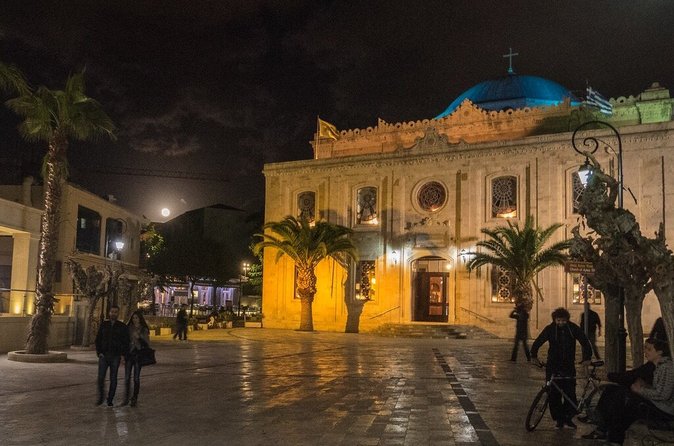
After the museum, head to Agios Titos Church, and you get the tour’s most explicitly faith-and-power story. This church is presented as a spiritual heart of Heraklion, tied to Saint Titus, Saint Paul’s companion. The audio focuses on Christianity taking root in Crete through early missionary work, then shifts to the hard part of the timeline: the church surviving Ottoman rule.
This is where the narration really adds depth. It says the church served as a mosque for nearly three centuries, preserving Christian relics in secret hiding places. Those hiding places are described as undiscovered until the 20th century. That kind of story makes a church feel less like a static monument and more like a survivor.
You also get a restoration angle. The audio mentions hidden Byzantine frescoes uncovered during restoration work, plus the mix of architectural styles that reflect Crete’s complex religious history. If you want a tour that respects both art and lived history, this is a strong middle stop.
Loggia and Morosini Fountain: Venice’s Power Graphics in Stone
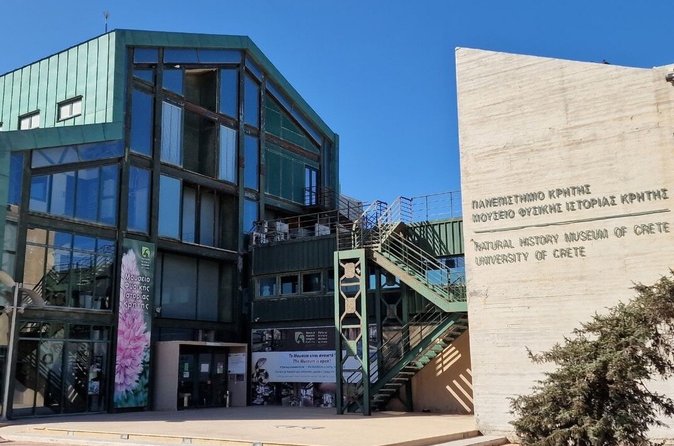
Once you are back outside, the tour shifts into civic and commercial storytelling with two standout city-center sights: the Loggia and Morosini Fountain (Lion’s Fountain).
The Loggia is described as the nerve center of Venetian commercial power, where merchant princes could influence trade routes. The audio encourages you to look closely at carvings and stonework, explaining symbolism built into columns and arches. That matters because otherwise you might just glance at it as architecture and move on. With audio, you start reading the building like a message board.
The narration also adds political and social texture. It mentions secret meetings in upper chambers, including revolutionary plans tied to Cretan independence. There is also drama from the “business” side, including bankruptcy scandals and love affairs among the elite. That may sound like gossip, but it helps you imagine how power actually operated. Trade, politics, and personal alliances all mix.
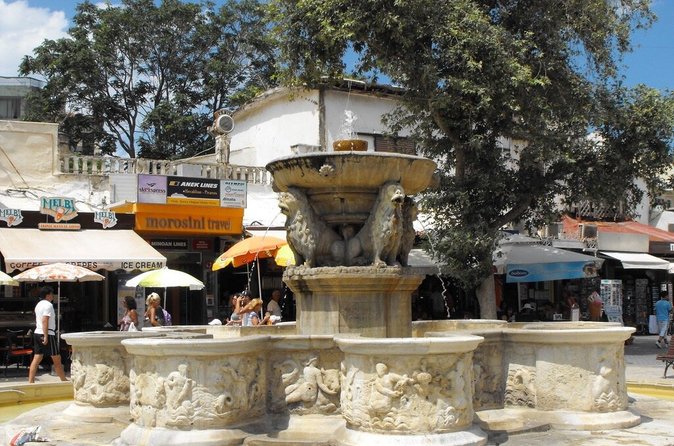
Then walk to Morosini Fountain, the Lion’s Fountain with four major lions guarding the central square for over 400 years. The audio does not treat the lions as decoration. It frames them as symbol-bearing figures tied to Venetian political ambitions. It also includes a restoration find: hidden chambers beneath the fountain that may have served as secret meeting places for Venetian nobles.
On top of that, the guide explains the practical engineering that made the fountain meaningful. It says fresh water was brought from Mount Juktas via an aqueduct system. If you have ever wondered why fountains matter so much in old cities, this is your answer. Water systems were power systems.
And if you like a story element, the audio also includes romantic legends tied to the fountain, involving a Venetian nobleman, a local Greek woman, and a betrayal-and-revenge thread. Again, treat legends as legends, but they make the square feel like a place where real people once argued and loved and feared.
St. Minas Cathedral and Crete’s Resistance Museum: Faith, Underground Rooms, and War Memories
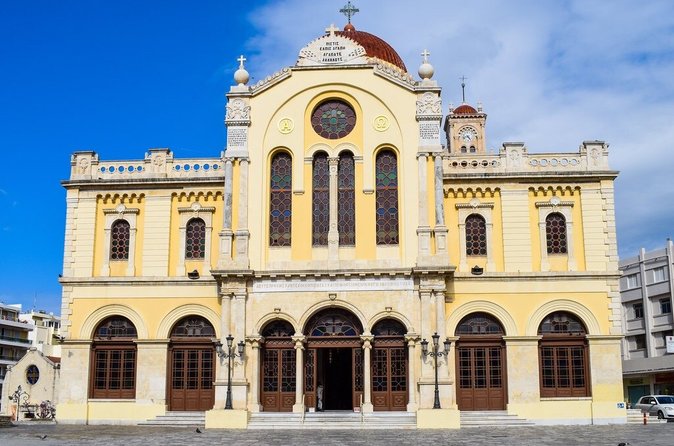
Your next big stop is the Cathedral of St. Minas, described as Crete’s largest Orthodox cathedral. The audio builds the cathedral as a culmination of early Christian survival and later national memory. It says the cathedral was built on a site where early Christians secretly worshipped during Roman persecution.
From there, the narration shifts again, this time into the post-Ottoman era and the people who funded the church. The guide attributes its rise to emigrant Cretans who never forgot their homeland. So you get a map of influence, not just a single building story.
The audio also points out symbolism in the iconography, including Byzantine icons described as recently authenticated. It then moves into the physical underworld: underground crypts used to house remains of resistance fighters. The narration also links the cathedral to a secret role during World War II.
If you want one lesson from this part of the tour, it is that sacred buildings often double as storage, shelter, and identity. This is not just about what you see above ground. It is about what was protected underground, and who was able to carry faith through control by outside powers.
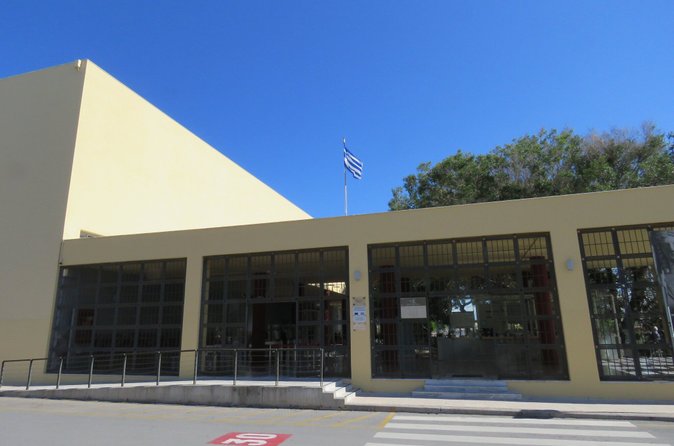
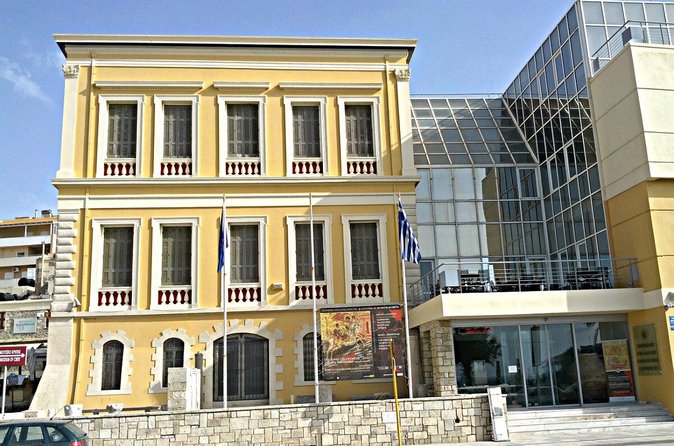
To close the historical arc, go to the Historical Museum of Crete. Here the audio emphasizes revolution, resistance, and resilience through artifacts. It tells a story of a secret network of caves and hideouts used by freedom fighters during the 1821 Greek Revolution, including mentions of weapons and coded messages described as recently discovered.
The narration also describes a transatlantic support network, with Cretan emigrants to America funding liberation efforts. That detail is easy to miss in shorter city visits, but it makes Crete’s modern story feel bigger than the island itself.
The audio does not shy away from danger. It mentions assassination attempts and diplomatic scandals that nearly changed the course of Mediterranean history. If you want more than gentle sightseeing, this museum delivers a sharper sense of stakes.
A guide in your ear, hands free

Natural History Museum of Crete: Evolution, Endemics, and Earth-Quake Time
The last stop is the Natural History Museum of Crete, and it gives your brain a breather from people-centered history. The audio frames Crete as an evolutionary laboratory, where species evolved in isolation, creating an ecosystem found nowhere else on Earth.
You will also hear how geology shaped settlement patterns, with catastrophic earthquakes described as affecting where and how humans lived. That is a practical angle, because it connects natural forces to the human timeline rather than treating nature as a separate planet.
The narration also highlights endemics, including the Cretan wild goat, which inspired ancient myths about magical creatures. That is a good bridge from myth to science. You start seeing how stories can be rooted in real creatures and local landscapes, even if the myths grow wings.
Finally, the audio mentions recent paleontological discoveries, including evidence described as ancient tsunamis and volcanic eruptions. The museum’s big idea is how Crete’s unique environment influenced everything from Minoan agriculture to modern conservation efforts. Even if you only have a short time, you can walk out feeling like you understand why the island’s life forms are different.
Timing note: this stop is marked as 20 minutes for the audio experience. If you enjoy science displays, you might extend beyond that. If you are museum-weary, this is a good place to stop, because the tour has already given you a full set of themes.
Should You Book This Heraklion Self-Guided Audio Tour?
If you like history that comes with place-based details, I think this is an easy yes for many visitors. The audio is built to explain what you are looking at: maritime strategy at the port, prison messages at Koules, Minoan puzzles at the museum, frescoes at St. Titus, and symbol-rich civic landmarks like the Loggia and Lion’s Fountain. At $6 per person, it is strong value when you want structure but still crave flexibility.
Book it if:
- You want an English audio plan without locking yourself into a group schedule
- You enjoy short, story-driven stops where each place has a theme
- You want to mix big ancient history with Byzantine faith and modern resistance narratives
Consider skipping or mixing in only the parts you care about if:
- You hate navigating without a GPS device and prefer turn-by-turn guidance
- You would rather have one in-person guide answering questions on the fly
My practical takeaway: treat this like a smart audio walking menu. Pick the stops that match your curiosity, then let the narration give you a better read on Heraklion than a quick photo run ever will.
FAQ
How long does the Heraklion Self-Guided Audio Tour take?
The experience is listed as 3 to 9 hours (approx.), depending on how many attractions you visit and how long you spend at each stop.
Is this a GPS-guided tour?
No. It is a self-guided audio tour and not a GPS-guided tour. You decide your starting point, order of attractions, and ending point.
What language is the audio guide available in?
The audio guide is offered in English.
What is the meeting point and how do I end the tour?
The start and end are both in Heraklion, Greece. Since it is self-guided, you can finish wherever you like based on your schedule.
Do I need tickets for all stops?
Entry fees are not included where required. Some attractions are marked as having admission ticket not included, and some are marked as admission ticket free.
How do I access the audio guide?
After booking, you receive private access links through the booking platform messaging system. One link opens a SoundCloud playlist for all attractions, and the other opens an interactive Google My Maps itinerary map.
Do the links expire?
Your private access links are valid for up to 6 days.
Is the tour refundable if I cancel?
No. This experience is non-refundable and cannot be changed for any reason.
What should I bring to use the audio guides?
Bring headphones/earphones, a fully charged smartphone, and internet access.
Recently Published: Crete Tours
- Creta Private Transfer from Heraklion (HER) Airport to Agia Pelagia★ 5.0 · 1 review
- Creta Private Transfer from Heraklion (HER) Airport to Stalís★ 5.0 · 1 review
- VISIT THE MOST FAMOUS PAINTER “EL GRECO” TOUR★ 5.0 · 1 review
- Crete: Balos Beach Viewpoint and Falassrna Beach Day Trip★ 5.0 · 1 review
- Samaria Gorge from Chania with Professional Hiking Guide★ 5.0 · 1 review
- Rethymno Bali & Panormo : Quad Safari & visit Cave 57km 4hours★ 5.0 · 1 review
- Unique wine tasting of organic Cretan wines★ 5.0 · 1 review
- Private Van Tour from Chania to Monasteries★ 5.0 · 1 review
Audio Tours, compared.
Knossos Palace Entry Ticket with Optional Audio Guide
Read our review →
Knossos Palace and Museum E-Tickets with Audio Guides
Read our review →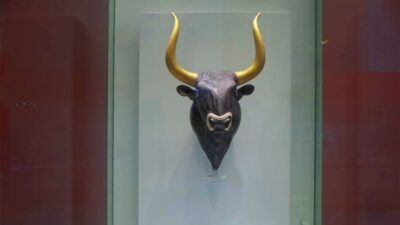
Heraklion Archaeological Museum Ticket & Audio Guide
Read our review →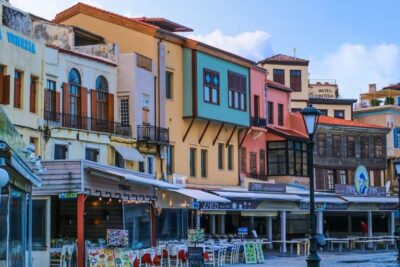
Full or Half-Day Trip to Chania with Audio Guide
Read our review →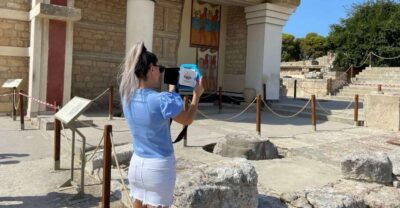
Palace of Knossos 3D Virtual Audio Tour by Tablet
Read our review →Knossos Palace and Museum E-Tickets with Audio Guides
Read our review →