
Reviewed · CRETE
The Cretan Way of Life at the mountains of Rethymno (Mylopotamos)
Crete feels real fast when goats and honey are involved. This half-day to full-day experience in the Rethymno mountains (Mylopotamos) mixes a monastery visit with hands-on rural life, then finishes in the village of Apladiana with an actual home-cooked meal. You get pickup in the Rethymno area, so you skip the stress of self-driving on mountain roads.
What I like most is the small group size. With a maximum of six people, you can ask questions and actually talk with Mr Andreas the shepherd and Ms Eleni the beekeeper, not just listen from the back of a bus. I also love that the day is built around food that comes from work, not restaurant sampling. Expect raki, simple Cretan appetizers, thyme honey, and a lunch in the Apladiana mountain home.
One thing to consider: this is a mountain day with a moderate fitness level requirement, and it depends on good weather. If you do best with minimal walking or you hate being outdoors in changing conditions, plan accordingly.
In This Review
- Key highlights in plain terms
- A small-group day in the Rethymno mountains (Mylopotamos)
- Pickup, timing, and how the schedule actually flows
- Stop 1: Monastery of the Holy Cross Vosakos, calm plus local tradition
- Stop 2: Milopotamos with Mr Andreas the shepherd, raki and a herd of 100 goats
- Stop 3: Thyme honey with Ms Eleni, the hands-on beekeeping demo
- Stop 4: Apladiana lunch in a mountain home, wine and pitakia with honey
- Stop 5: Orange trees in season, village customs, and how weddings work
- Price and value: what $204.26 buys you in the mountains
- Who this tour is best for
- What to bring for a smooth mountain day
- Should you book the Cretan Way of Life tour in Mylopotamos?
- FAQ
- How long is the Cretan Way of Life tour in Mylopotamos?
- How many people are in the group?
- Is hotel pickup included?
- What stops are included during the day?
- Is food included, and is there a vegetarian option?
- What should I know about accessibility or physical requirements?
- What is the cancellation policy?
Key highlights in plain terms
- Max 6 people for real conversations, not a crowd
- Monastery stop at Vosakos with a traditional welcome (including loukoumi)
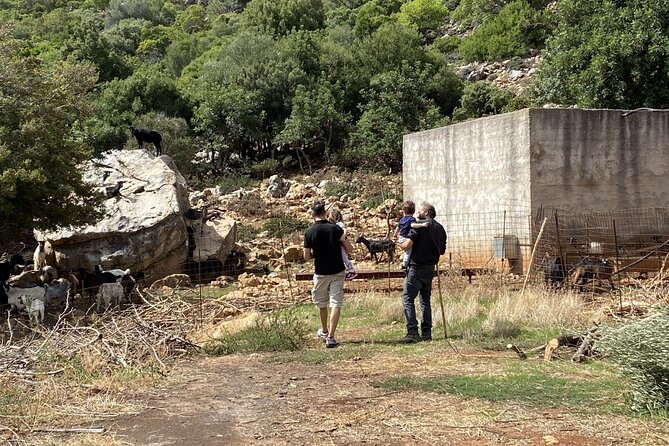
- Goat herding moment: watch a herd of 100 goats move freely toward the hills
- Thyme honey, explained hands-on by Ms Eleni, with honey extraction demonstrated
- Home lunch in Apladiana with wine and dessert like sweet cheese pies (pitakia) with honey
- Orange picking in season from the orange trees near the village
A handful of other ways to spend the day in Crete.
- Crete: Day Trip to Agios Nikolaos and Spinalonga Island
★ 4.6 · 4,416 reviews - Agios Nikolaos: Boat Trip to Spinalonga with Swim Stop
★ 4.4 · 3,031 reviews - Crete: Knossos Palace Entry Ticket with Optional Audio Guide
★ 3.9 · 2,251 reviews - From Chania: Day Trip to Elafonisi Island Pink Sand Beach
★ 4.5 · 2,014 reviews - Chania/Rethymno: Balos & Gramvousa With Pickup & Boat Ticket
★ 4.3 · 1,703 reviews
A small-group day in the Rethymno mountains (Mylopotamos)
This tour is built for people who want more than photo stops. The route concentrates on one slice of Crete, the mountain country around Rethymno, and it shows you daily rhythms instead of big-ticket attractions.
The size matters. When the group is limited to six, the schedule feels like a guided visit between stops, not a rushed itinerary. That makes the rural experiences easier to understand, because you’re not stuck listening over someone else’s questions.
The day’s theme is simple: watch how people farm, keep animals, and turn plants into food. Then you sit down and eat what you learned about.
Pickup, timing, and how the schedule actually flows
You start at 9:00 am from the meeting point on Eleftheríou Venizélou 39 in Rethymno, and the activity ends back there. If your hotel is in the district of Rethymno, you get private pickup and drop-off, with pickup time depending on where you’re staying.
Duration runs about 6 to 8 hours, so it’s long enough to feel like a full experience, but not so long that it turns into a travel marathon. Since the day includes meals and multiple “hands-on” moments, you’ll want to treat it like the core event of your day, not something you fit in casually.
A practical tip: since it’s a mountain route, dress in layers. Even if the morning starts mild, the itinerary includes outdoor time around farms and village areas, and those can shift with weather.
Stop 1: Monastery of the Holy Cross Vosakos, calm plus local tradition
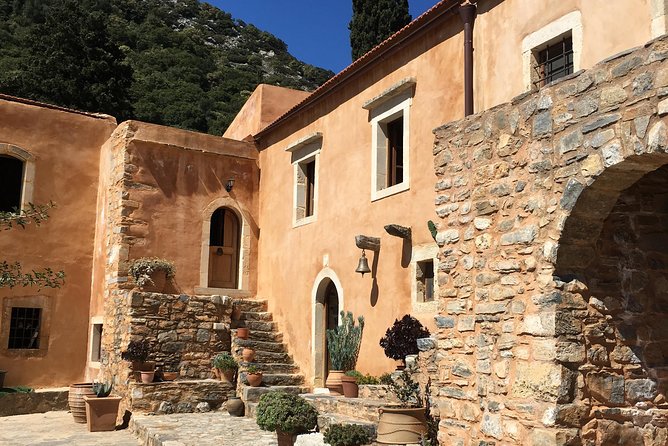
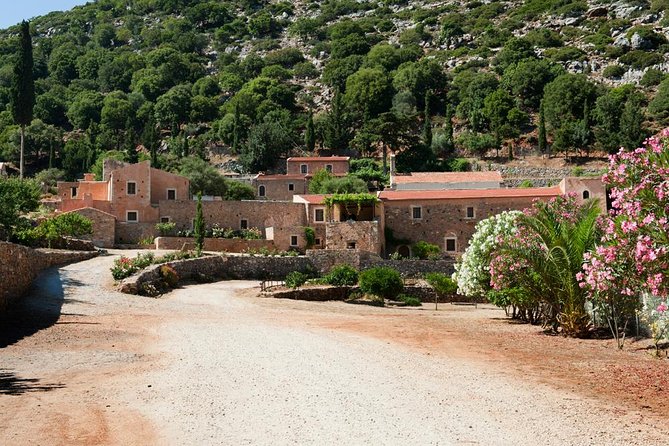
The day begins with a drive of about one hour from central Rethymno to the Vosakos area. Here you visit the Monastery of the Holy Cross (Vosakos), described as stone-built and set in a lush, flower-filled setting with aromatic herbs.
At the monastery, the tone is quiet and personal. You’re welcomed by a nun who is said to be the one remaining nun at the monastery, and you also get a loukoumi treat. You’ll have time to look around at the traditional architecture and soak in the calmer atmosphere before learning about the monastery’s history.
Why this stop works for you: it gives your brain a reset before you head into farm life. After the monastery, goat herding and beekeeping can feel more meaningful, because you’re seeing Crete’s spiritual and agricultural sides of the same rural culture.
Possible catch: monasteries usually mean slower walking and indoor time. If you’re someone who needs constant movement, you might find the calm pace a bit slow, but that’s also part of why people love this tour.
Stop 2: Milopotamos with Mr Andreas the shepherd, raki and a herd of 100 goats
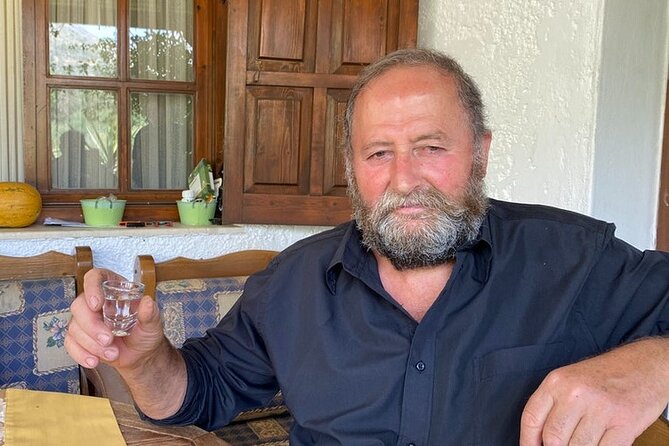
Next you go to Milopotamos, starting at the entrance where three huge trees form a natural entranceway into the property. Mr Andreas is there to greet you, and you learn what a day in his life looks like: routine, daily habits, and the milk production process while caring for the goats.
This stop includes tasting. You’ll try typical Cretan appetizers such as cheese and olives, plus raki. The food here feels like an extension of the farm work, not a separate event.
Then comes the moment most people remember: you’ll watch a herd of 100 goats flow freely out of the stockyard and dash toward the high hills. It’s fast, physical, and very “real Crete,” because you’re not watching an animal show. You’re watching animals do what they do when the timing is right.
How to get the most out of it: stand where you can see the movement clearly, and keep your phone ready but not glued to it. The action happens quickly, and you’ll enjoy it more if you watch with your eyes first.
One consideration: it’s an active rural moment. If you’re sensitive to noise, dust, or close-to-animal situations, mentally prepare for that.
Stop 3: Thyme honey with Ms Eleni, the hands-on beekeeping demo
After the goats, you’ll move into the next Milopotamos experience. Depending on the period, you may visit a different scenic spot where flowers bloom and release their aromas, or you may stay on the same location. Either way, the point is the beekeeping lesson.
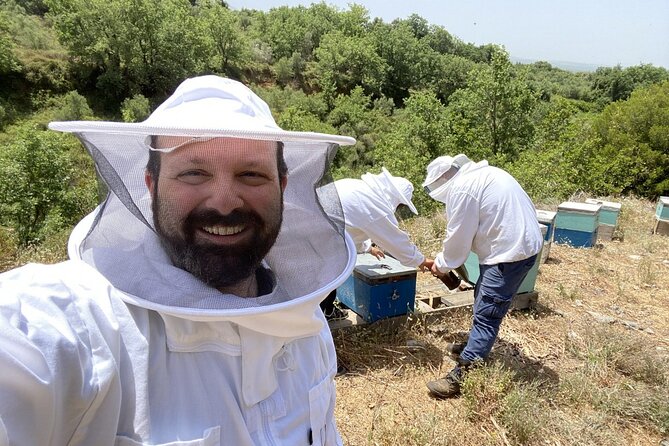
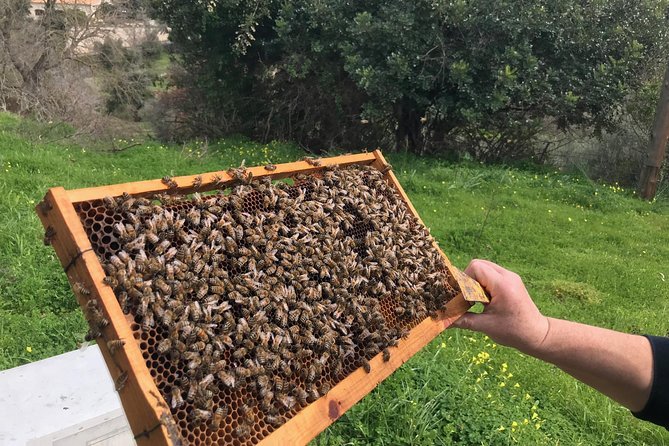
This is where Ms Eleni, the traditional Cretan woman who is also Mr Andreas’s wife, takes the lead. She demonstrates her mastery of beekeeping, a skill described as passing from generation to generation. You’ll wear beekeeping uniforms for the demonstration, and the tour notes that Ms Eleni’s experience is so close to her bees that she is comfortable in a more direct way than you might expect.
You’ll learn how thyme honey is produced, including the honey extraction procedure with her bare hands. It’s very specific to this place, because thyme is tied to the local plants and the way the countryside supports beekeeping.
Why you’ll likely enjoy this stop: honey here is not a product that arrives in a jar. You’re seeing the process behind it, so when you taste something later, you understand what you’re tasting.
A practical note: beekeeping activities are usually best enjoyed with calm attention. Don’t rush questions, and listen for the practical explanations, not just the story.
Not ready to stop exploring Crete? Try one of these.


Stop 4: Apladiana lunch in a mountain home, wine and pitakia with honey
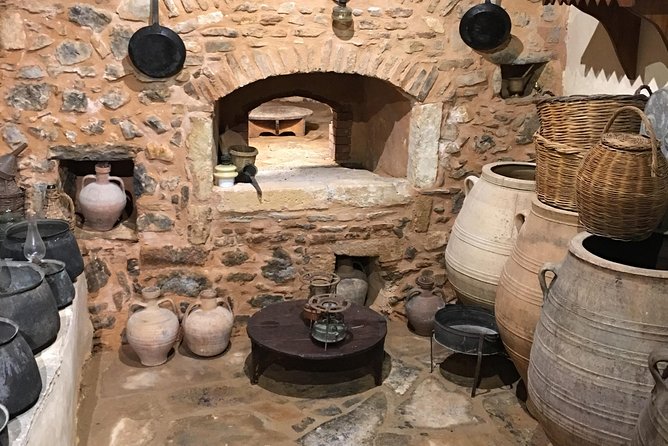
The day’s feel changes again at Apladiana, which is described as one of the most ancient and traditional villages that still follows Cretan customs. You’ll be guided to Mr Andreas and Ms Eleni’s house, high up in the mountain with views over the village.
Inside and around the home, the atmosphere is all about scent and hospitality. The tour describes the aromas of flowers, trees, and herb bushes around the house, and then the meal itself.
You’ll be seated while Mr Andreas opens a bottle of wine and offers a glass. Ms Eleni finishes preparing the lunch specifically for you. The meal uses local organic products, and then dessert is served, such as sweet cheese pies (pitakia) topped with honey.
Why this is the centerpiece for most people: it turns your earlier learning into something you can taste immediately. After honey extraction and farm routines, the lunch feels connected, not random.
If you’re vegetarian: a vegetarian option is available, but you need to request it at booking. If you have other dietary needs, you should also raise them when you book, since the plan is built around home cooking.
Stop 5: Orange trees in season, village customs, and how weddings work
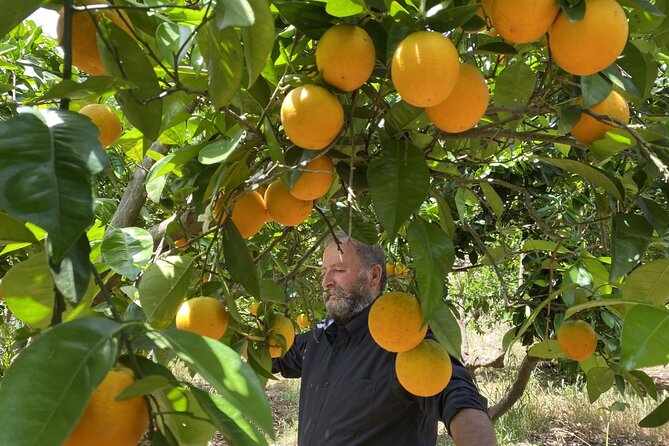
After lunch, you walk into the center of Apladiana to continue learning about local customs. On the way, you cross a field full of orange trees, and you can stop to smell the sweetness of the citrus air.
When timing allows, the guide cuts a few oranges by hand and offers them to you. The key phrase here is in season. If oranges are not in peak season during your visit, the timing might affect what fruit you can sample.
Once you reach the village square, the day ends with discussion of Cretan customs, including where and how famous Cretan weddings take place in traditional villages.
Why this stop matters even if you’re not there for weddings: learning how communities organize celebrations tells you more about culture than a museum panel ever will. It’s the social fabric view of Crete, tied to a real location.
Consideration: Apladiana is an older village, so expect uneven ground at times.
Price and value: what $204.26 buys you in the mountains
At $204.26 per person, this tour is not a bargain-basement option. But it also isn’t built like a big commercial bus day, and that is part of the value.
Here’s what you’re paying for, based on what’s included in the experience:
- A small group, maximum six people
- Private pickup and drop-off in the Rethymno district
- Monastery admission at Vosakos
- Guided farm visits and tastings, including raki and local appetizers
- Beekeeping demonstration and thyme honey production learning
- A home-cooked lunch plus dessert in Apladiana
- Orange tasting when in season
When tours bundle meals and meaningful visits, the price often makes more sense than it looks at first glance. The best way to evaluate value here is to ask yourself if you want your day to include food and learning from working people, rather than only scenic stops.
If you’re the type who hates getting stuck driving and parking, the pickup alone can make this feel like good value because you get straight access to mountain areas.
Who this tour is best for
This is a strong match if you want:
- A small group day in the Rethymno mountains
- Real farm culture: goats, shepherd life, and beekeeping
- A home-cooked meal in Apladiana instead of a restaurant carousel
- More interaction with locals like Mr Andreas and Ms Eleni
It may be less ideal if you:
- Prefer cities and major monuments over rural life
- Need a very light walking day with minimal time outdoors
- Dislike animal-adjacent farm settings
It also helps if you enjoy travel days where food is part of the learning, because the tour is built around that idea.
What to bring for a smooth mountain day
The tour mentions moderate physical fitness and includes rural and village time. That means you should plan like it’s outdoors and on uneven ground at points.
Bring:
- Comfortable walking shoes
- A light jacket or layers (mountain weather can shift)
- Water, especially if you run warm in active farm areas
- Sun protection if the day is clear
- Your phone or small camera for the goats and village moments, but not to the exclusion of watching with your eyes
If you have a vegetarian diet, confirm the vegetarian option when you book.
Service animals are allowed, so if you travel with one, you can plan around that.
Should you book the Cretan Way of Life tour in Mylopotamos?
If you like your travel days to feel personal, practical, and connected to real work, I think this is an easy yes. The strongest reasons are the small group size, the hands-on thyme honey beekeeping, and the fact that lunch is served in a mountain home in Apladiana with dishes like pitakia topped with honey.
I would only hesitate if you’re very sensitive to outdoor time, moderate walking, or farm environments. Also, because the tour requires good weather, check the forecast close to your day.
Overall, this is one of those Crete experiences where you leave with more than photos. You leave with a clearer sense of how goats, thyme honey, citrus orchards, and village customs fit together.
FAQ
How long is the Cretan Way of Life tour in Mylopotamos?
It runs approximately 6 to 8 hours.
How many people are in the group?
The tour has a maximum of 6 travelers.
Is hotel pickup included?
Yes, private pick-up is offered at each client’s hotel in the district of Rethymno. Pickup time depends on your hotel.
What stops are included during the day?
You’ll visit the Monastery of the Holy Cross Vosakos, then experience farm life in Milopotamos with Mr Andreas and Ms Eleni (shepherd life, goats, and beekeeping), and finally visit Apladiana for lunch and village customs, including orange tasting when in season.
Is food included, and is there a vegetarian option?
Yes. The tour includes a home-cooked lunch and tasting items like raki and local appetizers, with dessert after lunch. A vegetarian option is available, and you should advise them at booking.
What should I know about accessibility or physical requirements?
The tour requires a moderate physical fitness level. Comfortable shoes are a smart idea because you’ll be moving around monasteries, farms, and a village.
What is the cancellation policy?
You can cancel for a full refund if you cancel at least 24 hours in advance. The experience also requires good weather, and if it’s canceled due to poor weather, you’ll be offered a different date or a full refund.
Recently Published: Crete Tours
- Creta Private Transfer from Heraklion (HER) Airport to Agia Pelagia★ 5.0 · 1 review
- Creta Private Transfer from Heraklion (HER) Airport to Stalís★ 5.0 · 1 review
- VISIT THE MOST FAMOUS PAINTER “EL GRECO” TOUR★ 5.0 · 1 review
- Crete: Balos Beach Viewpoint and Falassrna Beach Day Trip★ 5.0 · 1 review
- Samaria Gorge from Chania with Professional Hiking Guide★ 5.0 · 1 review
- Rethymno Bali & Panormo : Quad Safari & visit Cave 57km 4hours★ 5.0 · 1 review
- Unique wine tasting of organic Cretan wines★ 5.0 · 1 review
- Hersonissos: Private Sunset Catamaran Cruise, Snack & Drinks★ 5.0 · 1 review