Reviewed · TOURS
WWII – The Battle of Crete Day Tour
WWII changes shape when you stand on its ground. I love how this small-group minivan route strings together the Battle of Crete sites, and I love the guided explanations at each stop. One caution: the day moves quickly, and you may spend some time looking at maps and viewpoints instead of walking every stretch of battlefield terrain.
Pickup from selected hotels around Chania Region keeps things simple, and the start time at 9:00 am helps you make the most of daylight. You’ll also get snacks and bottled water, which is a lifesaver when you are bouncing between memorial ground and viewpoints.
The experience is offered in English, with local driver/escorts who bring the story down to real people, not just dates. Names that show up in prior guest experiences include Ioannis and Babis, and you will visit both the German Military Cemetery and the British Commonwealth cemetery.
In This Review
- Key things I’d focus on before you go
- Maleme To Souda Bay, a six-hour story you can actually follow
- Maleme, where the day begins and the campaign hits hard
- Tavronitis Bridge and the geography of movement
- The German Military Cemetery, where the day turns serious
- Souda Bay War Cemetery and the Commonwealth angle
- A private collector stop, the hands-on reminder
- Guides, English, and why the best days feel question-friendly
- Transport and comfort, because 6 hours is real time
- Price and value, what you actually get for $114.89
- What to bring so the day feels easy
- Who this Battle of Crete tour is best for
- Should you book this WWII Battle of Crete day trip?
- FAQ
- How long is the WWII Battle of Crete day tour?
- What time does the tour start, and where does it end?
- Is the tour offered in English?
- How many people are in the group?
- What stops are included during the day?
- Are entrance fees included?
- Does the tour include food or drinks?
- Do you get hotel pickup and drop-off?
- What happens if weather is bad or the minimum number of travelers is not met?
Key things I’d focus on before you go
- A tight 6-hour loop built around four WWII touchpoints, including Maleme and two major cemeteries
- Entrance fees included, so you can spend mental energy on the meaning of each site
- Hotel pickup and drop-off in the Chania Region, which saves you from rental car stress
- Max 15 travelers, so questions stay in the conversation, not in the air
- A private collector stop adds a hands-on angle to how the war looked and felt
A handful of other ways to spend the day in Crete.
- Crete: Day Trip to Agios Nikolaos and Spinalonga Island
★ 4.6 · 4,416 reviews - Agios Nikolaos: Boat Trip to Spinalonga with Swim Stop
★ 4.4 · 3,031 reviews - Crete: Knossos Palace Entry Ticket with Optional Audio Guide
★ 3.9 · 2,251 reviews - From Chania: Day Trip to Elafonisi Island Pink Sand Beach
★ 4.5 · 2,014 reviews - Chania/Rethymno: Balos & Gramvousa With Pickup & Boat Ticket
★ 4.3 · 1,703 reviews
Maleme To Souda Bay, a six-hour story you can actually follow
This is not a slow museum crawl. It is a day that uses the geography of Crete to explain how the 1941 invasion unfolded and why the aftermath still matters. The route is compact enough to keep you moving, but structured enough that you get the big picture instead of a scatter of monuments.
You start in the Maleme area and end back near your starting point. Along the way, you move between tactical-looking infrastructure sites and solemn cemetery ground, which makes the day feel like a timeline you can see.
Two things matter here for your enjoyment: pace and balance. If you want quiet reflection, the cemetery stops deliver it. If you want a step-by-step blow by blow account, go in ready for some viewpoints and map talk, not constant walking on the exact action line.
Maleme, where the day begins and the campaign hits hard
Maleme is where the tour starts, and it is a strong place to begin because it sets the tone fast. You get about 50 minutes here, which is enough time to orient yourself and understand why this area became so critical during the Battle of Crete.
What I like about starting at Maleme is that it gives you something concrete right away. Instead of beginning with general background, you are immediately placed near one of the key locations that shaped the early invasion momentum.
Practical note: plan for standing and short walks. Even when you are not doing long hikes, cemetery and memorial visits often involve slower footwork and more looking than you expect.
Tavronitis Bridge and the geography of movement
From Maleme you head toward Tavronitis Bridge. This stop is scheduled for about 40 minutes, and it is a chance to look at how infrastructure can matter in warfare.
A bridge is not just a bridge in this context. It is a chokepoint and a route, and your guide can connect the terrain and the movement of forces to what happened nearby. If you like maps, this is where map talk tends to make more sense because you can relate it to a real structure in front of you.
One more thing you’ll appreciate on a guided route like this: you get context you’d miss if you just pulled up to the bridge on your own. You are not just seeing a landmark. You’re seeing why the landmark mattered.
The German Military Cemetery, where the day turns serious
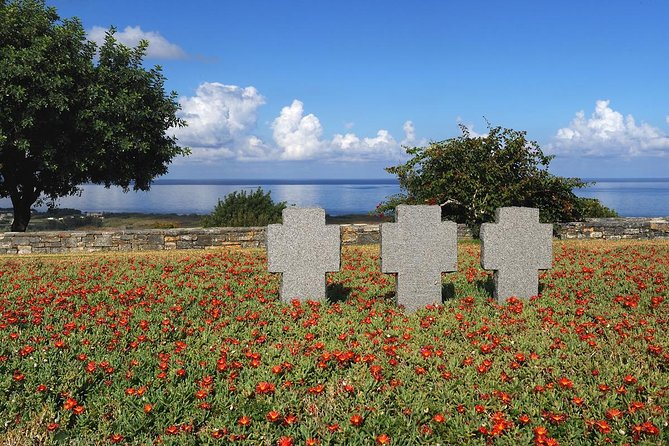
Then you shift to the German Military Cemetery. The visit is about 30 minutes, and it is one of those stops that feels intentionally paced.
Cemeteries force your attention to the human cost. In a tour setting, I find that the timing here matters because it gives you a breather between active-looking places and another memorial site. It also helps you notice details you would otherwise rush past.
If you are the type who reads every headstone like a detective, you’ll get time to do that without the pressure of “we’re late.” If you are not into details, you still come away with the sober weight of the site, and that shapes how you understand the rest of the day.
Souda Bay War Cemetery and the Commonwealth angle
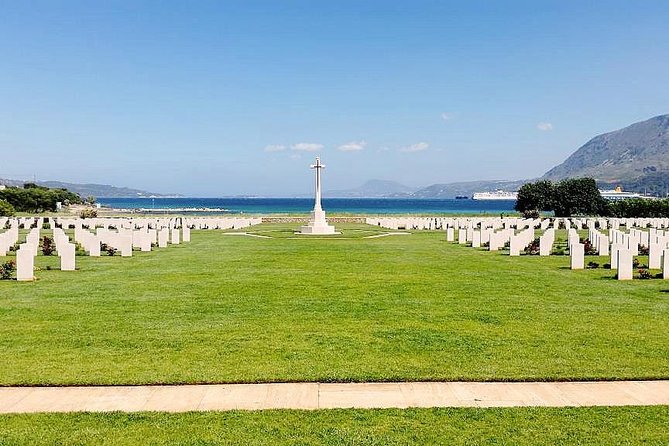
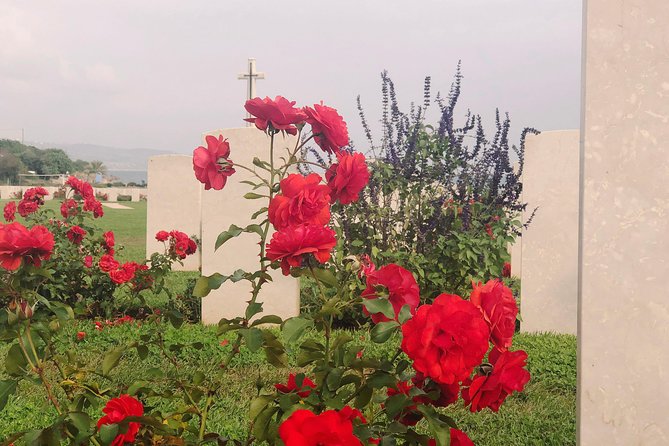
Next is Souda Bay War Cemetery, also about 30 minutes. This is the British Commonwealth cemetery stop, and it rounds out the story by putting allied losses and sacrifices into the same emotional frame as the German cemetery.
Souda Bay is an important setting in the Crete story because it connects the battle to evacuation and the wider Allied response. Even if you already know the basics, seeing a dedicated Commonwealth cemetery in the physical area helps the history click into place.
I also like that you are not stuck with only one perspective. When you visit both cemeteries, the Battle of Crete stops feeling like a single-sided narrative and becomes what it really was: a clash with lasting consequences for multiple communities.
Not ready to stop exploring Crete? Try one of these.
A private collector stop, the hands-on reminder
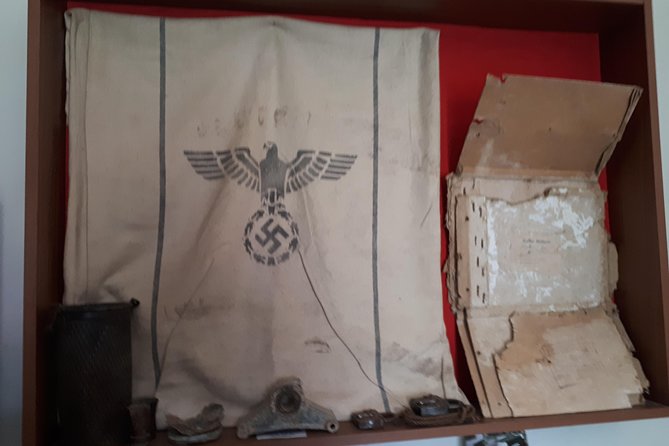
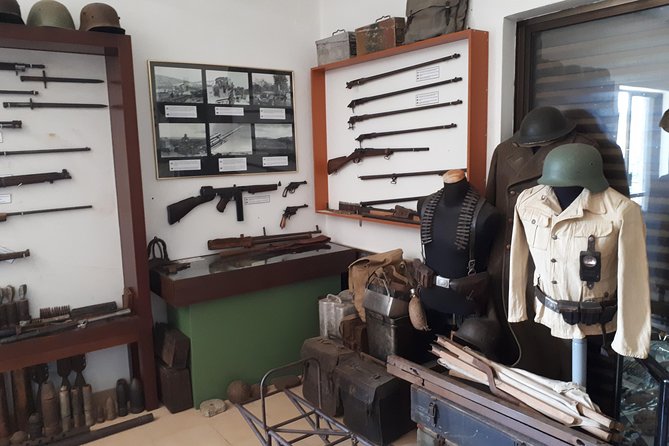
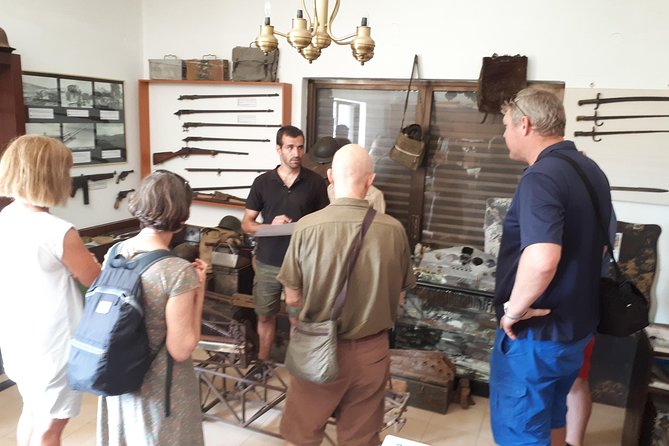
You may also include a stop at a private collector’s WWII memorabilia museum. Guests have called this out as a highlight, especially because it adds a personal, tactile dimension to a war you usually meet through books.
This is where the tour can feel less like history class and more like a guided walk through objects tied to the period. Prior guests have mentioned seeing items such as military artifacts connected to the Battle of Crete era, and the collector setting tends to turn questions into part of the experience.
I recommend going in with curiosity, not expectations. A private collection is not going to replace a major museum, but it can make the conflict feel less abstract. It also helps if you learn visually and through small details.
Guides, English, and why the best days feel question-friendly
The tour is offered in English, and it runs with a local driver and escort who handle the pacing and connect the dots between sites. A big part of the high recommendation rate comes from how guides tell the story: not only what happened, but how it affected Crete and the people caught in it.
In past experiences with the tour team, guides like Ioannis and Babis are noted for answering lots of questions and for explaining events with empathy rather than just facts. That matters because the Battle of Crete can be emotionally heavy. A good guide helps you hold both the tactical story and the human story at the same time.
Small group size is another practical advantage. With up to 15 travelers, you’re less likely to lose your chance to ask one more question before moving on. The day feels more personal, even though you are still seeing multiple sites.
Transport and comfort, because 6 hours is real time
You travel by air-conditioned minibus or minivan, and that is not a small detail in Crete. A lot of day tours collapse into discomfort when the heat rises. Here, the air-conditioning plus bottled water and snacks helps you keep your energy for the history.
The route is designed for a 6-hour (approx.) day. That means you should expect a packed schedule. It is ideal for people who want one focused historical outing without losing an entire vacation day to logistics.
Also, remember that you are moving between sites that often involve standing. Even if it is not a strenuous hike, you will still feel like you were on your feet most of the day.
Price and value, what you actually get for $114.89
At $114.89 per person, this is not a budget “just get me there” transfer. The value comes from the bundle: guided storytelling, transport, entrance fees, and the small comforts that stop you from spending the day solving practical problems.
Here’s what you are effectively paying for:
- Hotel pickup and drop-off from specific places in the Chania Region
- Entrance fees included, so you do not add costs on-site
- Snacks and bottled water, which keeps the schedule comfortable
- English-speaking local escort, which is the difference between seeing places and understanding them
If you are tempted to do it DIY, the main cost is not fuel. It’s time spent figuring out routing, reading up on each site, and paying entrance fees yourself. If you want the history connected in the moment, this format is a strong deal.
If you hate group tours and need total freedom, you might prefer independent driving. But if you like a guided flow and want to ask questions while you’re there, this price tends to make sense.
What to bring so the day feels easy
You do not need fancy gear, but a few basics help. Wear comfortable shoes because you’ll be walking and standing at memorials and viewpoints. Bring a hat or light sunscreen if the sun is out, since cemetery stops can mean long periods without shade.
Also, keep your camera ready. Cemeteries and WWII sites have plenty of angles, and you’ll want photos without rushing. If your guide is explaining context, jotting a couple of notes can help too, especially if you like remembering names and locations.
Lastly, this experience relies on good weather. If conditions are rough, you may be offered a different date or a full refund. That is worth factoring in your schedule planning.
Who this Battle of Crete tour is best for
This is a great fit if you fall into any of these groups:
- You want a WWII day trip that is structured, not chaotic
- You enjoy cemeteries and memorial sites and appreciate guided context
- You like asking questions and getting thoughtful answers
- You want to cover multiple key sites in one day without renting a car
It can also work well for history newcomers. The pace and multiple stops can feel like a crash course, but the guide support helps you keep the story straight.
One caution for hardcore WWII buffs: if you are looking for a full battlefield walk with every phase explained through step-by-step terrain movement, you might find some segments are done from viewpoints and map perspectives rather than getting down onto every contested field.
Should you book this WWII Battle of Crete day trip?
I think you should book it if you want one focused, guided day that ties together Maleme, major memorial ground, and the Commonwealth story around Souda Bay, all with hotel pickup and entrance fees handled. The small group size and English narration are the big quality markers here, and the private collector stop adds a memorable extra layer.
Skip it only if you need total freedom to linger in one exact spot for hours, or if you are specifically seeking long, on-foot battlefield roaming rather than guided viewpoints and a tight timeline.
If your priority is understanding the Battle of Crete as a connected story, this is one of the more efficient ways to do it from Chania.
FAQ
How long is the WWII Battle of Crete day tour?
The tour lasts about 6 hours.
What time does the tour start, and where does it end?
It starts at 9:00 am and ends back at the meeting point.
Is the tour offered in English?
Yes, it is offered in English.
How many people are in the group?
The maximum group size is 15 travelers.
What stops are included during the day?
You visit Maleme, Tavronitis Bridge, the German Military Cemetery, and Souda Bay War Cemetery. A stop at a private collector’s WWII memorabilia museum may also be part of the experience.
Are entrance fees included?
Yes, all entrance fees are included.
Does the tour include food or drinks?
Yes, it includes snacks and bottled water per person.
Do you get hotel pickup and drop-off?
Yes, pickup and drop-off are included from specific places in the Chania Region.
What happens if weather is bad or the minimum number of travelers is not met?
This experience requires good weather. If it is canceled due to poor weather, you will be offered a different date or a full refund. If the minimum number of travelers is not met, you will also be offered a different option or a full refund.
Recently Published: Crete Tours
- Creta Private Transfer from Heraklion (HER) Airport to Agia Pelagia★ 5.0 · 1 review
- Creta Private Transfer from Heraklion (HER) Airport to Stalís★ 5.0 · 1 review
- VISIT THE MOST FAMOUS PAINTER “EL GRECO” TOUR★ 5.0 · 1 review
- Crete: Balos Beach Viewpoint and Falassrna Beach Day Trip★ 5.0 · 1 review
- Samaria Gorge from Chania with Professional Hiking Guide★ 5.0 · 1 review
- Rethymno Bali & Panormo : Quad Safari & visit Cave 57km 4hours★ 5.0 · 1 review
- Unique wine tasting of organic Cretan wines★ 5.0 · 1 review
- Hersonissos: Private Sunset Catamaran Cruise, Snack & Drinks★ 5.0 · 1 review
Tours, compared.
Full-Day Samaria Gorge Trek Excursion & Guide
Read our review →
Knossos: Knossos Palace Skip-the-Line Guided Walking Tour
Read our review →
Finikia Horse Riding Tour with Lunch or Dinner
Read our review →
Full-Day Small-Group Tour in Crete with Zeus Cave Visit
Read our review →
5Hour Safari Tour in Crete(Heraklion)with Quad,Jeep,Buggy & Lunch
Read our review →