
Reviewed · HISTORICAL TOURS
Cretan Stories – A Journey Through History and Tradition
History, pottery, and caves in one day.
I like how this tour strings together Cretan history and local crafts without feeling like a lecture marathon. You’ll start at the Monastery of Arkadi, then move on to ancient Eleftherna, the pottery village of Margarites, and the Melidoni cave, with a working ceramics stop before you head back.
Two things I’d highlight right away. First, the Arkadi visit gives you time to walk the grounds and see the spaces tied to the revolution story, not just point-and-shoot sightseeing. Second, the stop at the Tsikalario ceramics workshop is hands-on in a real way, with Mrs Helen showing live how clay turns into everyday objects.
One possible drawback to plan around is that the big ticket sites are not included in the base price. You should budget for entrance fees (Arkadi, the Eleftherna museum, and Melidoni cave are listed together as about €13.00 per person).
In This Review
- Quick hits worth knowing
- One-day logistics: pickup, pacing, and what the day really feels like
- Arkadi Monastery: the revolution story, told on the bus and felt on the stone paths
- Ancient Eleftherna: a museum stop spanning thousands of years
- Margarites village: pottery-country walking plus lunch on your terms
- Melidoni cave: revolution history underground, with conservation questions
- Tsikalario cretan ceramics: watching clay become objects with Mrs Helen
- Price and value: what $36.05 really buys you, plus entrance fees
- Who this tour suits best, and who might not love it
- My booking verdict: should you book Cretan Stories?
- FAQ
- Where is this tour based and what area does it cover?
- How long is the tour?
- Is pickup included?
- What is included in the price?
- What entrance fees should I expect to pay?
- What language is the tour offered in?
- Is there a mobile ticket?
- What is the group size?
- What is the cancellation policy?
Quick hits worth knowing
- Arkadi Monastery first, with background set up by the guide before you get off the bus
- Free time built in, so you are not stuck staring out the windows all day
- Margarites pottery village plus time to grab lunch at local tavernas
- Melidoni cave visit tied to the Cretan Revolution during the Turkish occupation
- Tsikalario workshop with live making, including a demonstration by Mrs Helen
- Small enough groups (max 50) with pickup across much of the Rethymno coast
Plenty else to see around Heraklion
- From Heraklion: Historical Center City Tour & Knossos Palace
★ 4.4 · 340 reviews - Ecobike tour in historic Heraklion
★ 5.0 · 134 reviews - Knossos Palace & Historical Heraklion City Tour, with Old Market
★ 4.5 · 51 reviews - Small Group Eastern Crete Heritage Tour for Cruiseships
★ 5.0 · 11 reviews - Heraklion: Zeus Cave & Knossos History, Villages & Olive Oil
★ 4.9 · 89 reviews
One-day logistics: pickup, pacing, and what the day really feels like
This is a classic full-day route across the Rethymno region, built for people who want history and craft in the same day. The ride is by air-conditioned vehicle, and pickup and drop-off are offered across a long list of towns, including Bali, Panormo, Skaleta, Adele, Platanias, Rethymno town, Atsipopoulo, Kavros, and Georgioupoli.
The tour is timed in a way that keeps your legs and attention busy, but not frantic. You will have set visit blocks, yet you also get real breathing room, especially at Arkadi and Margarites. If you hate rush schedules, this one is still quite structured, but it does give you that chance to slow down.
One more practical note: it runs in English, and you should confirm your language expectations at booking. Also plan to meet the group by waiting outside your hotel reception about 10 minutes before pickup.
Arkadi Monastery: the revolution story, told on the bus and felt on the stone paths
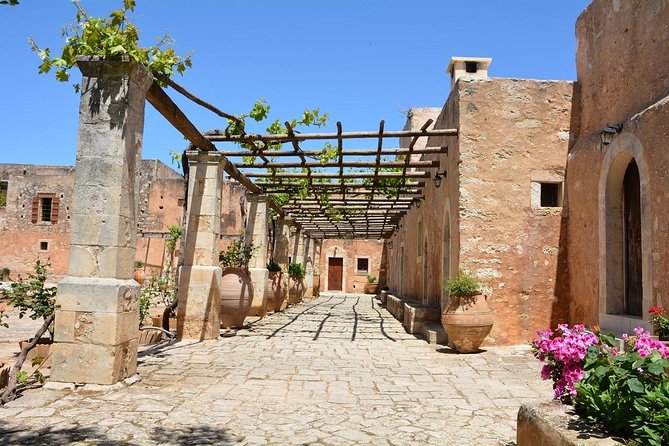
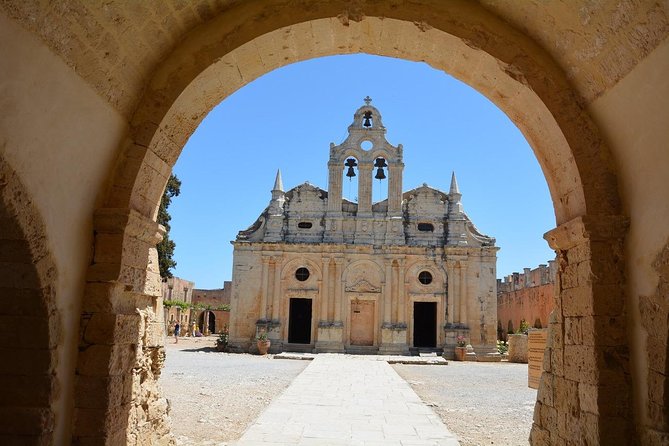
Arkadi Monastery is the emotional center of the day. Before you arrive, the guide sets context during the bus ride, so you understand what you are about to walk into, not just where you are supposed to point your camera.
Once you’re there, you get about an hour of free time. That hour matters, because Arkadi is not a quick “see it and go” stop. You can walk the small stone paths, visit rooms, and spend time in the big space connected to the explosion that’s part of the monastery’s revolution-era story.
If you care about how history is preserved and interpreted, you will probably appreciate that this isn’t only about facts. It’s also about atmosphere, the shape of the buildings, and the way the site forces you to slow down and look up.
The main planning consideration is straightforward: the entrance fee for Arkadi is not included in the base price. If you want to minimize surprises, budget for it upfront.
Ancient Eleftherna: a museum stop spanning thousands of years
After Arkadi, the day shifts from revolutionary memory to deep time at ancient Eleftherna. You are given a focused visit time, and the concept is clear: this area covers a long arc, from around 3000 BC all the way to about 1300 AD.
You’ll see local and religious life across eras, which is a good match for travelers who enjoy cultural continuity rather than only kings, wars, and battles. If you like objects, inscriptions, or explanations that connect everyday belief to big historical change, this stop fits your taste.
There is also a practical side to manage. The museum entrance fee is part of the set of paid sites for around €13.00 per person, so you are paying for access to the core collections and interpretive displays.
One thing to keep in mind if you are a museum super-fan: the museum portion can feel less rewarding than the other stops on the route. If you enjoy open-air sites and crafts more than indoor exhibits, you might want to treat this as a short context stop that helps the rest of the day click.
Margarites village: pottery-country walking plus lunch on your terms
Margarites is why this tour feels like more than a history day. The village is well known for pottery, and the visit gives you time to actually walk through the traditional area, not just stand outside and look in.
You get about two hours here, including time to slow down and explore. That timing is long enough to wander, browse, and pick up a small souvenir if you want something tied to the place.
Lunch is the flexible part of this stop. If you feel like eating, you have free time to choose a local small tavernas and go at your own pace. It’s a nice break from the bus schedule, and it usually makes the whole day feel more human.
This is also where you can connect the dots between places. If Arkadi gave you the revolution story and Eleftherna gave you the long timeline, Margarites brings it back to daily life, hands, and materials.
Melidoni cave: revolution history underground, with conservation questions
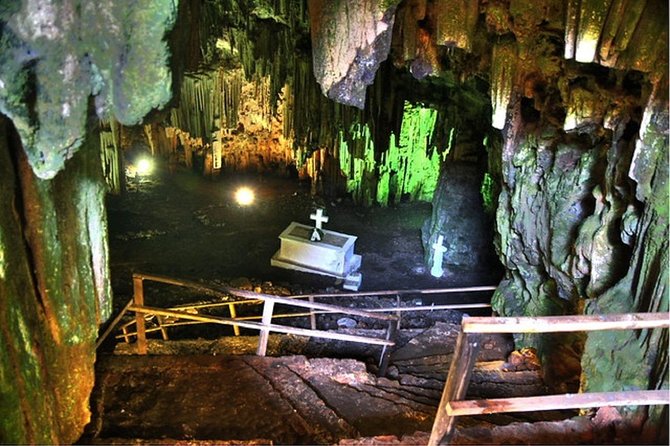
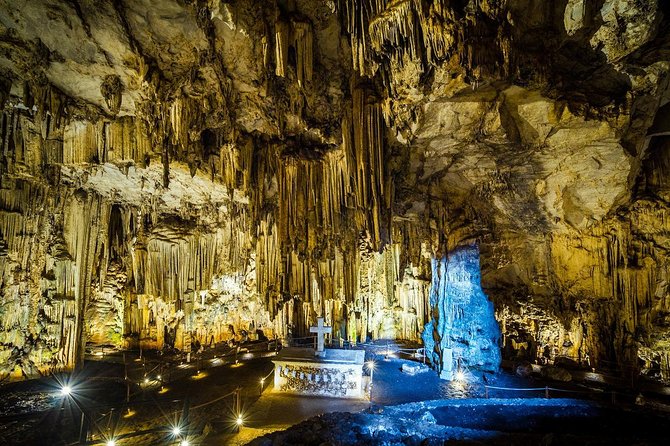
Then you head to Melidoni Cave, a very different kind of stop. The cave visit is tied to the Cretan Revolution during the Turks occupation, so the tour doesn’t treat the cave as just a pretty underground space.
You’ll have around 40 minutes in the cave. That’s enough time to see the main areas, take photos if allowed, and still come back out without feeling trapped underground all day.
Now, here’s the important nuance. Some visitors feel that the cave has been altered to improve access and make it easier for tourism, including changes to natural formations like stalactites. If you are sensitive to how natural spaces are managed, you might find those changes a bit disappointing.
If you go in expecting a pure, untouched natural wonder, you could come away frustrated. If you go in understanding that caves are also heritage sites shaped for visitors, you’ll likely be more satisfied.
Either way, it’s a memorable switch in mood. Going from sunlight village streets to the cave’s shadowy world is one of the reasons this tour works as a full-day sampler.
Not ready to stop exploring Heraklion? Try one of these.


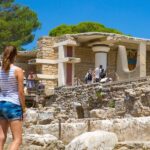

Tsikalario cretan ceramics: watching clay become objects with Mrs Helen
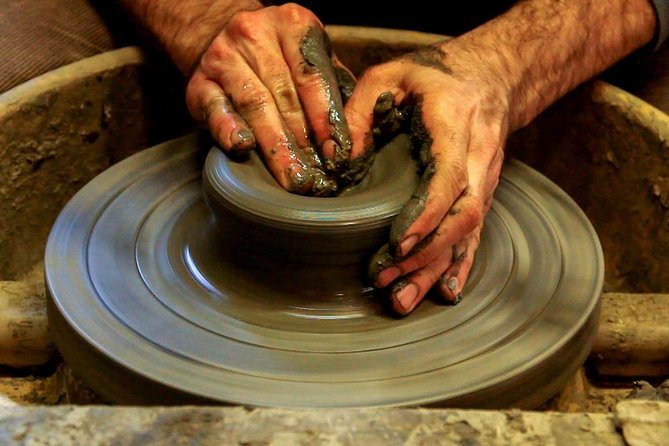
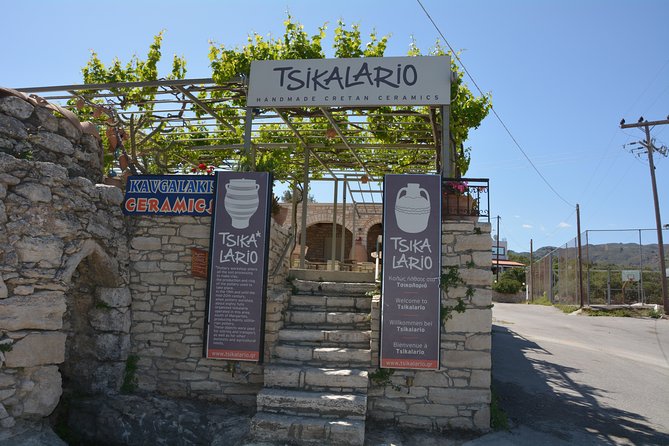
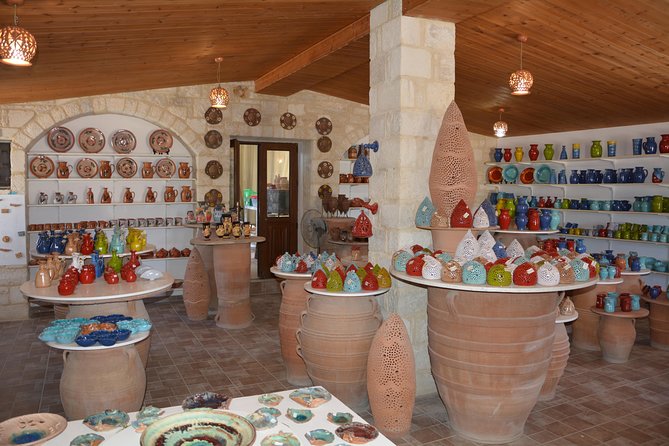
The Tsikalario cretan ceramics stop is one of the best uses of time on the route. Instead of only observing finished products, you get a look at the making process in a working workshop.
Mrs Helen, the owner and artist, demonstrates the transformation from clay into usable objects. That matters because pottery is not just a souvenir category, it’s a skill with steps and patience behind it. Even if you do not plan to buy anything, watching the process helps you understand what you are seeing when you admire local ceramics later.
The visit is around 40 minutes. That length is just right for a demonstration and a bit of browsing afterward, without turning into a sales push.
This is also where the tour’s “craft” side feels most authentic. It’s not a staged show for ten minutes, it’s a real working craft moment. If you’ve been curious about how traditions survive, this stop gives you a clear answer: people keep making things.
Price and value: what $36.05 really buys you, plus entrance fees
At about $36.05 per person, the base price is fairly strong value for a full-day, multi-stop route. What you get up front is the big practical piece: pickup and drop-off across many towns, plus an air-conditioned vehicle that handles the driving.
You also get the convenience of a mobile ticket. That reduces the usual “where do I stand, what do I show” stress.
The part to factor in is the entrance fee set for the main paid sites. Arkadi, the Eleftherna museum, and Melidoni cave are listed together as about €13.00 per person. With that added, you are still paying a reasonable total for a day that includes multiple major cultural anchors and two craft-related experiences.
One way to think about it: you are paying for transport, guide interpretation, and access to a handful of key places. If you tried to stitch this together on your own, you would likely spend time coordinating rides and buying separate tickets, and you would lose the context the guide brings to the route.
Who this tour suits best, and who might not love it
This tour is ideal if you want a structured day that covers several pillars of Crete. I’d especially recommend it if you care about how revolutions are remembered through places like Arkadi, and if you enjoy understanding culture through everyday crafts like pottery.
It also fits well for travelers who want a break from the beach routine without jumping into a full-blown backpacking day. The stops are spaced so you can recover with walking and free time between them.
If you strongly dislike caves, you may not get full value from the day. Melidoni is part of the core route, and it’s a featured stop for its revolution-era meaning.
If you are a serious museum lover, the Eleftherna museum stop might not feel like the highlight you want. The monastery, pottery village, and the working ceramics demonstration tend to land more powerfully, especially if your travel style leans toward hands-on culture.
My booking verdict: should you book Cretan Stories?
Yes, I think you should book this tour if you want one day that connects history to craft in the Rethymno area. Arkadi is a must-see stop for anyone who wants context on the Cretan Revolution, and the Tsikalario ceramics workshop with Mrs Helen is the kind of experience you can’t easily replace with casual browsing.
Before you book, do two quick checks. Make sure you’re comfortable paying the separate entrance fees for Arkadi, Eleftherna museum, and Melidoni cave, and decide whether you will appreciate a cave stop even if you are picky about how natural spaces are managed for tourism.
If those fit your style, this is a solid, balanced day out that helps you understand Crete in a more human way, through stone, stories, and fired clay.
FAQ
Where is this tour based and what area does it cover?
This experience is associated with Heraklion, Greece, and it runs through the Rethymno area. Pickup and drop-off are offered in several places, including Bali, Panormo, Skaleta, Adele, Platanias, Rethymno town, Atsipopoulo, Kavros, and Georgioupoli.
How long is the tour?
The duration is listed as about 8 to 9 hours.
Is pickup included?
Yes. Pickup and drop-off are included, and you wait outside your hotel reception about 10 minutes before the appointment time.
What is included in the price?
Included items are an air-conditioned vehicle and pickup and drop-off at the listed areas.
What entrance fees should I expect to pay?
Entrance fees are not included for Arkadi, the Eleftherna museum, and Melidoni cave. The listed total for these is €13.00 per person.
What language is the tour offered in?
The tour is offered in English.
Is there a mobile ticket?
Yes, a mobile ticket is included.
What is the group size?
This tour/activity has a maximum of 50 travelers.
What is the cancellation policy?
You can cancel for a full refund up to 24 hours in advance of the experience start time, and free cancellation is available.
Recently Published: Heraklion Tours
- Half-Day Private Tour in Two Wineries and Archanes from Heraklion★ 5.0 · 1 review
- Minoan Crete: Knossos Palace & Heraklion Museum with Winery★ 5.0 · 1 review
- Heraklion Museum Ticket and City Audio Tour★ 5.0 · 1 review
- Knossos Palace Wine Raki & Olive Oil tasting in Heraklion★ 5.0 · 1 review
- KNOSSOS PALACE private tour ( with Transfer from Heraklion Prefecture )★ 5.0 · 1 review
- Makrigialos-Ierapetra: Jeep Safari 4×4 Off Road Tour★ 5.0 · 1 review
- From Heraklion: Private Sailing Trip with our Hanse 470★ 5.0 · 1 review
- Private Transfer from Heraklion Airport to Elounda★ 5.0 · 1 review
Historical Tours, compared.
Zeus Cave & Knossos History, Villages & Olive Oil
Read our review →
Richtis Waterfall, History, Azoria, OliveTasting, NorthCoast
Read our review →
Heraklion Highlights: Knossos, Museum & Historic City Drive
Read our review →
Knossos Palace & Historical Heraklion City Tour, with Old Market
Read our review →
Hiking through History and Hidden Gems at Katholiko Bay
Read our review →Browse the lists this tour appears in