
Reviewed · HISTORICAL TOURS
From Chania: Crete World War II History Tour
World War II in Crete reads differently when you see it. This tour links the build-up from the 1940 Greek-Italian War to Hitler’s Operation Mercury, then walks you through the battle terrain around Maleme and Galatas, plus war cemeteries for both German and Allied forces. I like that the day feels organized and human, not just dates and maps, and I also like the care given to preservation at the graves. One thing to plan for, though, is that the day runs packed, and you may get limited comfort breaks, so bring your patience and comfortable shoes.
You’ll ride in an air-conditioned minivan with pickup and drop-off within the Chania region, and you’ll have an English-speaking guide who uses local context, maps, and documents to make the fighting and occupation make sense. The sites are spread out enough that you get a big-picture view, but the stops also stay close to the ground truth, from monuments to small museums and even secret shelters. If you want long, unstructured wandering time, this is not that kind of tour, but if you want clarity and context, it’s a strong pick.
In This Review
- Key moments that make this tour worth your time
- World War II on Crete, where Operation Mercury becomes real
- From 1940’s Greek-Italian War to 1941’s invasion pressure
- Maleme airfield views and the first-landing story
- Tavronitis Bridge, where the war’s movement becomes physical
- Galatas battle terrain, including Hill 107 context
- Small museums, monuments, and secret shelters you can’t guess on your own
- War cemeteries for Germans and Allied forces, handled with care
- Comfort, timing, and how to prepare for a 6-hour day
- Price and value: what $111 buys you in the field
- Who this tour fits best
- Should you book the Chania Crete World War II History Tour?
- FAQ
- How long is the Crete World War II History Tour from Chania?
- What part of Crete does this tour cover?
- Where does the tour depart from?
- What is included in the price?
- Is the tour a small group?
- What languages are available?
- What should I bring?
- Are pets allowed?
- Does the itinerary include war cemeteries?
- Is there a place to eat during the day?
- Can I cancel if my plans change?
Key moments that make this tour worth your time
- Maleme from above, plus the first-landing story tied to the paratroopers
- Tavronitis Bridge, a landmark where the war’s movement becomes physical
- The Battle of Galatas, explained through the terrain and key remnants
- Small museums and secret shelters, the quiet places that change how you picture the occupation
- German and Allied war cemeteries, preserved with visible respect and emotion
- Guides like Yanis and Babis, praised for story clarity, maps, and sensitive presentation
Plenty else to see around Chania
- Chania: Hiking through History and Hidden Gems at Katholiko Bay
★ 4.0 · 19 reviews - Chania Battle of Crete Private Tour: WW2 Military History
★ 5.0 · 16 reviews - Private Crete Far West Adventure: Hiking, History & Beaches
★ 5.0 · 2 reviews - Chania: Private Walking Tour: History, Sights, Food & Senses
★ 5.0 · 1 review - Sfakia Private Escape: Imbros Gorge, History & Hidden Beach
★ 5.0 · 1 review
World War II on Crete, where Operation Mercury becomes real
Crete can feel like a sun-and-sea island until you start paying attention to the landscape. On this day trip, the island stops being a postcard and becomes a battlefield map. You get the build-up, the invasion, the occupation, and the resistance thread that connects Crete to wider events in southeast Europe and back to the Allied world.
What makes the tour work well is that it doesn’t just say what happened. It helps you understand why it happened, and how quickly the momentum shifted in the May days of 1941. The guide explains the circumstances that led to Hitler’s Operation Mercury, then brings you to places where you can still picture troop movement and defensive lines.
I also appreciate that the day doesn’t avoid the moral weight of what you’re seeing. The tour ends with German and Allied war cemeteries, and multiple guides are noted for approaching the cemetery visits with careful, respectful commentary. That matters, because cemeteries are where the stories stop being abstract.
From 1940’s Greek-Italian War to 1941’s invasion pressure
The tour starts by placing Crete in the larger chain of events. You’ll hear about the Greek-Italian War of 1940 and the conditions that made Crete strategically important as Hitler expanded the fight. This helps you avoid the common beginner mistake of treating the Battle of Crete as a standalone episode.
Then the focus shifts to Operation Mercury, the German airborne operation tied to the invasion of the island. Even if you know the headline version of the story, you’ll likely find the sequence becomes clearer once you understand the earlier pressure points. The guide’s approach, including supporting maps and old photos used on the ride, helps you link the dots without turning the day into a lecture.
One smart feature here is the pacing of the explanation. You don’t hear everything as one long storyline before you move. You get context, then you visit a site, then the meaning clicks into place on the ground. That makes it easier to follow troop moves and why certain locations mattered.
Maleme airfield views and the first-landing story
Maleme is a big deal in the Battle of Crete story, and the tour builds your understanding starting with the airfield area. You’ll see Maleme from above, then connect the view to the landing story of where German paratroopers first touched down. Even if you’re not a history nerd, you’ll understand quickly why elevation and approach routes matter.
This stop also gives you a sense of how fast things changed in those early days. Paratroopers weren’t just landing on a normal airfield. They were landing inside a time-critical operation where control of key points could decide what the rest of the battle looked like. Standing there with the guide’s explanation, the battle stops being a paragraph and becomes a series of decisions made in minutes.
In plain terms, this is one of the stops that makes your brain start running a mental map. You begin thinking in terms of access, cover, and movement, instead of just naming locations.
Tavronitis Bridge, where the war’s movement becomes physical
After Maleme, the tour moves you toward remnants around Tavronitis, including a stop at Tavronitis Bridge. Bridges sound simple, but in war terms they become bottlenecks, chokepoints, and lines of control. With a guide guiding the story, that bridge becomes more than a landmark. It becomes a visual anchor for how forces tried to cross, hold, or disrupt movement.
This is also a good stop for people who learn better by seeing. If you’re the type who reads slowly and processes faster in the field, Tavronitis Bridge does the job. The guide can connect the fighting to what you’re watching in real time: roads, sight lines, and terrain that would have shaped every push.
You’ll likely notice the tour keeps returning to the same idea: what looks calm now once carried enormous consequences. The bridge helps you feel that shift.
Galatas battle terrain, including Hill 107 context
Galatas is where the tour turns from “what the Germans planned” to “how the battle unfolded on Crete.” You’ll learn about the battle of Galatas and see how the fighting played out across the area. The guide explains the action with a logical, chronological flow, which is especially helpful if you’re starting from zero.
One of the small details that helps comprehension is mentioning specific points like Hill 107, a reference that several visitors bring up as a clear way to understand the action. When a guide can explain a named position and then point at what the terrain would have meant, you walk away with real spatial understanding, not just a memory of names.
This stop is also where the tour’s balance really shows. It’s not only about the invasion. It connects the battle sites to the resistance that followed, including how partisans fought during the occupation. You’ll hear how that resistance helped revive Allied morale around the world, which changes how you judge the significance of local actions.
Not ready to stop exploring Chania? Try one of these.
Small museums, monuments, and secret shelters you can’t guess on your own
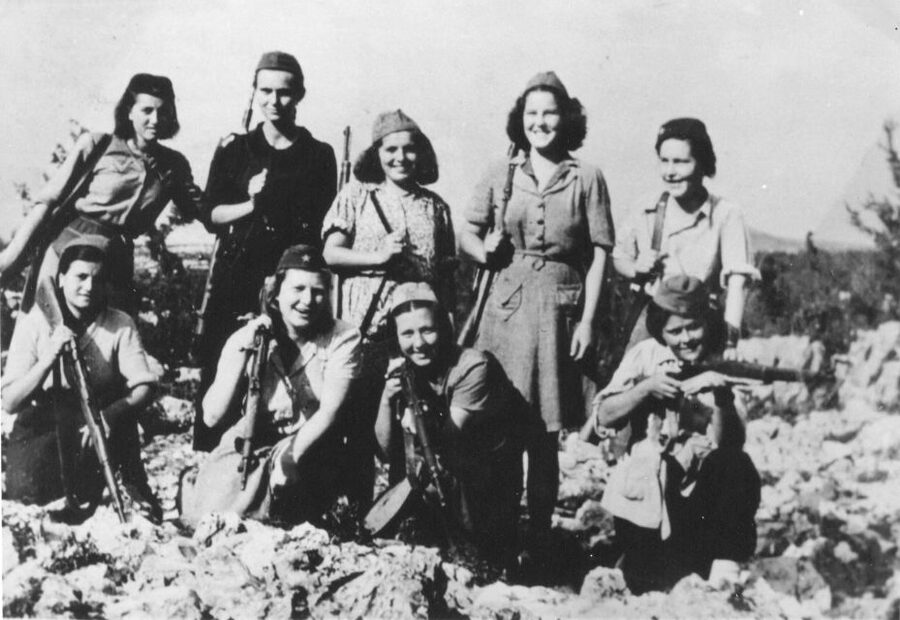
One of the best parts of the day is how it mixes the big sites with smaller places. You’ll visit war-related monuments and remnants, plus small museums that add depth to what you’re seeing outside. These stops help you understand the human side of the war, not just troop movements.
Even better, the tour includes secret shelters. That’s the kind of stop you’d miss on your own because it isn’t the obvious tourist icon. Standing near or inside these shelter spaces changes your mental picture of occupation life. You start thinking about time, fear, movement at night, and how civilians survived under constant threat.
Multiple visitors also mention a guide bringing along maps, documents, and old photos to make sense of what you’re looking at. That visual support matters on a subject like this, where it’s easy to get lost if you only have spoken explanations.
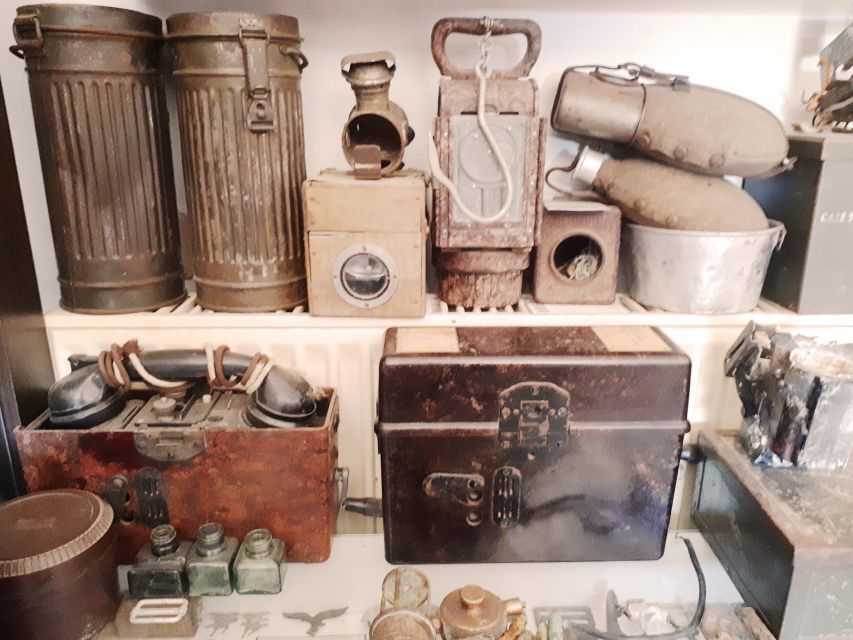
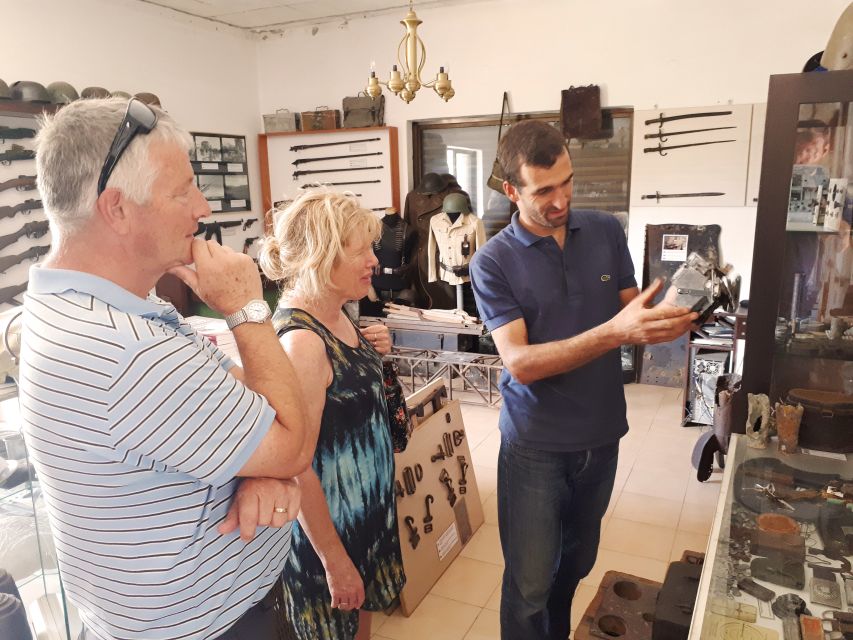
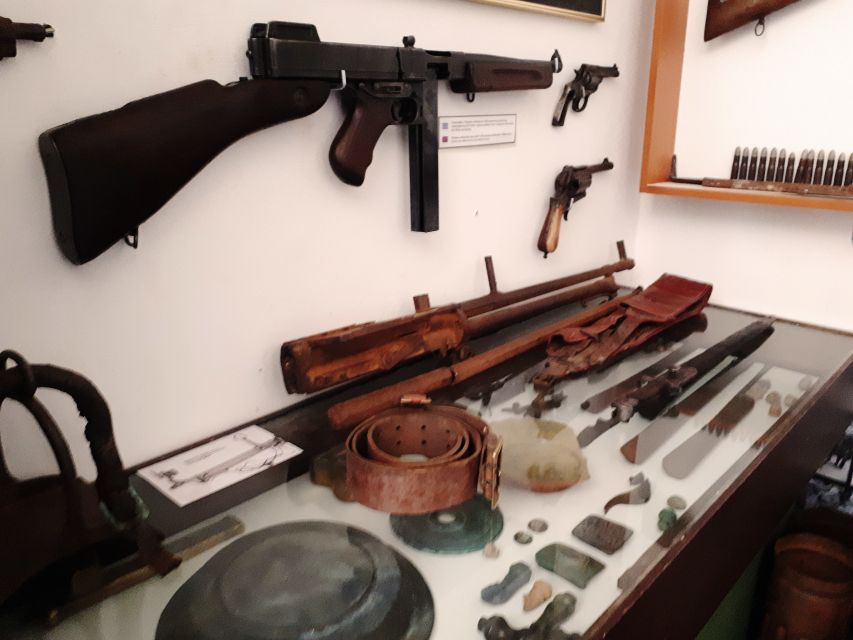
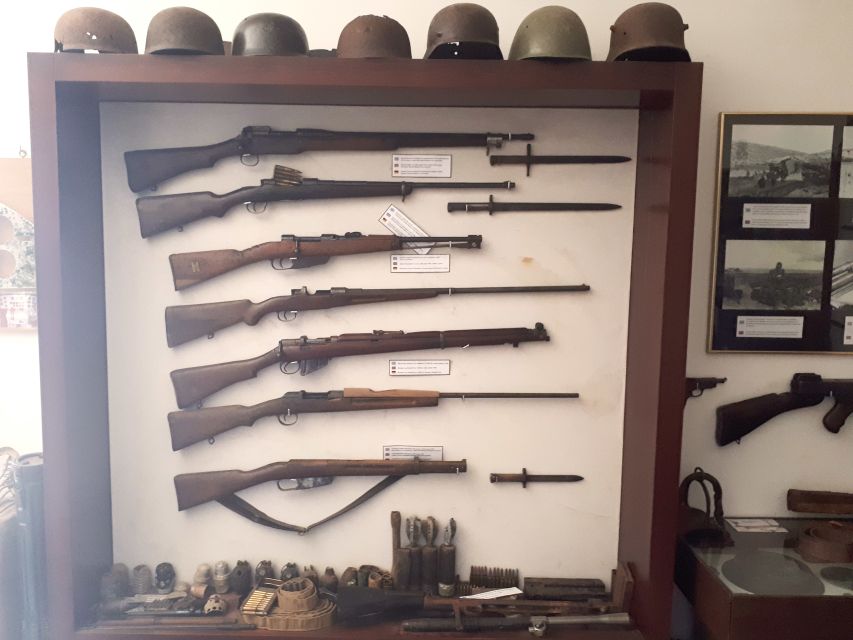
There may also be a stop at a private local collection of WWII artifacts, depending on the flow of the day. Visitors describe it as impressive, with the chance to see items up close and hear the collector’s context. Even if you’re not into collectibles, it’s a reminder that history is stored in real objects, not only in books.
War cemeteries for Germans and Allied forces, handled with care
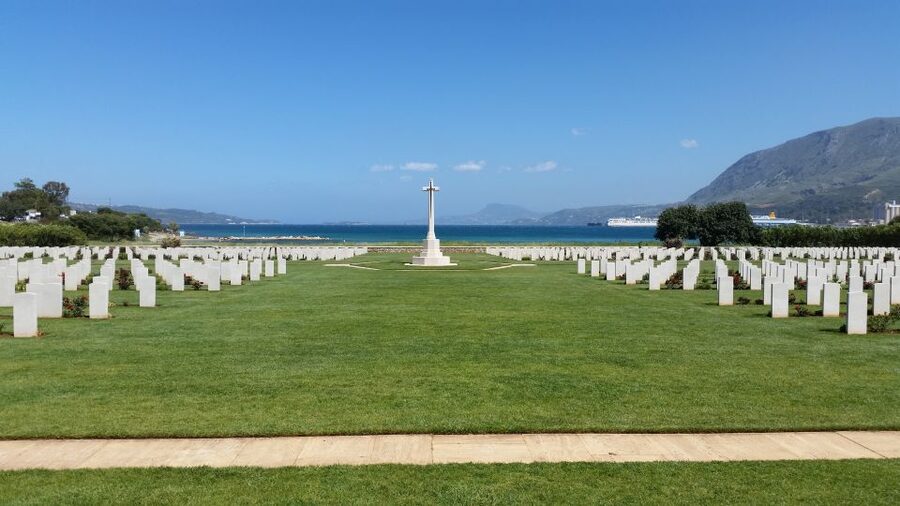
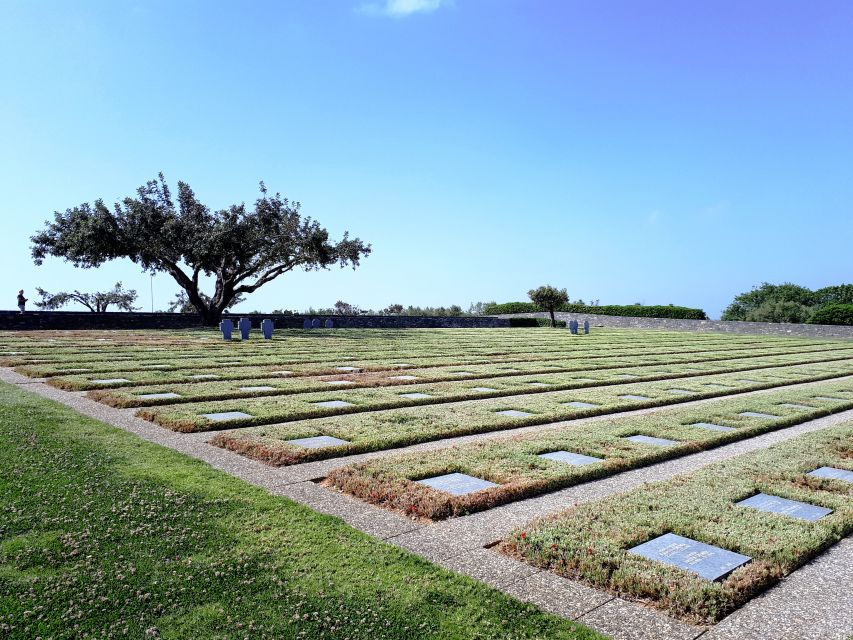
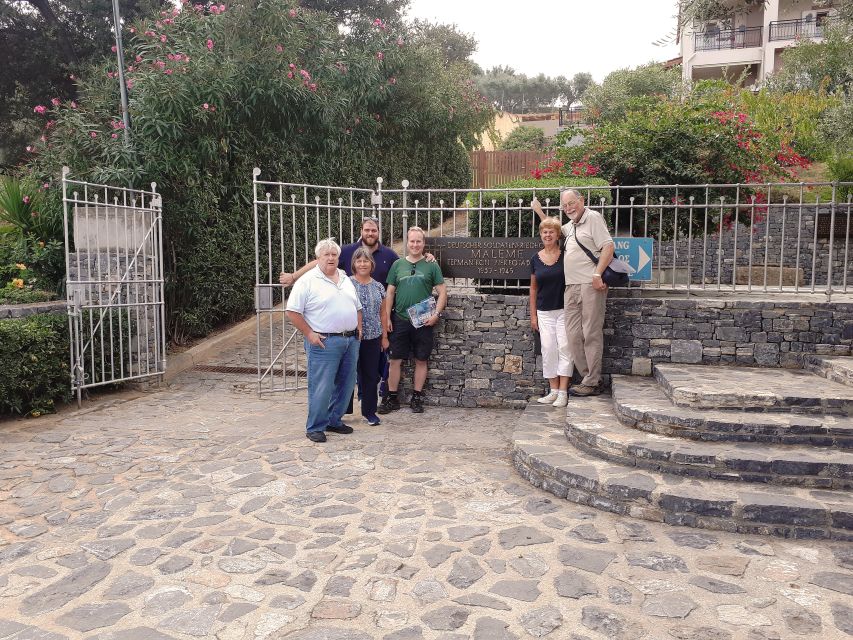
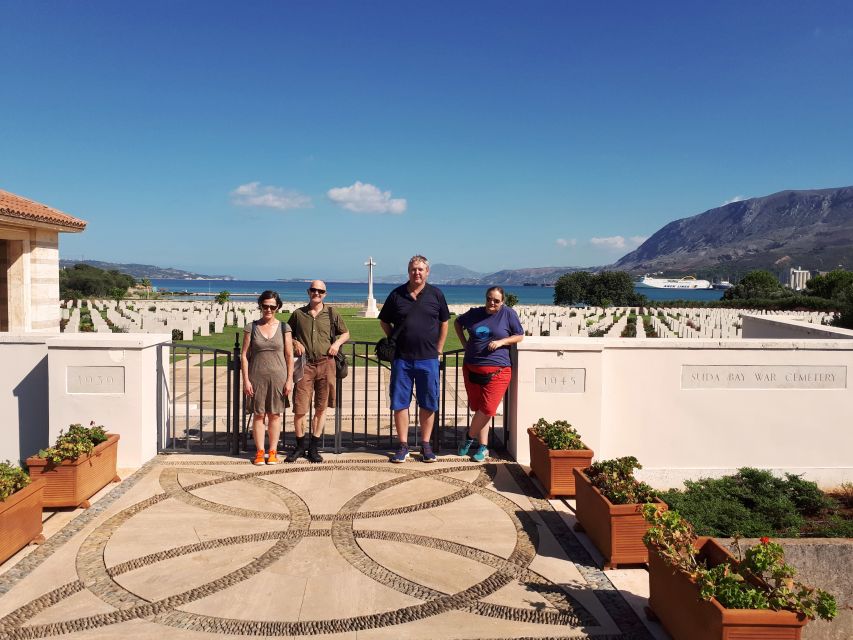
The cemetery portion is the emotional turning point of the day. You’ll visit war cemeteries for both German and Allied forces, and the contrast is striking in a good, sobering way. One visitor specifically notes how the words at the German graves felt sensitive and respectful, and that kind of tone matters when you’re standing in rows that represent real people, not history headlines.
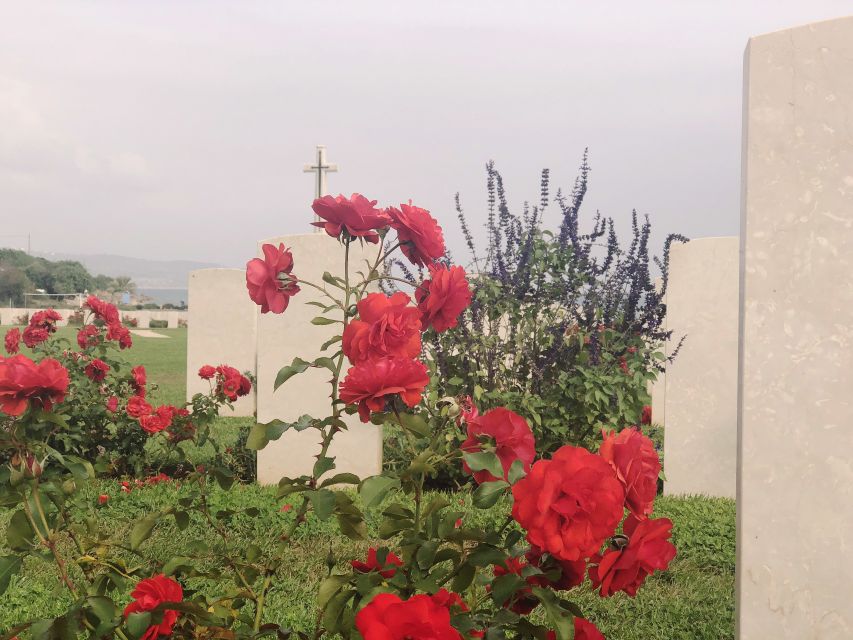
For many, the Commonwealth cemetery at Souda Bay is one of the most important parts. It can feel heavier when you realize these were men far from home. One visitor wished they’d had more time there, which tells you something useful: plan to linger mentally, because the cemetery experience is not a quick photo stop.
If you’re the type who gets emotional easily, this section may hit you harder than the battle sites. That’s not a reason to avoid it. It’s a reason to be prepared. Bring a steady pace to yourself, and let the guide’s words land before you move on.
Comfort, timing, and how to prepare for a 6-hour day
This is listed as a 6-hour tour, but expect a slightly fuller day in practice since the route packs multiple locations into one outing. The minivan rides are air-conditioned, which is a lifesaver in Crete heat, and you’ll have a snack plus a bottle of water per person.
One recurring practical point from visitors is that comfort breaks may feel limited if you’re used to longer tours with frequent stops. You can often ask the guide, and they may help arrange an extra stop if timing allows. Still, don’t count on a long sit-down lunch. Consider this more of a history day with brief breaks, not a slow meal-and-museum crawl.
What you should bring is simple: comfortable shoes and a mindset for walking and standing. Even if the distances between stops are manageable, you’ll spend time at sites where you’ll want to pause, look, and absorb the guide’s narration.
Price and value: what $111 buys you in the field
At $111 per person, the pricing can look like a lot until you break down what you’re actually getting for a Crete day trip. You get pickup and drop-off within the Chania region, air-conditioned transport, and a small group format. Entrance fees and local taxes are included, and you’re not paying extra for the “right to see” the sites.
Then there’s the thing money can’t easily replace: time saved and confusion avoided. Visiting battle sites and WW2 locations on your own would require more planning, more reading, and a stronger sense of what to look for. Here, a guide links each stop to the wider story of the invasion, occupation, and resistance, including how Crete’s events helped morale far beyond the island.
For $111, you’re buying context plus access. If you care about WW2 history and want it organized into a clear day, the value holds.
Who this tour fits best
This tour fits you best if:
- You’re interested in WW2 history and want a grounded, site-based explanation
- You like tours that connect big strategy to specific places, like Maleme and Tavronitis
- You want a respectful cemetery visit included in the itinerary
- You prefer small-group pacing over a rushed, large-bus style outing
It may feel less ideal if you’re hoping for a casual, flexible sightseeing day with lots of free time. Also, if you’re expecting a light, family-friendly history theme, remember that the content is serious. It’s history with real human cost.
The guide can make the difference here. Visitors frequently mention guides such as Yanis and Babis for being clear, organized, and careful with sensitive moments. When the guide is strong, the whole day becomes easier to follow and more meaningful.
Should you book the Chania Crete World War II History Tour?
If you’re choosing between “read about Crete” and “see Crete in the war story,” I’d lean toward booking this one. The combination of major battle locations, quieter places like secret shelters, and the German and Allied cemeteries makes it a full-spectrum experience. You’ll leave with a mental map of the invasion and a better grasp of why resistance mattered beyond the island.
Book it if WW2 history is a real interest for you and you like structured context. Skip it if you want a slow day, lots of free time, or you get uncomfortable with heavy topics.
If you do book, do one small favor for yourself: set your expectations for a packed day and plan your energy. Wear good shoes, hydrate, and let the guide’s storytelling do what it’s designed to do, connect the past to the exact spots you’re standing on.
FAQ
How long is the Crete World War II History Tour from Chania?
The tour duration is 6 hours.
What part of Crete does this tour cover?
It focuses on World War II history in Crete, including sites connected to the Battle of Crete, such as Maleme and Galatas, plus war cemeteries.
Where does the tour depart from?
This tour only departs from the Chania region.
What is included in the price?
Pickup and drop-off from specific locations in the Chania region, transportation by air-conditioned minivan, an English-speaking driver/guide and local guide, entrance fees, local taxes, and a snack plus a bottle of water per person.
Is the tour a small group?
Yes, it is described as a small group tour.
What languages are available?
The live tour guide is available in English and Greek.
What should I bring?
Bring comfortable shoes.
Are pets allowed?
No pets are allowed.
Does the itinerary include war cemeteries?
Yes. The tour visits the war cemeteries of both German and Allied forces.
Is there a place to eat during the day?
A snack and a bottle of water are included. Some visitors note the day can feel time-tight for longer breaks, so plan accordingly.
Can I cancel if my plans change?
Yes, you can cancel up to 24 hours in advance for a full refund.
Recently Published: Chania Tours
- Elafonisi Pink Sand Beach | Private Day Trip from Heraklion★ 5.0 · 1 review
- Samaria Long Way from Rethymno★ 5.0 · 1 review
- Kayaking or River trekking or Rafting- kiliaris activities chania★ 5.0 · 1 review
- Chania Old Town, Ancient Olive Tree&Theriso Village Private Tour★ 5.0 · 1 review
- Private Tour From Chania Area to Rethymno and Arkadi Monastery★ 4.0 · 1 review
- Private Driver & Chauffeur Service in Crete from Chania★ 5.0 · 1 review
- Minoan Luxuries: Ancient Palaces, Messara Wine Routes & Matala★ 5.0 · 1 review
- From Chania: Imbros Gorge Hike&Authentic Culinary Experience★ 5.0 · 1 review
Historical Tours, compared.
Zeus Cave & Knossos History, Villages & Olive Oil
Read our review →
Richtis Waterfall, History, Azoria, OliveTasting, NorthCoast
Read our review →
Heraklion Highlights: Knossos, Museum & Historic City Drive
Read our review →
Knossos Palace & Historical Heraklion City Tour, with Old Market
Read our review →
Hiking through History and Hidden Gems at Katholiko Bay
Read our review →
Cretan Stories – A Journey Through History and Tradition
Read our review →Browse the lists this tour appears in