
Reviewed · SCUBA DIVING
Crete Introductory Scuba Diving Experience
Your first underwater lesson in Crete is simple. I like how this intro scuba course is built for true beginners, with an instructor staying right with you the whole time, plus the guided open-water check where you can spot colorful fish in the Aegean. In the best moments, you get that mix of learning and wonder, and instructors like Artur and Sebastian bring a calm, patient tone that helps nervous first-timers feel steady fast.
There is a safety-minded feel to the whole day, from equipment setup to hands-on practice in the pool or shallow water. One possible drawback: the schedule can stretch, so you might finish the main activities early and then wait longer than the headline time estimate, especially if conditions force adjustments.
In This Review
- Key highlights to look for
- Why this Crete intro scuba course is a smart first step
- The 9:00 am flow, pickup zones, and why timing can surprise you
- Part 1: theory class, where you learn the rules before you go under
- Part 2: pool or shallow-water practice, confidence on purpose
- Part 3: the guided open-water swim at 3 to 6 m
- Who is this course really for in Crete?
- Instructors and supervision: the reason beginners feel safe
- Location choices: Heraklion, Chania, or Rethymno-Georgioupolis
- Price, value, and what you get for $96.13
- Weather, cancellations, and how wind can change the plan
- Should you book this intro scuba course in Crete?
- FAQ
- What is the age range for the course?
- Do I need previous scuba experience?
- How fit do I need to be, and do I need to swim?
- How deep will we go during the open-water part?
- Is scuba equipment provided?
- What language is the instruction?
- Where can I be picked up?
- What happens if weather is poor?
- How long is the experience?
Key highlights to look for
- Instructor stays with you the entire time, with direct supervision being required
- Three-part structure: theory, confined water practice, then an open-water swim at 3 to 6 m
- Provided equipment plus English guidance, so you are not buying gear or translating
- Beginner-friendly real sightings, including lots of fish, and even a rare octopus in one memorable session
- Flexible location choice across Heraklion, Chania, or Rethymno-Georgioupolis area
Wrecks and reefs below the surface
- Heraklion: Scuba Diving Experience for Beginners _Beach
★ 4.7 · 549 reviews - Heraklion: Beginner Scuba Diving Lesson with PADI Instructor
★ 4.9 · 355 reviews - Heraklion: Scuba Diving Experience for First-Timers
★ 4.8 · 203 reviews - Chania: Scuba Diving for Beginners
★ 4.7 · 196 reviews - Chania: Scuba Diving for Beginners
★ 5.0 · 103 reviews
Why this Crete intro scuba course is a smart first step
If you have ever watched someone surface smiling and thought, I want to try that, this is one of the more practical ways to do it in Crete. It is not a vague, lets-see-what-happens experience. It is a structured try-it format designed for people with no prior experience, usually in a small group capped at 20.
Here is what I like for you as a decision-maker: the program is designed around what you need to feel safe and coordinated. You get a theory class first, then you practice in controlled water, and only then do you go to open water. That step-by-step order matters, because your confidence grows with each segment instead of being thrown in at the deep end.
It is also easy to match to your vacation logistics. The course can run in the Heraklion, Chania, or Rethymno-Georgioupolis area, and pickup is offered from hotels in those zones. That means less hassle than trying to taxi yourself to a random pier on your own.
One more detail that helps: the age range is 10 to 60, and the course is described as suitable for people with good swimming and excellent health conditions. In other words, they set the bar early, so you are not dealing with mixed expectations on the day.
The 9:00 am flow, pickup zones, and why timing can surprise you
The day starts at 9:00 am. Depending on where you are staying, you may have pickup from hotels in the Chersonissos, Chania area, or Rethymnon and Georgioupolis area. The program says hotel pickup and drop-off are not included, yet it also offers pickup in those areas, so I suggest you confirm what your exact pickup location covers during booking. If you are near the pickup zones, it usually runs smoothly.
The course duration is listed as about 4 hours, which is helpful if you want to keep the rest of your day free. But based on real experience patterns, the day might not perfectly match that number. In one case, the group finished around 12:00 pm and then had to wait until 3:30 pm before heading back. That is not typical of every day, but it is a real reason to plan loosely.
Also keep in mind the open-water portion can be affected by weather. If conditions are windy, the location may change to protect the schedule and keep the session going. That can add time, especially when transport and timing are already mapped out.
Practical tip: on a day like this, I recommend you avoid booking a second big activity for the immediate afternoon. Plan for a relaxed window after the morning.
Part 1: theory class, where you learn the rules before you go under
The first segment is a theory class, and it is there for a reason. You learn the basics of scuba gear use and the fundamentals you need to handle what will happen once you are underwater. This matters because you are not just watching someone else do it, you are expected to respond to cues, follow instructions, and understand what your body and gear are doing.
In a first-timer course, the theory is not about impressing you with complicated science. It is about giving you a framework. When your instructor explains how breathing works with the equipment and how to follow procedures, you spend less energy guessing and more energy enjoying the experience.
I also like that the program keeps the instructor present throughout the entire course. When you already know you will not be left alone with confusing equipment, you tend to relax faster.
Part 2: pool or shallow-water practice, confidence on purpose
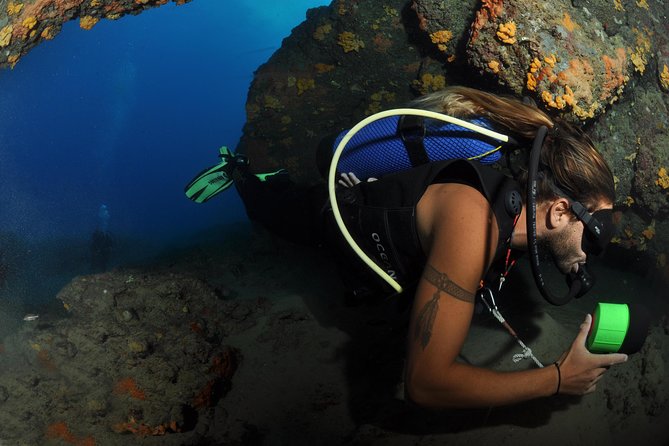
Next comes confined water training, in a pool or a shallow sea area, depending on conditions and the setup at that training location. This segment is where you turn theory into muscle memory.
What I take from the feedback is that patience is a big deal here. For example, instructors like Sebastian and Artur were noted for being extremely patient and supportive, especially for first-timers who felt unsure during the pool session. When someone feels overwhelmed, this stage is exactly when you want the instructor to slow things down, check in often, and help you feel comfortable.
It is also common to see small groups during practice. One experience mentioned just two people with one instructor, which is the dream scenario for your first day. Smaller groups usually mean more time for correct fitting and more hands-on reassurance.
Even if you end up doing less than you hoped in practice, do not treat it like a failed attempt. This part is the checkpoint. It helps you decide whether open water feels right.
Practical tip: wear swimwear that stays put. You will likely spend time adjusting gear, and nothing tanks confidence faster than being distracted by comfort issues.
Part 3: the guided open-water swim at 3 to 6 m
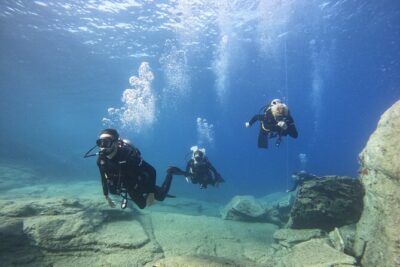
Only after theory and practice do you move to the open-water portion. The program states the open-water session is in the 3 to 6 m range, which is fairly shallow. That matters because it lowers the pressure change and keeps the experience focused on learning and comfort rather than endurance.
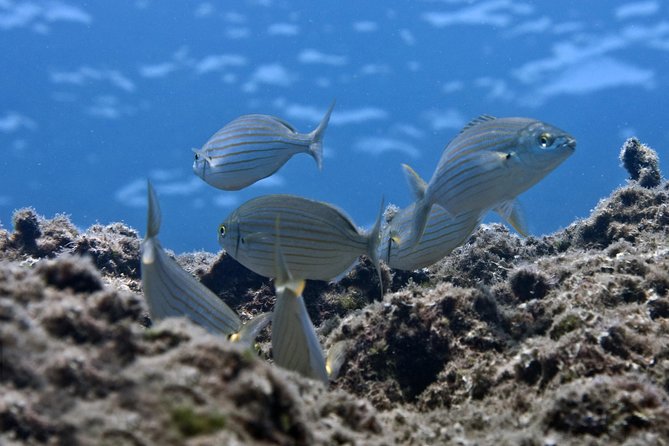
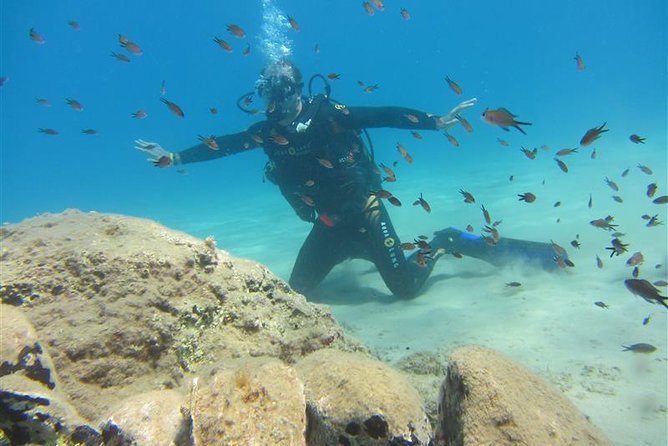
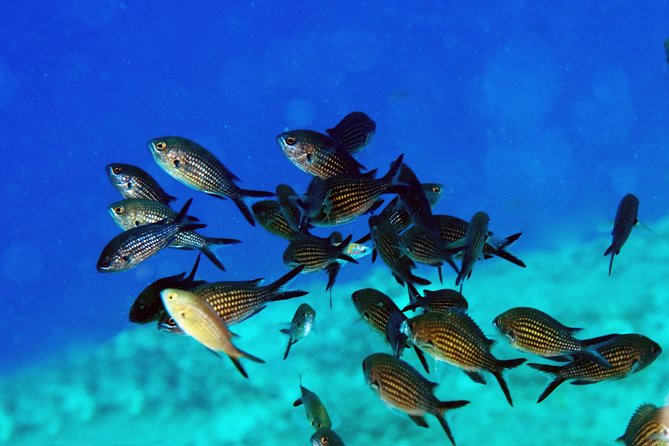
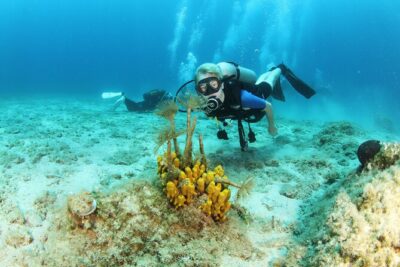
What you can expect to see in the Aegean depends on the exact site and conditions. In one great example, the water was clear with lots of fish, and someone even spotted a small octopus. In another case, the beginners’ session was from a beach area and the underwater life was more limited, with mainly a few fish types. That difference can happen even within the same region.
So think of this part as two things at once: a chance to experience underwater movement beyond the pool, and a bonus for wildlife spotting. If you are coming mainly for sea life, you might be slightly surprised if conditions or the beginner site mean less variety. But if you come ready to learn and enjoy the feeling of being underwater, the open-water time is usually memorable.
Also note that you are not forced forward. One experience story includes a couple who decided after the pool session that they did not feel comfortable enough for open water, and the instructor encouraged a different next step like practicing with snorkeling and returning when they felt ready. That respectful approach is a major plus.
Not ready to stop exploring Crete? Try one of these.



Who is this course really for in Crete?
This is aimed at people aged 10 to 60 and says no previous experience is required. That makes it a good match if you want to try scuba without committing to full certification on this trip.
It does require two real-life factors:
- Good swimming
- Excellent health conditions
Those are not minor details. You should honestly assess your comfort in open water and your general fitness. The course is hands-on and supervised, but your body still needs to cooperate.
It also expects moderate physical fitness. If you get winded easily swimming short distances, you might struggle with the early practice and lose the calm mindset the course is trying to build.
For families: children must be accompanied by an adult. If you are bringing a kid, plan for the day to be adult-led, both for logistics and for safety.
Instructors and supervision: the reason beginners feel safe
This course earns a lot of its strong ratings because the instruction style is consistently described as patient, confident, and close to you. Names that came up include Artur, Sebastian, and Pedros, plus Stan the PADI Pro in one highlight.
What you should take from that: you are buying more than equipment access. You are paying for someone to coach you through the parts that feel awkward at first. That includes helping you learn how to stay calm, move correctly, and follow instructions the moment you get underwater.
Direct supervision is described as obligatory, and the instructor is always with the students. That matters if you are the type of person who panics when you cannot see the bottom clearly or you need reassurance about gear behavior.
One interesting detail: instructors may gently encourage you to keep going, especially if you are on the edge after the pool session. That can be motivating for some people, but it also helps that the best outcomes still respect your comfort and your final decision.
Location choices: Heraklion, Chania, or Rethymno-Georgioupolis
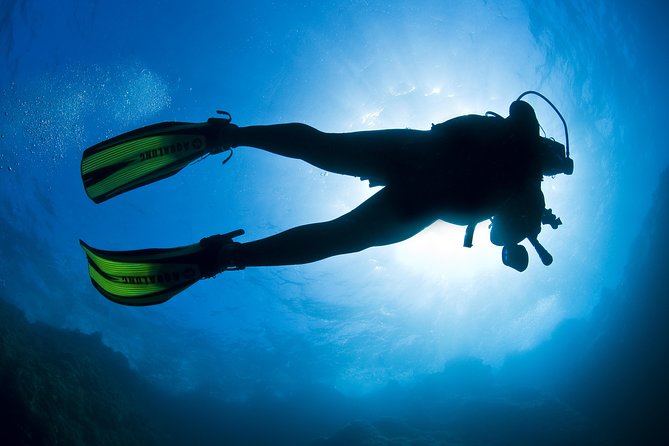
Crete is big enough that where you train changes the vibe of your day. You can choose the Heraklion, Chania, or Rethymno-Georgioupolis area, and pickup is offered from hotels across those regions.
One review noted the drive was about half an hour one way, which is what you hope for if you are trying to keep the experience from feeling like a long transit day. Still, your exact drive time depends on where your pickup starts.
Because the open-water session is tied to specific local conditions, your wildlife experience may vary. You could get clear water and lots of fish in one area and more limited variety in another. The lesson here is not to chase a perfect underwater checklist. Treat it as a first scuba learning day, and let the sea life be a bonus.
Price, value, and what you get for $96.13
At about $96.13 per person for roughly half-day time, this course can feel like a fair way to test the waters without over-planning. You are paying for:
- Diving equipment
- Theory class and pool training
- Guided open-water session with a certified instructor
- Instruction in English
- A small group size (maximum 20)
Compared with booking equipment rentals and finding independent coaching, the package structure saves time and stress. And because the open-water part is guided, you get real-world practice under supervision rather than just watching someone else.
Also, the age range and beginner-friendly setup mean you are unlikely to be the only new person in the group. That helps with comfort. If you are worried you will feel awkward, this kind of course tends to reduce that risk.
One thing to keep your expectations realistic: at this price point and depth range, you should not expect the underwater variety of longer trips or specialized marine-wildlife outings. The goal is learning, safety, and that first look at underwater life in the Mediterranean.
Weather, cancellations, and how wind can change the plan
This experience requires good weather. If it gets canceled due to poor weather, you will be offered a different date or a full refund. There is also free cancellation up to 24 hours in advance for a full refund.
On some days, it may not cancel entirely, but the location can change due to conditions like wind. That is not unusual for open-water training. The key is that the company aims to keep the session going when possible.
Practical tip: pack a light windbreaker and keep swimwear accessible. Even when the water is fine, the wait and transport around it can be cooler than you expect in the morning.
Should you book this intro scuba course in Crete?
I think you should book it if you want a structured first try, you can swim confidently, and you appreciate close coaching. The instructor supervision, the clear three-part flow, and the way beginners are handled with patience (even when someone chooses not to go open water) make this a strong option.
Skip it or consider a different activity if:
- You do not feel comfortable in open water.
- Your health or fitness is not strong enough for the program requirements.
- You are looking only for guaranteed dramatic sea life, not an intro learning session.
If you are on the fence, this is also one of those experiences where you can learn a lot in the pool portion and still walk away with a win, because the program is built around making you feel ready, not rushing you.
In Crete, a half-day plan with equipment included is a good deal, and if the day is calm, you get the added reward of clear water and fish close enough to actually enjoy.
FAQ
What is the age range for the course?
The course is for participants between 10 and 60 years old.
Do I need previous scuba experience?
No previous diving experience is required.
How fit do I need to be, and do I need to swim?
Good swimming and excellent health conditions are required, and you should have a moderate physical fitness level.
How deep will we go during the open-water part?
The open-water swim is to a depth of about 3 to 6 m.
Is scuba equipment provided?
Yes, diving equipment is included.
What language is the instruction?
The course is offered in English.
Where can I be picked up?
Pickup is offered from hotels in the Chersonissos, Chania area, or Rethymnon and Georgioupolis area.
What happens if weather is poor?
This experience requires good weather. If it is canceled due to poor weather, you will be offered a different date or a full refund.
How long is the experience?
The duration is approximately 4 hours.
Recently Published: Crete Tours
- Creta Private Transfer from Heraklion (HER) Airport to Stalís★ 5.0 · 1 review
- Creta Private Transfer from Heraklion (HER) Airport to Agia Pelagia★ 5.0 · 1 review
- VISIT THE MOST FAMOUS PAINTER “EL GRECO” TOUR★ 5.0 · 1 review
- Crete: Balos Beach Viewpoint and Falassrna Beach Day Trip★ 5.0 · 1 review
- Samaria Gorge from Chania with Professional Hiking Guide★ 5.0 · 1 review
- Rethymno Bali & Panormo : Quad Safari & visit Cave 57km 4hours★ 5.0 · 1 review
- Unique wine tasting of organic Cretan wines★ 5.0 · 1 review
- Hersonissos: Private Sunset Catamaran Cruise, Snack & Drinks★ 5.0 · 1 review
Scuba Diving, compared.
Beginner Scuba Diving Lesson with PADI Instructor
Read our review →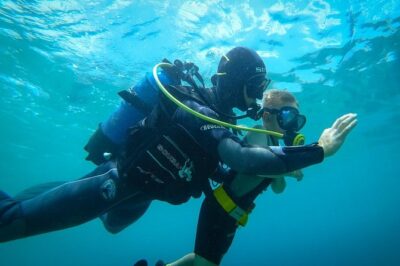
Chania: Snorkeling & Scuba Dive for Beginners by Boat
Read our review →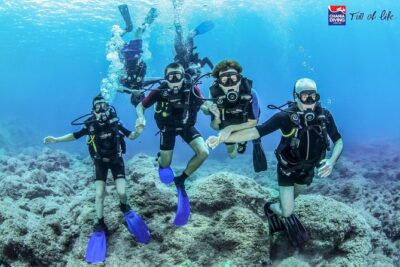
Try Scuba in Crete – Free Certification & Photos (Beginners)
Read our review →Browse the lists this tour appears in