
Reviewed · CRETAN FOOD TOURS
Food Tour in Heraklion – Discover Cretan Flavors
Food in Heraklion is best read on foot. This 4-hour Food Tour in Heraklion pairs Cretan tastings with landmark stops, so you learn the city and eat it too. I like that the walk starts right by the Heraklion Archaeological Museum, then moves through squares and churches where everyday life still plays out.
I also love the food variety, from bougatsa and strong Greek coffee to local honey, sweets, and Cretan raki, plus meze at the end. One drawback to keep in mind: in crowded areas, audio can be tough, since a microphone might not be used, so you may need to lean in when the guide talks.
In This Review
- Key Things You’ll Love About This Heraklion Food Tour
- Why Heraklion Makes Sense for a Food Tour
- Start at Heraklion Archaeological Museum, Then Plateia Eleftherias
- Basilica and Plaza Views: Agios Markos and the Venetian Loggia
- Old Venetian Harbor Energy: Koules Fortress and Morosini Lions Fountain
- Agios Titos and the 25th Avgoustou 17 Photo Stop
- Your Coffee, Dessert Break, and the Cretan Sweet Set-Up
- Central Market Time: Smell the Ingredients, See the Everyday
- Pastry History Museum: The Sweet Ending Before the Meal
- The Workshop Stop: Craft Behind Stivania Leather Boots
- Rocca a Mare Fortress Break and Sightseeing Pause
- Local Restaurant Meze Finale: Classic Bites and Cretan Hospitality
- Food, Price, and Value: Is $106 Worth It?
- Who This Heraklion Food Tour Fits Best
- Should You Book This Food Tour in Heraklion?
- FAQ
- How long is the Food Tour in Heraklion?
- Where does the tour start?
- What language is the host speaking?
- What’s included in the food and drink?
- Does the tour visit local markets?
- Is there a traditional workshop visit?
- Which major sights are part of the route?
- Where does the tour end?
- What should I bring?
- What is the cancellation policy?
Key Things You’ll Love About This Heraklion Food Tour
- Start at the Heraklion Archaeological Museum area for an easy first landmark and a smart route
- A tasting lineup that covers sweet, savory, and drinks, not just one snack stop
- Market and pastry-focused moments that explain how Heraklion stays a food city
- Landmarks between bites, including Venetian-era sights and major churches
- A family workshop visit tied to Cretan craft, including stivania leather boots
- A small-group feel for questions and clearer explanations on the walk
Snails, dakos, and cheese you won't find shipped out
- Crete: Olive Oil, Soap, Wine, Raki – Flavorful Culinary Journey
★ 5.0 · 119 reviews - Heraklion: E-Bike Food Tour – Discover the Flavors of Crete
★ 5.0 · 106 reviews - Heraklion: Ecobike Sightseeing Tour with Greek Meze
★ 4.9 · 78 reviews - Crete: Olive, Wine, & Raki on a Flavorful Culinary Journey
★ 4.7 · 56 reviews - Heraklion – Walking city tour with food tasting
★ 4.5 · 25 reviews
Why Heraklion Makes Sense for a Food Tour
Heraklion is Crete’s administrative and commercial hub, so the food scene is practical, local, and repeatable. You’ll notice that most of what you eat is built around ingredients and old routines, not fancy presentation.
On this tour, the “food part” is only half the deal. The other half is how the guide threads each tasting into the neighborhood setting, so you understand why bougatsa shows up here, why markets matter, and why certain churches and public spaces feel tied to daily rhythm.
Start at Heraklion Archaeological Museum, Then Plateia Eleftherias
The tour begins outside the Heraklion Archaeological Museum, with the meeting point at the statue in the square. I like this because it gives you an easy geographic anchor. Even if you’re arriving in Heraklion for the first time, you can orient fast before you start eating.
Your route then swings toward Plateia Eleftherias, where you’ll get a guided walk and time to look around. This area is a good setup stop, because it’s open enough to settle in, hear the plan, and spot key streets before you narrow into smaller lanes and photo spots.
After that you’ll pass Dedalou for a photo stop, which is perfect for breaking the walk into shorter chunks. You get movement, but you also get those quick pauses that keep a 4-hour tour comfortable.
Basilica and Plaza Views: Agios Markos and the Venetian Loggia
Next comes Βασιλική Αγίου Μάρκου (Agios Markos Basilica). This is one of those stops that works well in a food tour because it turns your brain on. You’re not just consuming snacks, you’re learning how the city’s architecture and community spaces connect to everyday life.
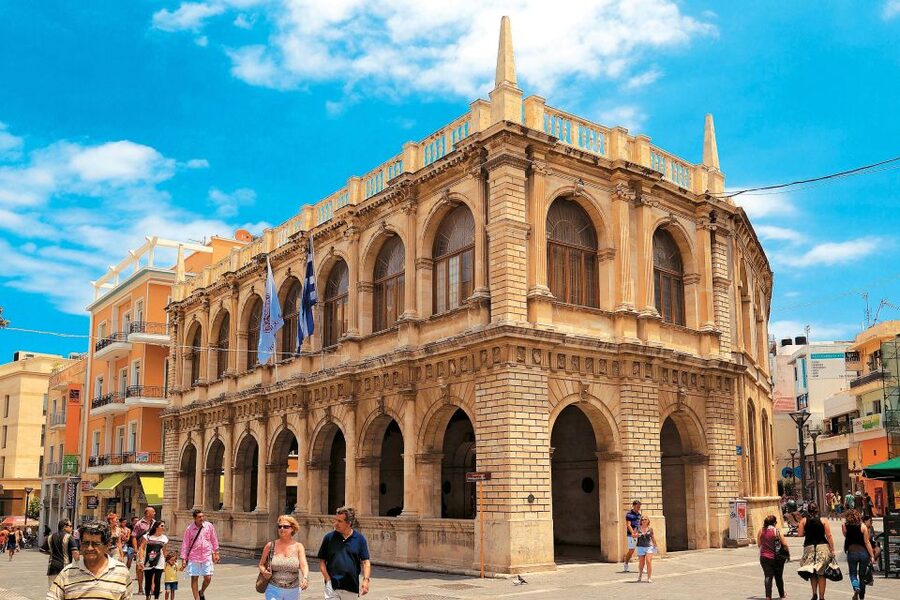
From there, you’ll move through the city’s visible layers, including time around the Venetian Loggia. You’ll get a photo stop, then a visit and walk, which is a nice balance. You’re not stuck staring at stone for too long, and you still get enough context to understand why Venetians left a mark here.
Old Venetian Harbor Energy: Koules Fortress and Morosini Lions Fountain
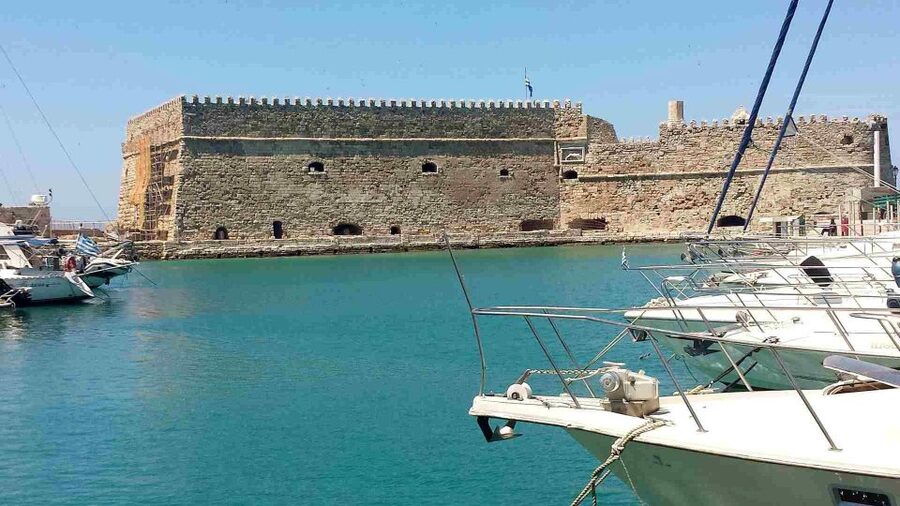
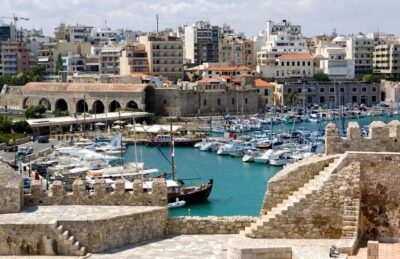
The route includes a harbor-side feel, with stops tied to the Old Venetian Harbor area. You’ll admire Koules Fortress (Castello del Molo) and also work in the Morosini Lions Fountain as a photo stop.
Why I like this segment: it breaks up the tour visually. After churches and streets, you get a stronger sense of how the city functioned through trade and maritime links. That matters because Heraklion food culture is shaped by what moved through the port, and a food tour is a good way to connect that to what ends up on plates.
This part also tends to be a bit busier, so it’s a good moment to stay alert if you care about hearing the guide clearly. One past participant noted that audio can be tricky in noisy areas, and it fits with what you can expect near popular viewpoints.
Agios Titos and the 25th Avgoustou 17 Photo Stop
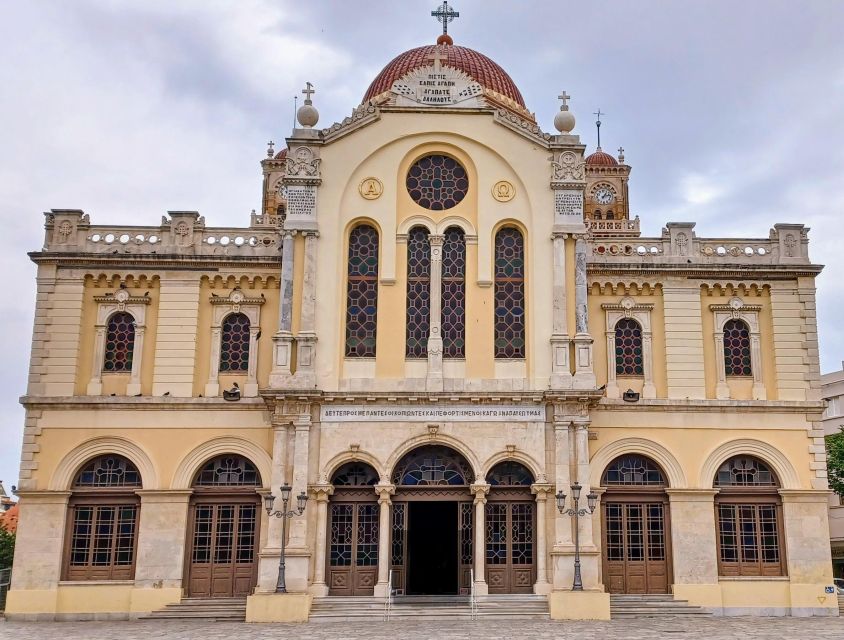
You’ll head toward Agios Titos Church for a photo stop and guided walk. Church stops can feel like filler on some tours, but here it works better because it’s timed between food moments and the guide ties the buildings into the larger story of Crete’s cultural identity.
Then you’ll hit 25th Avgoustou 17 as a photo stop. The purpose of a stop like this is usually simple: you get a quick, curated glimpse of a street-level detail that helps you remember the look and feel of the neighborhood once you’re done eating.
If you like photography, this is one of those “little payoff” stops. If you don’t, it still gives you short downtime that resets your legs.
Plenty else to see around Heraklion
Your Coffee, Dessert Break, and the Cretan Sweet Set-Up
At a local café, you’ll get a break time and a proper tasting moment with coffee and dessert. This is a smart pacing move. In a 4-hour food tour, you need at least one pause where you can stand less and reset.
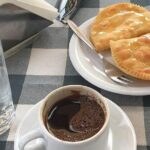
Expect the tour’s early flavor direction to be classic Cretan comfort. The tour highlights start you off with Cretan bougatsa paired with strong Greek coffee. Bougatsa is that famous baked custard or cheese pastry depending on the version, and the point here is not just to taste it, but to learn why it’s a go-to in everyday life.
After the café, you’ll return to the walk with more sights, including more photo stops and guided moments, so your sugar and caffeine do not turn into a sleepy detour.
Central Market Time: Smell the Ingredients, See the Everyday
One of the biggest value parts of a Heraklion food tour is the market segment, and this one does that through the Central Market, Heraklion stop. You’ll get photo time and a guided walk through the market area.
Even if you’re not a “market person,” this stop pays off because you’ll understand what the city actually buys and cooks with. Markets are where you notice what’s seasonal, what’s practical, and what locals keep returning for. That’s exactly the context you want before a tour shifts from street tastings to a more sit-down meal.
This is also where your taste memories get organized. You’ll connect the earlier bougatsa-and-honey type snacks to the broader idea of Cretan ingredients, rather than eating items as random bites.
Pastry History Museum: The Sweet Ending Before the Meal
You’ll finish at the Pastry History Museum, and along the way you’ll visit it as part of the last stretch. This stop is a great way to cap a food tour because it turns eating into understanding.
Even if you don’t know much about Cretan pastry culture ahead of time, the museum format helps you place what you tasted earlier into a bigger timeline. It also gives you something to do while you’re full, but not overwhelmed. A museum stop is ideal right after a final food round.
This is also a good “collect your thoughts” moment. If you’re walking through the city and eating quickly, you’re likely to lose track of your best bites unless you have a structured endpoint. Finishing at a museum does that job.
The Workshop Stop: Craft Behind Stivania Leather Boots
One standout cultural feature is a visit to a family-run workshop focused on stivania, the traditional leather boots worn by Cretan shepherds. You’ll learn the handmade process and why these boots matter culturally.
I like workshop stops because they change the question from what did I eat to why did someone make this the old way. When you hear the practical purpose behind the materials and technique, food and craft stop feeling like separate topics. They become part of the same island lifestyle.
If you like craftsmanship, this is the part of the tour you’ll remember on a deeper level than just another pastry taste.
Rocca a Mare Fortress Break and Sightseeing Pause
Your itinerary includes a break time at Rocca a Mare Fortress, with photo stop, visit, and sightseeing. This is a solid pacing anchor in the second half of the tour.
Fortress viewpoints also help you reset your perspective. You get a wider city view and a feel for how Heraklion’s defenses shaped where people lived and moved. That kind of context can make your market and church stops feel less like a checklist and more like a coherent walking story.
Plus, a break is not a luxury here. By the time you reach the fortress segment, your feet will appreciate the chance to slow down.
Local Restaurant Meze Finale: Classic Bites and Cretan Hospitality
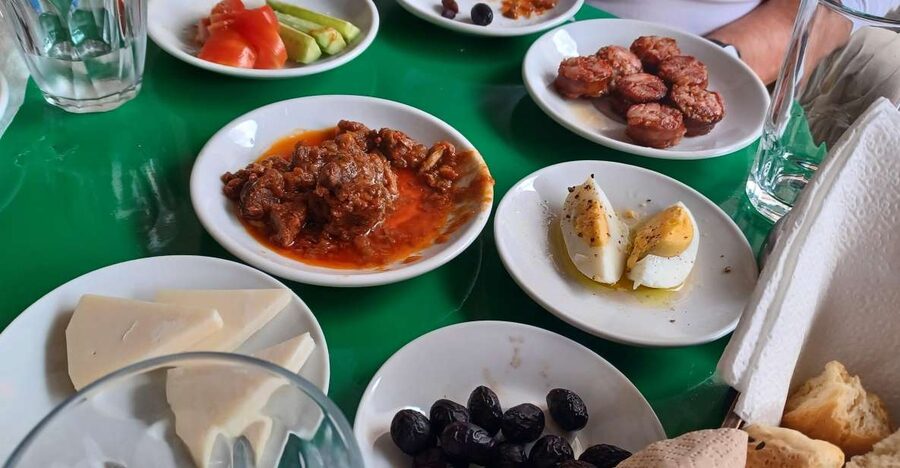
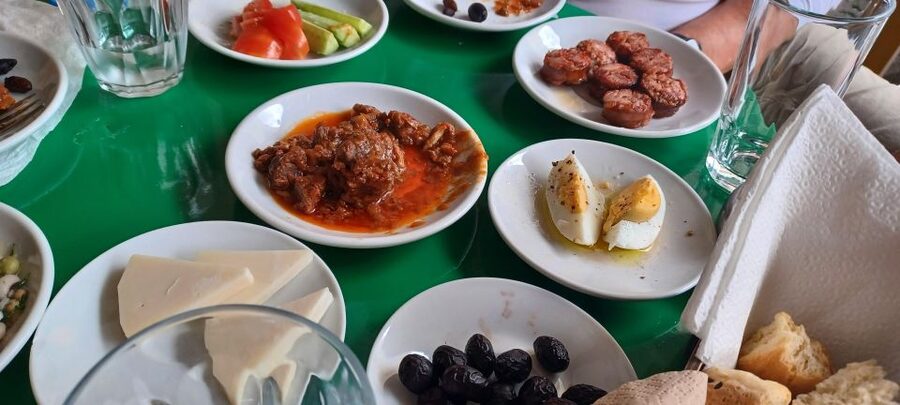
After the market, you’ll head to a local restaurant for another break time, with a food tasting portion. The tour ends with meze-style classics, served in a traditional taverna setting.
Meze is a smart way to close, because it lets you sample a range without needing to choose one heavy main dish. You also get that Cretan hospitality rhythm, where food is social and the table stays active.
From the tour highlights, the tastings are designed to cover traditional dishes, sweets, coffee, and raki. So by the end, you should feel like you ate a cross-section of Cretan comfort and celebratory flavors, not just one category.
Food, Price, and Value: Is $106 Worth It?
At $106 per person for 4 hours, the value depends on what you usually pay for food plus a guided walk. In many cities, a standalone meal plus a market tour will run close to this once you add drinks and guide time.
Here, you’re getting multiple tasting moments plus city landmarks and a workshop stop, and the route is designed so the food stops are spaced across real neighborhoods. If you want a way to see Heraklion and eat in a guided, time-efficient loop, this price starts to look fair.
If you’re the type who likes browsing at your own pace and you already have a detailed plan for specific tavernas, a self-guided snack crawl can be cheaper. But if you value structure, explanation, and a guided path that keeps you fed, this one is built for that.
Who This Heraklion Food Tour Fits Best
This tour is a good match if you want:
- A one-afternoon plan that mixes food with city landmarks
- Classic Cretan flavors like bougatsa, honey and sweets, and coffee, plus raki and meze in the tasting flow
- A small-group feel with an English-speaking host and room for questions
- The kind of cultural stop that goes beyond photos, like the stivania workshop
It may feel less ideal if you dislike walking city blocks, or if you need perfectly quiet guide audio at all times. The route includes busy sightseeing zones and narrow streets, so hearing can vary.
Should You Book This Food Tour in Heraklion?
I’d book it if you want one guided block where the city makes sense through food. The pairing of tastings with landmarks and markets is the heart of the experience, and the workshop visit adds real cultural weight.
I’d think twice if you’re extremely picky about food types or you know you won’t enjoy pastries and sweets, since the tour is built around bougatsa and honey-sweet moments. Also, if you rely on audio details, be prepared for noisy outdoor sections and position yourself close when the guide speaks.
FAQ
How long is the Food Tour in Heraklion?
The tour lasts 4 hours.
Where does the tour start?
It starts at the statue in the square outside the Heraklion Archaeological Museum area.
What language is the host speaking?
The tour is English.
What’s included in the food and drink?
The tour includes multiple food and drink tastings, including traditional dishes, sweets, coffee, and raki. You also get meze at the end.
Does the tour visit local markets?
Yes, the route includes a stop at the Central Market, Heraklion.
Is there a traditional workshop visit?
Yes, you visit a family-run workshop to learn about stivania leather boots.
Which major sights are part of the route?
You’ll see stops related to Koules Fortress (Castello del Molo), the Venetian Loggia, Agios Titos Church, and Agios Minas Cathedral, plus Rocca a Mare Fortress.
Where does the tour end?
The tour finishes at the Pastry History Museum.
What should I bring?
Bring comfortable shoes.
What is the cancellation policy?
You can cancel up to 24 hours in advance for a full refund.
Recently Published: Heraklion Tours
- Half-Day Private Tour in Two Wineries and Archanes from Heraklion★ 5.0 · 1 review
- Minoan Crete: Knossos Palace & Heraklion Museum with Winery★ 5.0 · 1 review
- Heraklion Museum Ticket and City Audio Tour★ 5.0 · 1 review
- Knossos Palace Wine Raki & Olive Oil tasting in Heraklion★ 5.0 · 1 review
- KNOSSOS PALACE private tour ( with Transfer from Heraklion Prefecture )★ 5.0 · 1 review
- Makrigialos-Ierapetra: Jeep Safari 4×4 Off Road Tour★ 5.0 · 1 review
- From Heraklion: Private Sailing Trip with our Hanse 470★ 5.0 · 1 review
- Private Transfer from Heraklion Airport to Elounda★ 5.0 · 1 review
Cretan Food Tours, compared.
Old Town Highlights Guided Tour with Street Food
Read our review →
Walking “Food tasting tour” in the town of Chania
Read our review →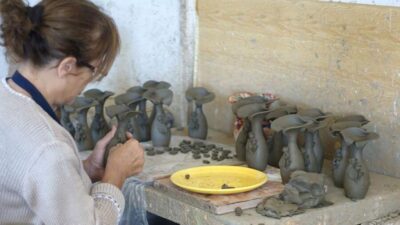
Full-Day Cretan Wines, Olive Oil, Raki and Food Tour
Read our review →
Olive Oil, Soap, Wine, Raki – Flavorful Culinary Journey
Read our review →
E-Bike Food Tour – Discover the Flavors of Crete
Read our review →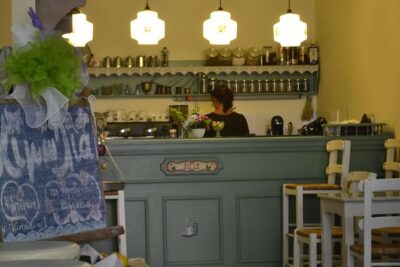
Browse the lists this tour appears in