
Reviewed · COOKING CLASSES
Chania: Authentic Cooking Class
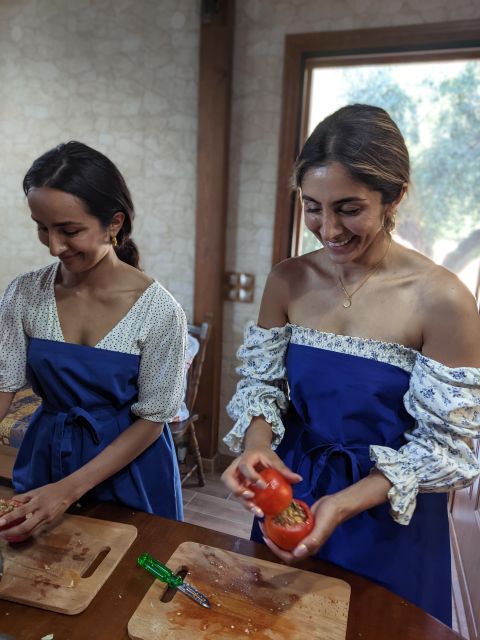
Five dishes, one family table in Chania. This is a hands-on Cretan cooking class set just outside the city, where garden-picked ingredients go straight into a menu based on the Mediterranean diet. I like that you are not just watching, you are actually rolling grape leaves, stuffing vegetables, and making traditional kalitsounia.
The heart of the class is the wood-fired stone oven timing. While the lamb cooks for over two hours, you keep moving with prep tasks, then finish with appetizers, a big shared meal, and dessert, all with generous local wine and raki. One thing to plan for: the class is about a 10 to 15 minute drive from central Chania, so you will want a taxi, rental car, or the optional transfer.
In This Review
- Quick hits before you go
- A Family Olive Grove Welcome Just Outside Chania
- The Wood-Fired Lamb That Everyone Wants to Know About
- Dolmades and Stuffed Vegetables: Where You Learn the Technique
- Kalitsounia Dough Work, Cheese, and Wild Greens
- Appetizers Served First: Tzatziki and Dakos
- Dinner at the End: Local Wine, Raki, and Dessert
- Value Check: What $129 Covers and Why It Feels Worth It
- Getting There and Timing It With Your Day in Chania
- Who Should Book This Cooking Class
- Should You Book It? My Practical Recommendation
- FAQ
- Where is the cooking class located?
- How long is the experience?
- Is transportation included?
- What dishes will I cook during the class?
- Is the class taught in English, and is it wheelchair accessible?
- What does the price include, and do I have to pay today?
Quick hits before you go
- Garden and local farm sourcing used across the recipes
- Veerna and her family team teach with real technique and real warmth
- The wood-fired lamb callout teaches the story behind the dish name
- Dolmades and kalitsounia skill-building with guided hands-on instruction
- Appetizers served first so you snack while the oven works
- Wine and raki with dinner plus dessert, so you leave properly fed
Learn the mezze before you eat it
- The Cretan Cooking Experience
★ 5.0 · 1 review - Chania: Cretan Wine, Olive Oil & Cooking Workshop
★ 5.0 · 1 review - Chania: Authentic Cooking Class in the White Mountains
★ 4.9 · 529 reviews - The Real Cretan Cooking Experience
★ 5.0 · 528 reviews - Chania Cooking Class-The Authentic Enjoy traditional Cretan meal
★ 5.0 · 339 reviews
A Family Olive Grove Welcome Just Outside Chania
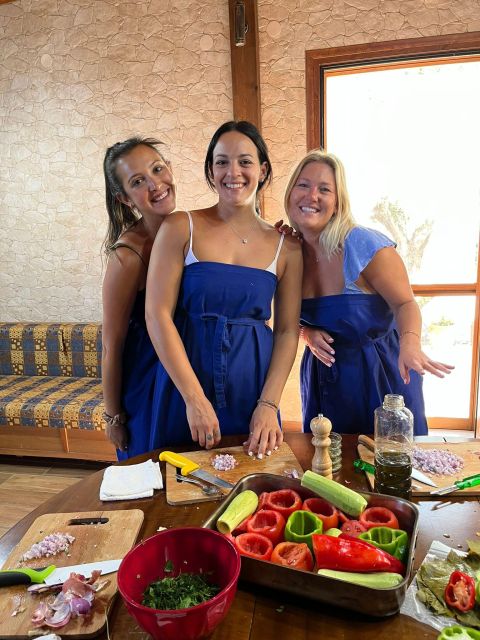
This Chania cooking class happens in the Nerokourou neighborhood, roughly a 10 to 15 minute drive from the city center. The payoff is that you get out of the busy streets and into a home setting under olive and avocado trees, where the group feels more like you have been invited than processed.
When you arrive, you are welcomed with a homemade refreshment or a Greek coffee, plus cookies. That first sip and snack matters, because it sets a relaxed pace before anyone touches dough or starts stuffing grape leaves.
The class is conducted in English, and it is designed to be wheelchair accessible. The experience runs about 4 hours, and it is set up for a semi-private feel, with the chance you are in a shared vehicle if you use transportation.
A quick practical note for your day: parking is along the fence. If you are driving, plan a little extra time to park and walk in, especially if the road traffic in Chania slows your arrival.
The Wood-Fired Lamb That Everyone Wants to Know About

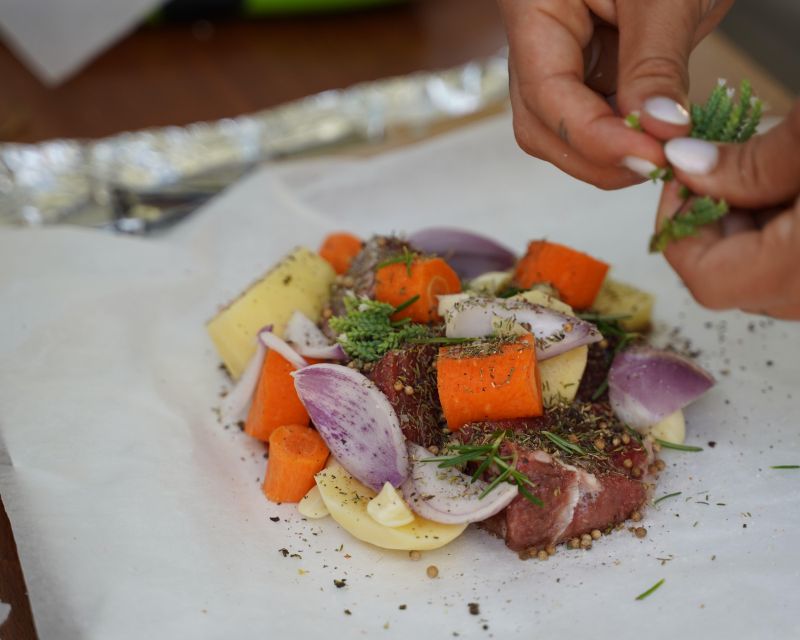
The menu kicks off with oven-roasted lamb, because it needs serious time. You will be learning alongside the wait, not stuck doing nothing.
The oven part is the difference between a cooking demo and a real Cretan cooking experience. The lamb cooks for over two hours in a wood-fired stone oven, and during that time the hosts explain the dish’s name and its historic significance, including why it is called the thieves dinner. Even if you do not catch every detail, you walk away with the story thread that helps the meal stick in your mind.
This is also when you often get to see more of the setting beyond the kitchen. Several people describe an olive orchard and herb areas nearby, with farm animals and even puppies around the property. It is not just a backdrop. It helps you understand the ingredients and the traditions behind them, because the food is tied to the place where it grows.
Dolmades and Stuffed Vegetables: Where You Learn the Technique
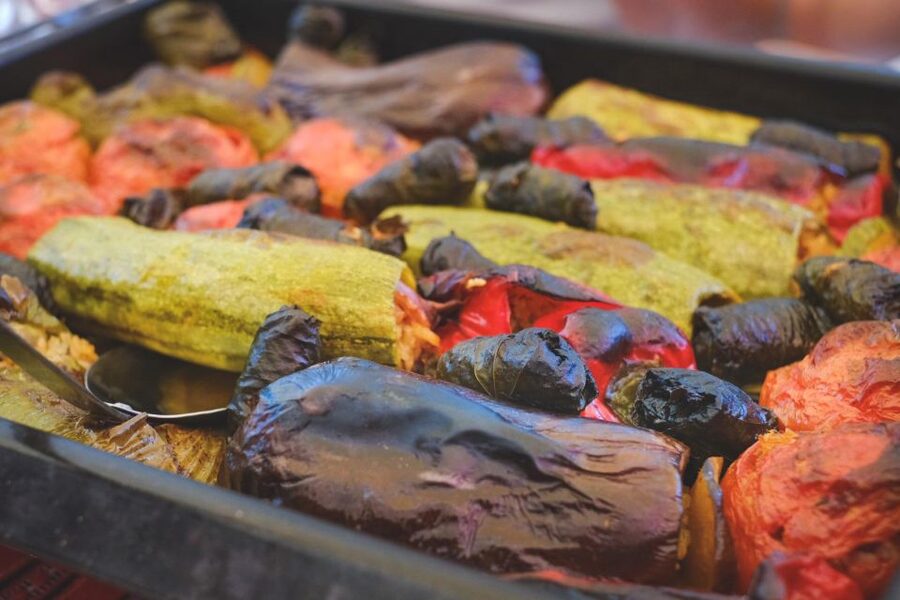
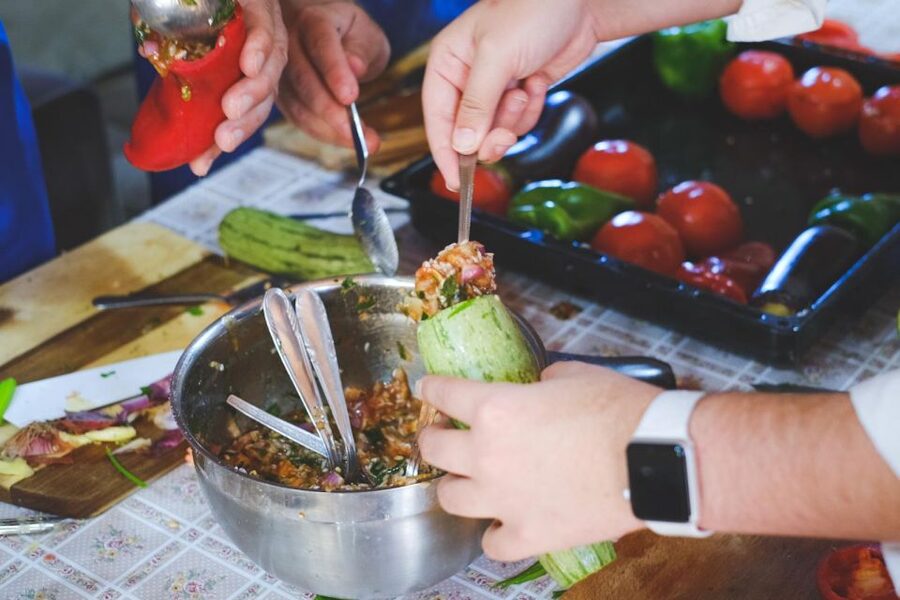
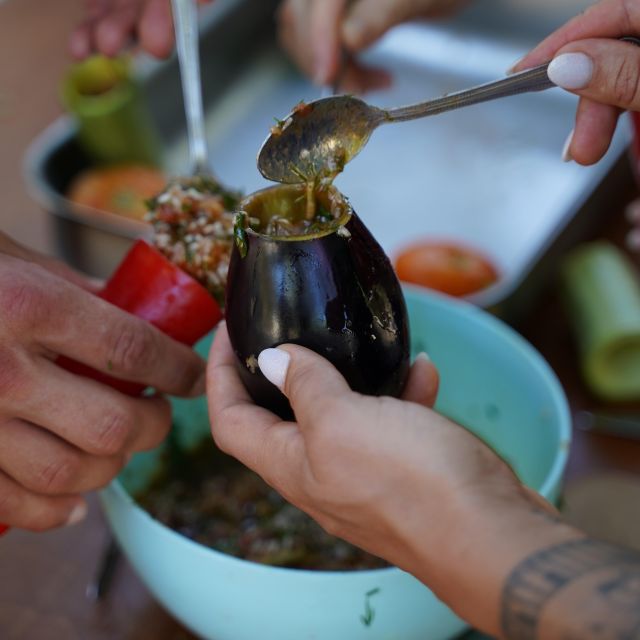
Once the lamb is underway, it is your turn to work. You will prepare stuffed vegetables and dolmades (stuffed grape leaves). This is where the class earns its reputation for being both fun and actually useful when you cook at home later.
You start by gathering herbs and vegetables for the stuffing. That little step makes a difference. It is easy to follow a recipe. It is harder to truly understand the proportions and flavors. Gathering ingredients first helps you connect what you chopped moments later to what you taste at the end.
Dolmades are delicate, so expect patience here. Rolling grape leaves is taught step by step, and the pacing is built so you can practice without feeling rushed. People love this part because it combines hand skills with clear instruction, and because the results are small, bite-sized, and satisfying even if you are not an experienced cook.
The stuffed vegetables follow the same idea: simple Mediterranean ingredients, taught with technique. You get to see how stuffing holds flavor and moisture, and why Cretan cooking often leans on herbs, greens, and thoughtful prep rather than complicated gadgets.
Kalitsounia Dough Work, Cheese, and Wild Greens
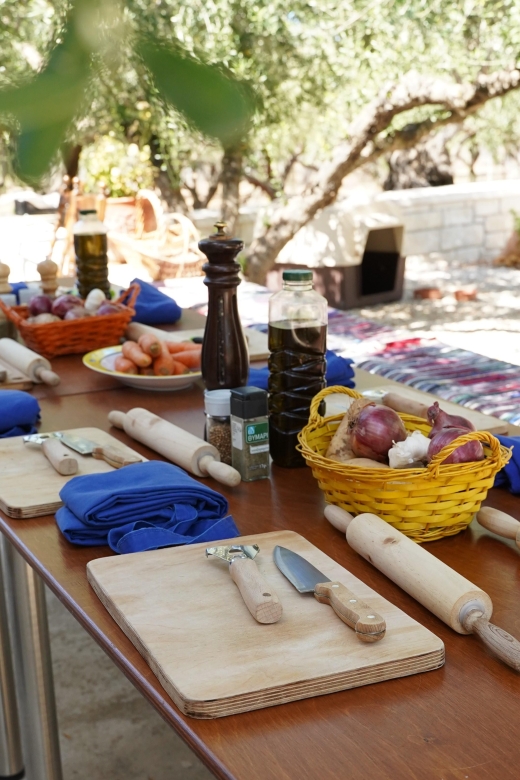
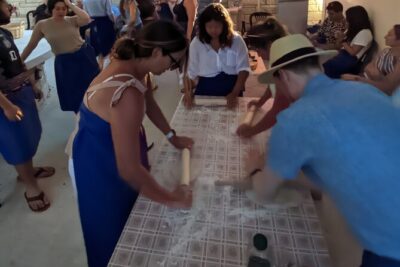
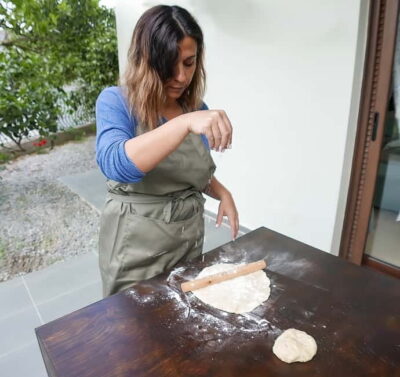
Next comes kalitsounia, traditional Cretan pies. The class focuses on the dough and the filling, and you roll out the dough before shaping and filling.
This is where you can feel your confidence grow. Even if you have never made dough before, the process is taught with guidance, and the pacing keeps you moving. The recipes center on cheese and wild greens, which gives you that classic island flavor profile.
What I like about this part is that it teaches you more than one move. You learn how dough responds when you roll it, how to manage the filling, and how to assemble without turning the pie into a mess. By the time you get to baking, you understand what you did, not just what you were told to do.
If you are a food nerd, you will also appreciate that kalitsounia are a selling-point in this family. Veerna is repeatedly described as the best cook in the area, with kalitsounia sold for years. That kind of local credibility matters because it usually means the recipes are refined, not improvised.
Appetizers Served First: Tzatziki and Dakos
The class prepares appetizers while other components bake, but you eat them first. That is smart planning. It keeps your hunger controlled while the oven does its job, and it also introduces flavors early so you are not waiting hours for the first taste.
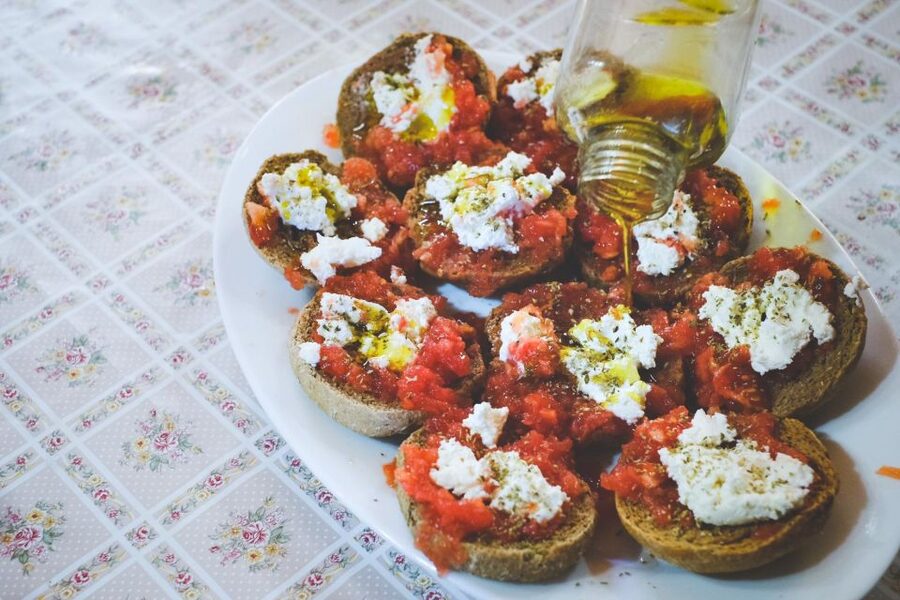
You will learn to make tzatziki and dakos. These are not fussy dishes. They are about good ingredients and correct balance, which is exactly what you want from a Mediterranean cooking class.
Tzatziki brings the creamy, cool contrast. Dakos adds texture and a tangy bite, and it works as an appetizer bridge into the heavier dishes later.
People often describe tzatziki and dakos as the snacks they want to recreate at home. That is the real marker of a good cooking class: you leave thinking, I can repeat this, and it will still taste like the original.
Take a skill home besides the tan


Dinner at the End: Local Wine, Raki, and Dessert
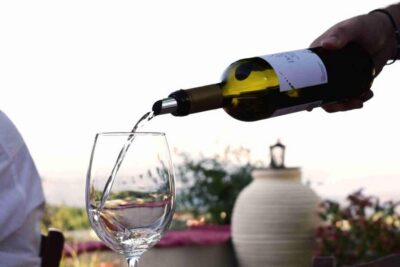
When it is time to eat, you sit down with the dishes you made, along with other traditional Cretan food that rounds out the meal. Local wine flows in generous amounts, and you also get local raki.
This part is not just about drinking. It is about understanding the meal as a whole, not a list of individual recipes. The hosts explain combinations and approach while you eat, so you connect the technique to the final plate.
And yes, leave room for dessert. Sweet dishes are offered at the end, and the meal has that classic island rhythm: do the work, share the table, then finish with something sweet.
One extra practical bonus: some people mention they received recipes to try later at home, and leftovers were packed for later meals. That can be huge if you want your cooking class to pay off for more than one dinner.
Value Check: What $129 Covers and Why It Feels Worth It
At $129 per person for about 4 hours, the value comes from what is included, not from the headline number.
You get:
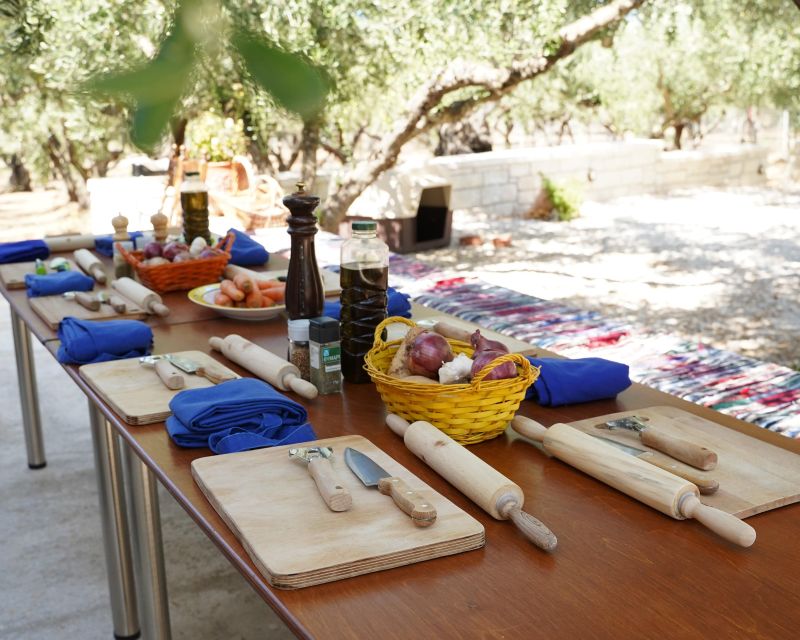
- ingredients and everything you need to cook
- lunch or dinner built from the dishes you make
- generous local wine and raki
That inclusion matters in Crete, because a standalone meal is already a cost, and a workshop that includes drinks and ingredients is usually where the budget equation changes. Here, you are effectively paying for a guided, ingredient-based meal plus hands-on technique time, all in a real family setting.
Where it can fall short for some people is simple: it is not in the center of town. If you are on foot and rely on transit, you might end up paying for taxis anyway. But if you can handle the short drive, the all-in nature of the experience is the reason people rate it so highly.
Getting There and Timing It With Your Day in Chania
Plan this class as a focused block, not a quick side trip. A 4-hour experience works best when you do not schedule too much right after dinner, especially if you will have wine and raki.
You have a few options:
- Drive or take a taxi to the Nerokourou area, parking along the fence
- Use the class transfer service with an extra fee, depending on where you are staying
- If you book pickup, you will follow the provided pickup location details
Transportation is described as semi-private, using a 9-seat van and an EV (5-seat). That usually means you might share the ride with other people who are joining the same cooking session.
If you are staying near the center, leaving a buffer of time is smart. Chania roads can be slow, and you want to arrive when you can park easily and settle in.
Who Should Book This Cooking Class
This is a great fit if you want:
- real Cretan home-style cooking, not a rushed demonstration
- hands-on practice with specific skills like dolmades and kalitsounia
- a relaxed family atmosphere with stories behind the dishes
- a full meal experience, including wine, raki, and dessert
It is especially good for couples and small groups because the class feels personal. It can also work well for families, since multiple people describe bringing children and seeing kids eat the vegetables and participate.
If you are someone who hates waiting while food cooks, this class still works because the lamb is cooking for over two hours, and the schedule keeps you busy. The waiting is part of the rhythm, not dead time.
Should You Book It? My Practical Recommendation
Book this cooking class if you care about technique, ingredients, and a Cretan meal you can actually repeat. The biggest reason to choose it is that you learn the kind of food that defines Crete, like dolmades, kalitsounia, tzatziki, and dakos, taught in a setting where the hosts are proud of the tradition and the process.
Skip it or reconsider if you are relying on being in the city center and you do not want to manage taxis or extra transfer costs. Also, if you are looking for a short, casual bite-sized workshop, 4 hours is a real commitment.
For most visitors to Chania, this is the kind of experience that turns food into memory, because you bring home the steps, the flavors, and the story behind the thieves dinner.
FAQ
Where is the cooking class located?
It is located about 10 to 15 minutes from the center of Chania in the Nerokourou neighborhood. The location is easy to reach by car or taxi, and you can park along the fence.
How long is the experience?
The class lasts 4 hours.
Is transportation included?
Transportation is not included, but pickup details are provided. A transfer service is available with an extra fee depending on your location.
What dishes will I cook during the class?
You will prepare oven-roasted lamb, stuffed vegetables, dolmades, kalitsounia, and appetizers including tzatziki and dakos. Dessert is offered at the end.
Is the class taught in English, and is it wheelchair accessible?
Yes, the instructor speaks English. The experience is wheelchair accessible.
What does the price include, and do I have to pay today?
The price includes ingredients, lunch or dinner, and generous amounts of local wine and raki. You can reserve now and pay later, and there is free cancellation up to 24 hours in advance for a full refund.
Recently Published: Chania Tours
- Elafonisi Pink Sand Beach | Private Day Trip from Heraklion★ 5.0 · 1 review
- Samaria Long Way from Rethymno★ 5.0 · 1 review
- Kayaking or River trekking or Rafting- kiliaris activities chania★ 5.0 · 1 review
- Chania Old Town, Ancient Olive Tree&Theriso Village Private Tour★ 5.0 · 1 review
- Private Tour From Chania Area to Rethymno and Arkadi Monastery★ 4.0 · 1 review
- Private Driver & Chauffeur Service in Crete from Chania★ 5.0 · 1 review
- From Chania: Imbros Gorge Hike&Authentic Culinary Experience★ 5.0 · 1 review
- Minoan Luxuries: Ancient Palaces, Messara Wine Routes & Matala★ 5.0 · 1 review
Cooking Classes, compared.
Authentic Cooking Class in the White Mountains
Read our review →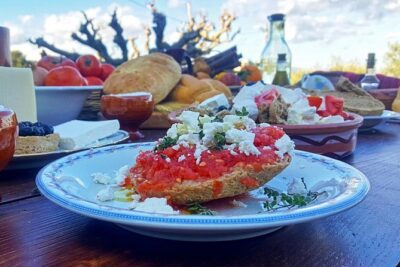
Chania Cooking Class-The Authentic Enjoy traditional Cretan meal
Read our review →
Full-Day Jeep Safari Tour with Cooking Lesson
Read our review →
Moires: Cooking Class and Olive Oil Tasting at a Family Farm
Read our review →
Sightseeing Day Trip with Cooking Lesson and Lunch
Read our review →Browse the lists this tour appears in