
Reviewed · CRETAN FOOD TOURS
Traditional Food Tour in Rethymno
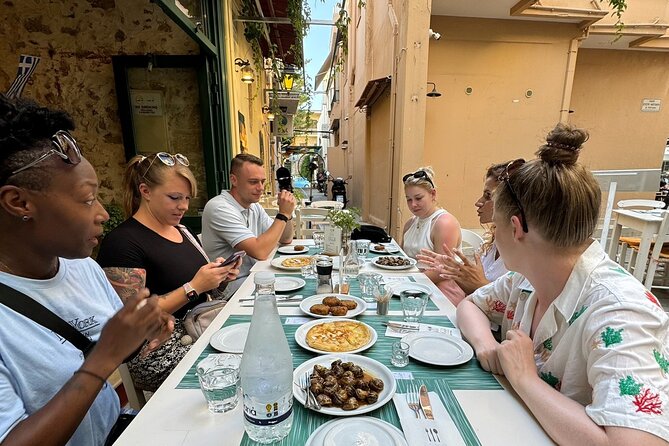
You get a full Crete flavor lesson in just three hours. This Traditional Food Tour in Rethymno strings together six stops, from a Venetian-leaning harbour tavern to a philo workshop and a honey-syrup donut finish. I really like how the food choices feel local and varied, not repetitive, and I also like the small group size that keeps the vibe relaxed. One thing to consider, you’ll be walking between stops, and the tour depends on good weather, so plan for a bit of movement on an evening itinerary.
If you care about both eating and learning, this is a smart way to spend your time in town. The guide, Virginia, has a reputation for being engaging and fun, and that energy matters when you’re moving quickly from shop to tavern. The only drawback I’d flag is for anyone with allergies or special diets, you need to mention needs in advance so the tastings work for you.
If you want value, this tour also stacks in alcohol, bottled water, and enough tastings that they can substitute for dinner.
In This Review
- Key highlights worth your attention
- The evening loop: how this 3-hour Rethymno food tour actually feels
- Price and value: what $106.92 covers (and what it doesn’t)
- Start at the Former Customs House, then let the guide set the tempo
- Old Venetian Harbour tavern: raki plus three traditional Cretan dishes
- Old Town bakery stop: the smell test for Cretan sweets and appetizers
- The philo workshop in a 17th-century Venetian mansion
- Iroon Politechniou Square: a tavern tasting with six flavors and local wine
- Mikrasiaton Square meze-style dining: rakomelo and four more plates
- The lokma donut finish: crisp honey sweetness at the end of the route
- What to expect, practically: walking, timing, and the alcohol angle
- Who should book this tour, and who should think twice
- Should you book this Traditional Food Tour in Rethymno?
- FAQ
- What time does the Traditional Food Tour in Rethymno start?
- Where does the tour meet, and where does it end?
- How long is the tour?
- How much does it cost per person?
- Is the tour offered in English?
- Is food and drink included in the price?
- Does the tour include a ticket or anything digital?
- How big is the group?
- Does the tour run in bad weather?
Key highlights worth your attention
- Six food stops across Rethymno Old Town, including off-the-main-street places that are hard to find on your own
- Raki, rakomelo, and local wine spread across the evening, so you get a real sense of Cretan drink culture
- A philo workshop setting in a 17th-century Venetian mansion, with tasting tied directly to how the pastry is made
- A guide named Virginia who’s praised for knowledge, warmth, and keeping the group entertained
- A honey-syrup lokma donut finale, which makes a memorable end point for the whole loop
Snails, dakos, and cheese you won't find shipped out
- Chania: Old Town Highlights Guided Tour with Street Food
★ 4.9 · 407 reviews - Crete: Full-Day Cretan Wines, Olive Oil, Raki and Food Tour
★ 5.0 · 264 reviews - Heraklion: Food Tastings Walking Tour
★ 5.0 · 136 reviews - Rethymno Walking & Gastronomy Tour
★ 5.0 · 103 reviews - Chania Food Stories Half-Day Tour inc. tastings & drinks
★ 5.0 · 92 reviews
The evening loop: how this 3-hour Rethymno food tour actually feels
This is a 3-hour tour that starts at 6:00 pm at the Former Customs House (Rethimno 741 31). From the first stop to the last, you’re tasting your way through the older parts of town, with time built in for short meals rather than long restaurant sittings. Expect 20 to 60 minutes of walking total, depending on the route and how the group moves.
The pacing is one of the reasons it works. You’re not stuck in a single place for hours, and you’re not sprinting either. Most tastings are short and focused, so you keep energy up and keep your appetite sharp for the next stop.
Group size also helps. This is capped at 12 travelers, which usually means less waiting and more attention from the guide.
You’ll get a mobile ticket, and the tour is offered in English. If you’re traveling with a service animal, it’s allowed. And since the meeting point is near public transportation, you’re not locked into a taxi plan.
Price and value: what $106.92 covers (and what it doesn’t)
At $106.92 per person for about three hours, the real question is whether the included food and drinks justify the cost. Here, they do a lot of the heavy lifting.
Included items cover traditional dishes, alcoholic beverages, bottled water, and enough tasting to substitute for dinner. Tips and any extra drinks or food are not included, so if you’re someone who likes to add on, you’ll need to budget for that.
Another value point is that the tour includes both savory and sweet stops. You’re not only eating dinner-style portions, you’re also hitting baked goods, philo-based desserts, and ending with lokma donuts. That variety alone usually adds up fast if you try to DIY it.
Also, the tour is consistently rated 5 out of 5, with a strong “recommended” rate. In travel terms, that’s a sign the pacing and food amounts tend to meet expectations rather than leaving people hungry or disappointed.
Start at the Former Customs House, then let the guide set the tempo

The tour begins where many visitors start planning, at the Former Customs House. It’s a practical starting point because it’s easy to find, and it ends back at the meeting spot.
The first minutes matter because you’re going to move through different types of places: a tavern, a bakery, a historic pastry workshop, and a couple of tasting-style meals. A good guide keeps that flow smooth, and this tour’s guide is specifically praised for being engaging, caring, and fun.
If you like structure, you’ll appreciate the schedule. If you prefer to wander alone, you might feel the opposite, but most food tours are like this: planned stops, short tastings, and a route that tries to keep you close to what you came for.
Old Venetian Harbour tavern: raki plus three traditional Cretan dishes
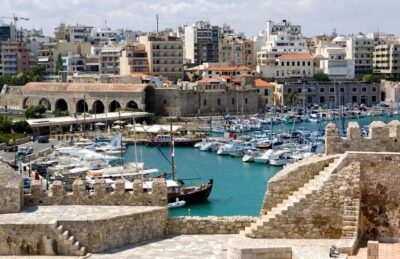
Your evening kicks off at the Old Venetian Harbour of Rethymno, at a family-owned Cretan tavern. This is where the tour starts building a foundation: you’re not just ordering food, you’re being introduced to Cretan hospitality and flavors right away.
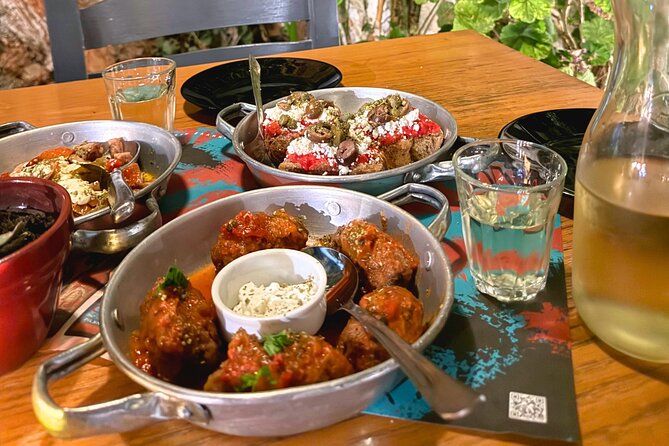
You’ll be welcomed and served traditional raki, described as Crete’s signature distilled spirit. Alongside that, you’ll taste three traditional Cretan dishes, chosen to highlight local ingredients and flavors.
This stop tends to work well because it’s early enough to set the tone, and it’s also a good way to learn what to expect from the rest of the evening. If you’re the type who loves learning with your fork, the guide’s explanation here helps connect the dots between the different sweet and savory stops later.
One practical note: if you don’t drink alcohol, you should mention it in advance as early as possible, since alcohol is part of what’s included.
Old Town bakery stop: the smell test for Cretan sweets and appetizers
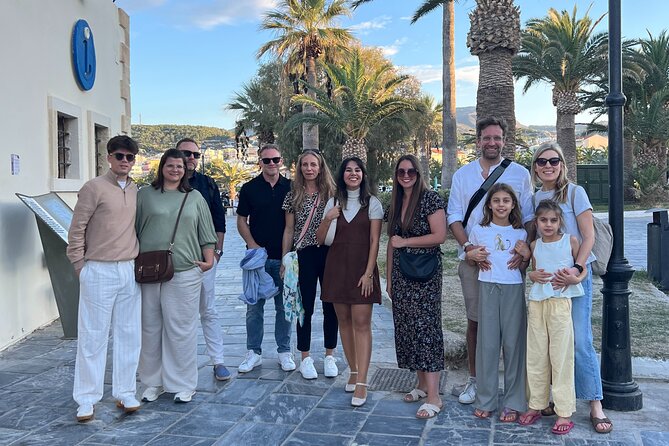
Next comes Old Town Rethymno, where you’ll step into a local bakery. This stop is all about aroma and craft. You’ll notice the smell first, then the counter, then the baked shapes and textures.
Here, you’ll taste a traditional Cretan appetizer and spend time around the baked goods that locals clearly treat as part of everyday life. The emphasis is on recipes passed down through families, using techniques that keep coming back generation after generation.
This is a smart “mid-tour” stop. After a tavern start, a bakery resets your palate before the philo workshop later on. It also gives you something you can recognize after the tour, because once you’ve seen how these sweets are built, you’ll start spotting them around town.
If you’re someone who hates sweets, plan for the fact that the second half of this tour leans dessert-heavy. The good news is that the tour includes savory elements too, so you’re not locked into one flavor track.
Plenty else to see around Crete



The philo workshop in a 17th-century Venetian mansion
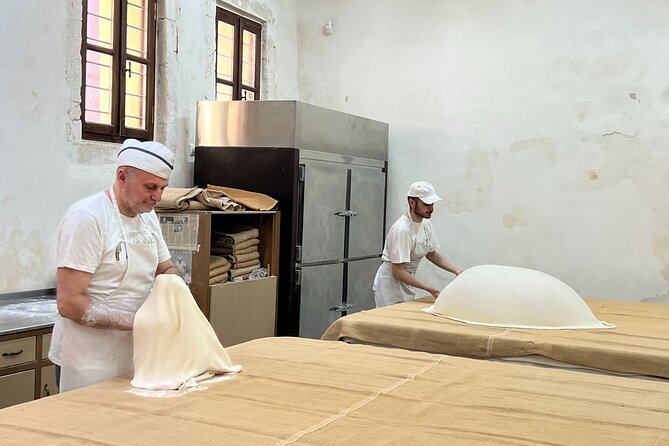
One of the most memorable parts is the handmade traditional philo workshop located in a 17th-century Venetian mansion. The name associated with the workshop is Giorgos Chatziparaschos, and it’s been dedicated to crafting philo for over 65 years.
This is where the tour gets more than “eat and walk.” You’re visiting an actual workshop environment for making philo pastry sheets. The focus includes philo used for kantaifi and baklava, which matters because those desserts don’t taste the same everywhere. When the pastry is made with care, you can taste the difference.
You may get lucky and actually witness the process of creating the delicate sheets. Even if you don’t see every stage, the tasting is part of the point: you’ll have baklava made with fine philo, nuts, and honey.
The tour’s structure here is also helpful. You can taste it on the spot, and then the tour indicates that everyone grabs a bite of these sweets, so you get the dessert experience without being rushed. This is also a stop where it’s worth paying attention to texture. Philo can be delicate or dense depending on how it’s made, and this one is built to be light and precise.
For anyone with nut allergies, this is a big deal, because baklava commonly includes nuts. Mention allergies in advance so the guide can manage what you’re served.
Iroon Politechniou Square: a tavern tasting with six flavors and local wine
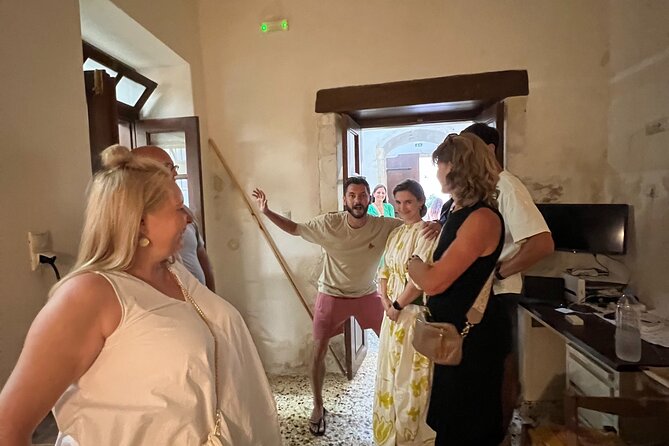
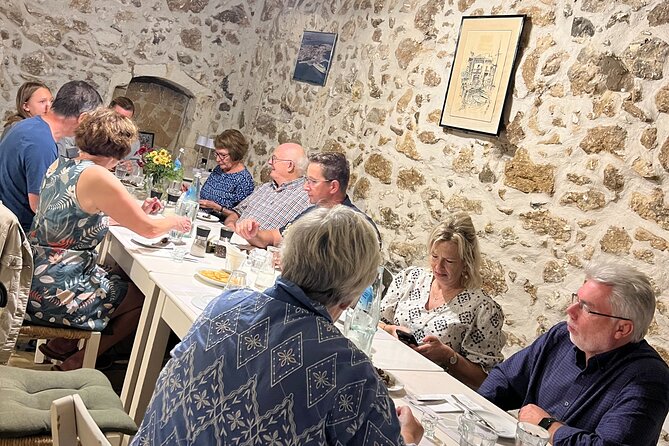
After the workshop, you head to Iroon Politechniou Square for an atmosphere-forward tavern stop. This place is described as decorated in a way that makes the dining experience feel special without needing a big production.
At this stop, you’ll taste six traditional flavors, and you’ll have a glass of local wine paired with the meal. The idea is variety: different dishes, different textures, and a clearer picture of how broad Cretan cuisine can be.
This is a good moment to slow down and reset. By now, you’ve had raki and bakery bites, and you’ve been in a historic workshop setting. A tavern tasting in the middle of the loop gives you a place to sit with the group and enjoy the evening.
If you like matching food with drinks, this stop is a highlight. If you prefer to keep alcohol minimal, you may want to check in with the guide early so you know what options exist.
Mikrasiaton Square meze-style dining: rakomelo and four more plates
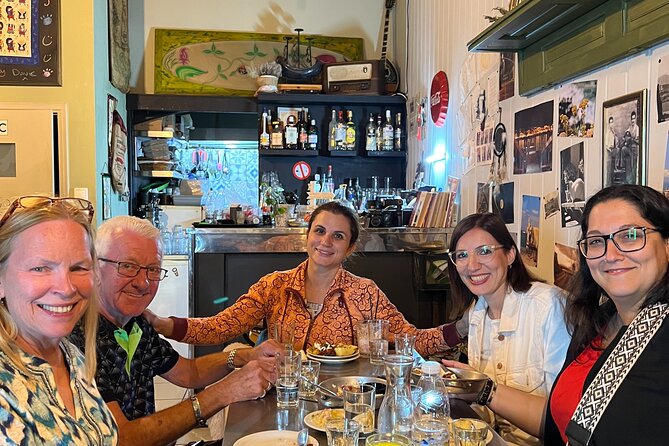
At Mikrasiaton Square, the tour shifts into a meze-style experience. This is the Greek approach where multiple small dishes encourage sharing, conversation, and trying more than you’d order alone.
You’ll be introduced to rakomelo, a warm honey-infused spirit. You’ll also taste four more authentic plates, designed to show off the flavor range of Crete using fresh, locally based ingredients.
This stop feels like the heart of Greek dining culture, because the point isn’t a single perfect dish. It’s variety and community. If you’re traveling solo, this is also where you tend to enjoy the social side most, since the meze format makes it easy to talk about what you’re tasting.
One thing to watch: rakomelo is warming and strong, so if you’ve already had raki earlier, you might want to sip slowly.
The lokma donut finish: crisp honey sweetness at the end of the route
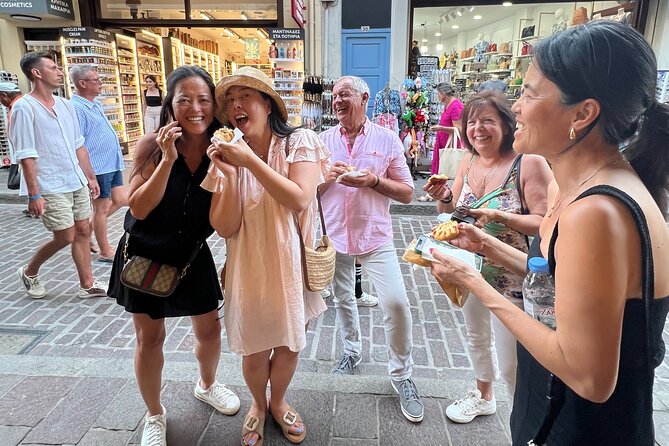
To wrap everything up, you’ll go for a final sweet at a tiny spot for Greek lokma donuts. These are small, golden, and crisp, drenched in honey syrup, and typically topped with cinnamon or nuts.
The best part here is that the stop feels like a celebration rather than just a last bite. Watching how the dough is fried can be fun, and the tasting is a satisfying crunch followed by honey sweetness.
This last stop matters because it makes the whole tour feel complete. You’ve had savory tasting, pastry craft, and drink culture, and then you end with a local sweet that’s easy to remember after you leave.
Also, unlike some stops, the lokma tasting is listed as admission ticket free, which is a nice small bonus.
What to expect, practically: walking, timing, and the alcohol angle
Let’s make this practical.
The whole experience is about three hours, starting at 6:00 pm. You’ll walk between venues, with 20 to 60 minutes expected for that walking time across the route. So wear comfortable shoes, especially if it’s a cobblestone or uneven-street kind of evening.
There’s also a weather dependency. Since this tour requires good weather, you should have a flexible evening plan in your schedule. If weather cancels it, the tour indicates you’ll be offered another date or a full refund.
And then there’s alcohol. Alcoholic beverages are included at multiple stops, so if you’re avoiding alcohol completely, you’ll want to communicate that in advance. Even if you drink, consider pace and water. Bottled water is included, which helps.
Who should book this tour, and who should think twice
This tour is a great fit if you want:
- A guided way to find places off the main street
- A mix of taverns, bakeries, and a real pastry workshop
- A small group vibe capped at 12
- Enough tasting for a dinner substitute
It’s especially good for food-and-culture travelers who like learning why something tastes the way it does. The philo workshop stop is the anchor here, and it gives context to desserts that many people just eat without understanding the craft.
You might think twice if:
- You have serious allergies, especially to nuts, since baklava and other sweets can contain them. The tour asks you to mention allergies or special dietary requirements in advance.
- You dislike alcohol, since the tour includes raki, rakomelo, and local wine.
- You want a low-walking evening. It’s not long walking, but it is a walk-through town experience.
Should you book this Traditional Food Tour in Rethymno?
If you like your evenings structured but not stiff, and you want a real tasting spread across different kinds of food places, I’d say yes. The strongest selling points are the variety of food and drink, the off-the-obvious-street venues, and the fact that the guide, Virginia, is repeatedly praised for being engaging and warm.
The main reason you’d skip it is if allergies or alcohol are dealbreakers for you. If those are manageable, this tour looks like a solid value, especially because the tastings can replace dinner and you get both savory and sweet stops, plus a pastry workshop tied to the dessert you’ll eat.
FAQ
What time does the Traditional Food Tour in Rethymno start?
It starts at 6:00 pm.
Where does the tour meet, and where does it end?
The meeting point is the Former Customs House, Rethimno 741 31, Greece. The tour ends back at the same meeting point.
How long is the tour?
The duration is about 3 hours.
How much does it cost per person?
The price is $106.92 per person.
Is the tour offered in English?
Yes, it is offered in English.
Is food and drink included in the price?
Yes. The tour includes traditional dishes, alcoholic beverages, bottled water, and tastings can substitute for dinner. Tips and any additional food or drinks are not included.
Does the tour include a ticket or anything digital?
Yes, it includes a mobile ticket.
How big is the group?
The tour has a maximum of 12 travelers.
Does the tour run in bad weather?
It requires good weather. If it’s canceled due to poor weather, you’ll be offered a different date or a full refund.
Recently Published: Crete Tours
- Creta Private Transfer from Heraklion (HER) Airport to Agia Pelagia★ 5.0 · 1 review
- Creta Private Transfer from Heraklion (HER) Airport to Stalís★ 5.0 · 1 review
- Crete: Balos Beach Viewpoint and Falassrna Beach Day Trip★ 5.0 · 1 review
- VISIT THE MOST FAMOUS PAINTER “EL GRECO” TOUR★ 5.0 · 1 review
- Samaria Gorge from Chania with Professional Hiking Guide★ 5.0 · 1 review
- Rethymno Bali & Panormo : Quad Safari & visit Cave 57km 4hours★ 5.0 · 1 review
- Unique wine tasting of organic Cretan wines★ 5.0 · 1 review
- Hersonissos: Private Sunset Catamaran Cruise, Snack & Drinks★ 5.0 · 1 review
Cretan Food Tours, compared.

Old Town Highlights Guided Tour with Street Food
Read our review →
Walking “Food tasting tour” in the town of Chania
Read our review →
Full-Day Cretan Wines, Olive Oil, Raki and Food Tour
Read our review →

Olive Oil, Soap, Wine, Raki – Flavorful Culinary Journey
Read our review →
E-Bike Food Tour – Discover the Flavors of Crete
Read our review →
Browse the lists this tour appears in